In Eugene, we’re used to weird. In some neighborhoods, shooting a politically charged, hardcore punk music video in public would solicit no more than a passing glance. Doing it uninvited in a local church, as Russian feminist performance art collective Pussy Riot did in 2012, might be a trespass leading to a hand-slap, but not much more than a nuisance or prank.
In Vladimir Putin’s Russia, this very stunt — this very guerilla performance art piece — brought about a highly publicized trial of three members of Pussy Riot, two of whom served out sentences in brutal labor camps.
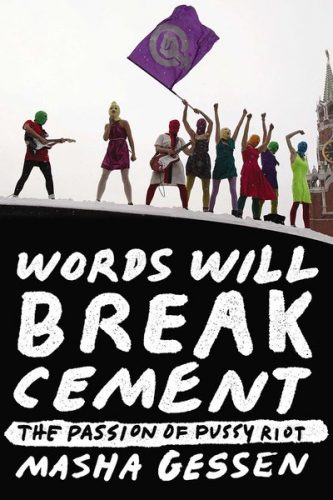
“They knew they were taking a risk,” says Masha Gessen, author of the recent Pussy Riot biography Words Will Break Cement: The Passion of Pussy Riot. “They had a very reasonable expectation of going to jail 10 to 15 days.”
But, Gessen adds, Pussy Riot members had no idea how severely the Putin government would react to their performance. “They were the first people to go to jail for peaceful protest,” she says. “They are the beginning of the Putin crackdown.”
With Words Will Break Cement, Gessen, also known for her Putin biography The Man Without A Face: The Unlikely Rise of Vladimir Putin, goes beyond the Western coverage of Pussy Riot, putting their work in the context of today’s Russia while framing the conceptual punk collective within that region’s long history of activist writers and artists.
Gessen says a discussion of Pussy Riot belongs in the context of Western protest art. “They are very much steeped in Western protest tradition, which makes them difficult for Russians to understand,” Gessen says. “I don’t think that what they did can be separated from the government reaction,” she continues. “Their performance can be viewed as a whole. It begins with them entering the cathedral [Moscow’s Cathedral of Christ the Savior] and ends with their closing statements in court. That is the nature of performance art.”
Gessen was working with restricted access: highly censored correspondence with Pussy Riot members from within labor camps, court records and interviews with those on the story’s periphery. Nevertheless, the book is compelling and highly readable. It’s an artist biography, a meditation on revolutionary art and gender politics, an absurdist courtroom drama and defiant commentary on the cultural climate of Gessen’s homeland — a place for which the author obviously has enduring love and concern.
With recent events in Sochi during the Winter Olympics, Pussy Riot continues to work for change in Russia and, deservedly, capture headlines. Their saga continues, and Gessen’s Words Will Break Cement is only the first chapter.
Masha Gessen presents Words Will Break Cement: The Passion of Pussy Riot for the UO PageTurners series 4 to 6 pm Sunday, April 13, at the University of Oregon Knight Library Browsing Room; Free.