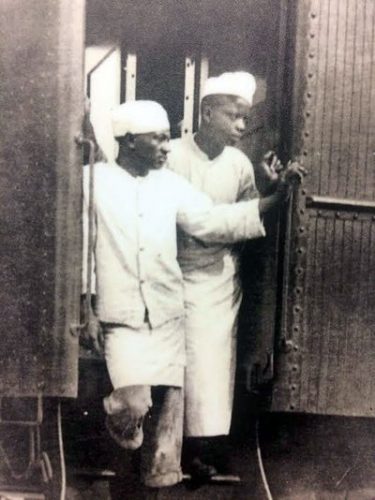
The Oregon Electric Railway first arrived in Eugene in 1912, but its historical significance today remains relevant to the area — and especially to the city’s African-American residents.
The Lane County Historical Museum is hosting an exhibit about the arrival of railroads to Eugene and the employment opportunities for African-Americans that came with it. “Rails Through Eugene: A Black History Connection” was put together by the Oregon Black Pioneers, a nonprofit group based in Salem that focuses on bringing Oregon’s black history to light.
The exhibit features historical photos and artifacts from the Oregon Electric Railway’s heyday in Oregon and, specifically, Eugene, along with the effect the railways had in bringing African-Americans looking for work to the Beaver State.
Working on the railroad, and eventually on the trains, was “one of the first paying jobs available for blacks,” says Gwen Carr of the Oregon Black Pioneers.
Although they weren’t allowed to be conductors or engineers, African-Americans working on the trains held a variety of positions like porters, brakemen, cooks, bartenders and barbers, says Bob Hart, executive director of the Lane County Historical Museum.
The introduction of railroad work was one of the ways African-Americans gained access to middle-class living, Hart explains, adding that even though these are major historical events, they don’t get talked about nearly enough. “The museum hasn’t done a lot of black history,” he says. “It’s high time we talk about race.”
This sentiment echoes throughout the work of the Oregon Black Pioneers. “The African-American story in Oregon was not visible or well-known,” says Willie Richardson, president of the group. “We then decided our job was to bring the African-American story to life in its totality.”
The Oregon Black Pioneers do this by partnering with museums, school districts and historical organizations to show exhibits and presentations about black history in Oregon.
Richardson says the group is working with Eugene school districts as well as the Salem-Keizer school district to adapt curriculum to include more Oregonian black history.
“Rails Through Eugene: A Black History Connection” is at the Lane County Historical Museum through Oct. 9. Guest lecturers Bill Rutherford, an artist and sculptor, and Eric Richardson, president of the local NAACP chapter, will speak at the exhibit 2 pm Saturday, Sept. 17, and at 2 pm on Oct. 1, respectively. For further information, visit lanecountyhistoricalsociety.org.