The great Russian novelist Fyodor Dostoyevsky invented the modern suspense thriller with Crime and Punishment, the story of a poor college student who murders his landlady with an ax and is hounded throughout the rest of the book by his conscience and a dogged detective who baits him mercilessly until he confesses.
We never tire of such cat-and-mouse potboilers. But, really, such procedural tales are meant to be scaffolding for a deeper story, as Dostoyevsky knew: The story of our fall from grace, and whether we will seek forgiveness and salvation, or succumb to further cycles of violence and criminality.
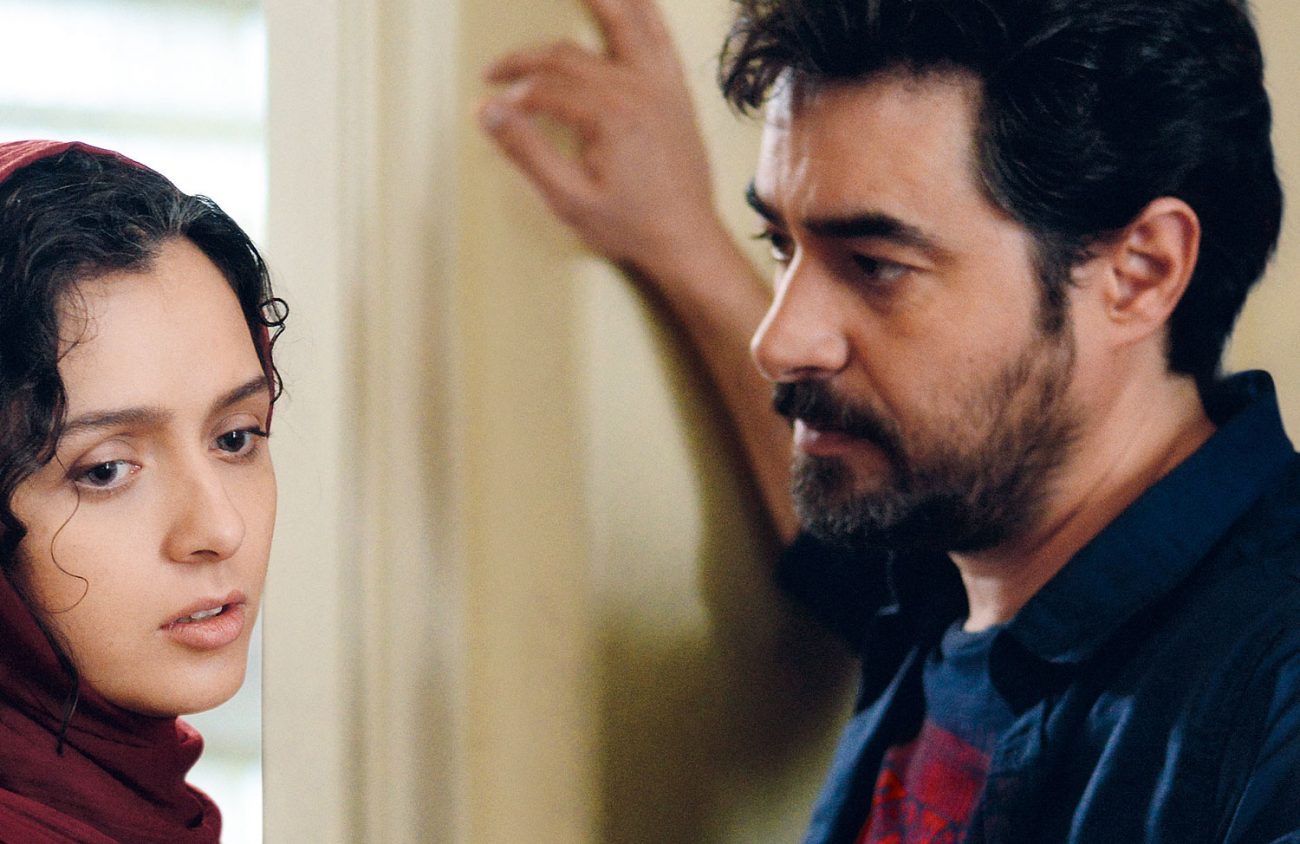
On its surface, Iranian director Asghar Farhadi’s latest film, The Salesman, is a classic thriller — a suspenseful crime story that becomes an obsessive vengeance plot. An Iranian couple, Emad (Shahab Hosseini) and Rana (Taraneh Alidoosti), are suddenly forced to evacuate their crumbling apartment building. A friend with whom they are staging a production of Arthur Miller’s Death of a Salesman, Babak (Babak Karimi), offers them a new apartment recently and mysteriously vacated by a woman who may have been a prostitute.
Shortly after moving in, Rana is brutally assaulted in the shower while Emad is away at the store. A fog of uncertainty and half-truths surrounds the attack: Was the perpetrator one of the previous tenant’s johns? Why did Babak not warn them? In his haste to flee, the attacker left behind a cell phone, a set of keys and, as Emad discovers, his truck parked outside. He sets about tracking down Rana’s attacker.
As the mystery unfolds and the suspense ratchets up, we witness the unraveling of Emad and Rana’s marriage, which is strained by his frustrated and increasingly selfish search for the perpetrator. As she moves toward healing and forgiveness, he is increasingly driven by anger, and when he finally discovers the surprising culprit, there is no relief but, rather, an excruciating escalation of anticipation and anxiety. A decision must be made.
Farhadi, who also wrote The Salesman, directs a muted, ungarish yet propulsive picture that is always focused on those intimate places where relationships play out, a diverted glance or a shrug of the shoulders. He is adept at pacing, at squeezing suspense from the blunt architecture of his narrative, and yet he never loses sight of the very human drama playing out — a drama that, in the end, is cosmic, and that speaks to us as fragile creatures who slouch, however clumsily, toward grace.
We don’t talk about sin much anymore. The term has lost its distinct chill in this so-called enlightened age of secular concerns, but that doesn’t mean the cynicism that ignores our fallen nature has eradicated our essential sinfulness. No matter how we frame ourselves, we remain creatures prone to acts of crime and punishment, and whether we know it or not, we are up to our noses in a human drama that is as old as time itself.
The Salesman has been nominated for an Oscar in the Best Foreign Language Film category, but Farhadi (who took home that honor in 2012 for his excellent A Separation) has already said he won’t attend the ceremony due to the humiliating nature of our salesman-in-chief’s executive order banning travel from a list of Muslim countries, regardless of how it pans out in the courts. Which poses a serious question about where we’re now at as a society: Does punishment for a crime never committed even include the possibility of grace?
And what do you call revenge for a crime never committed? (Broadway Metro)