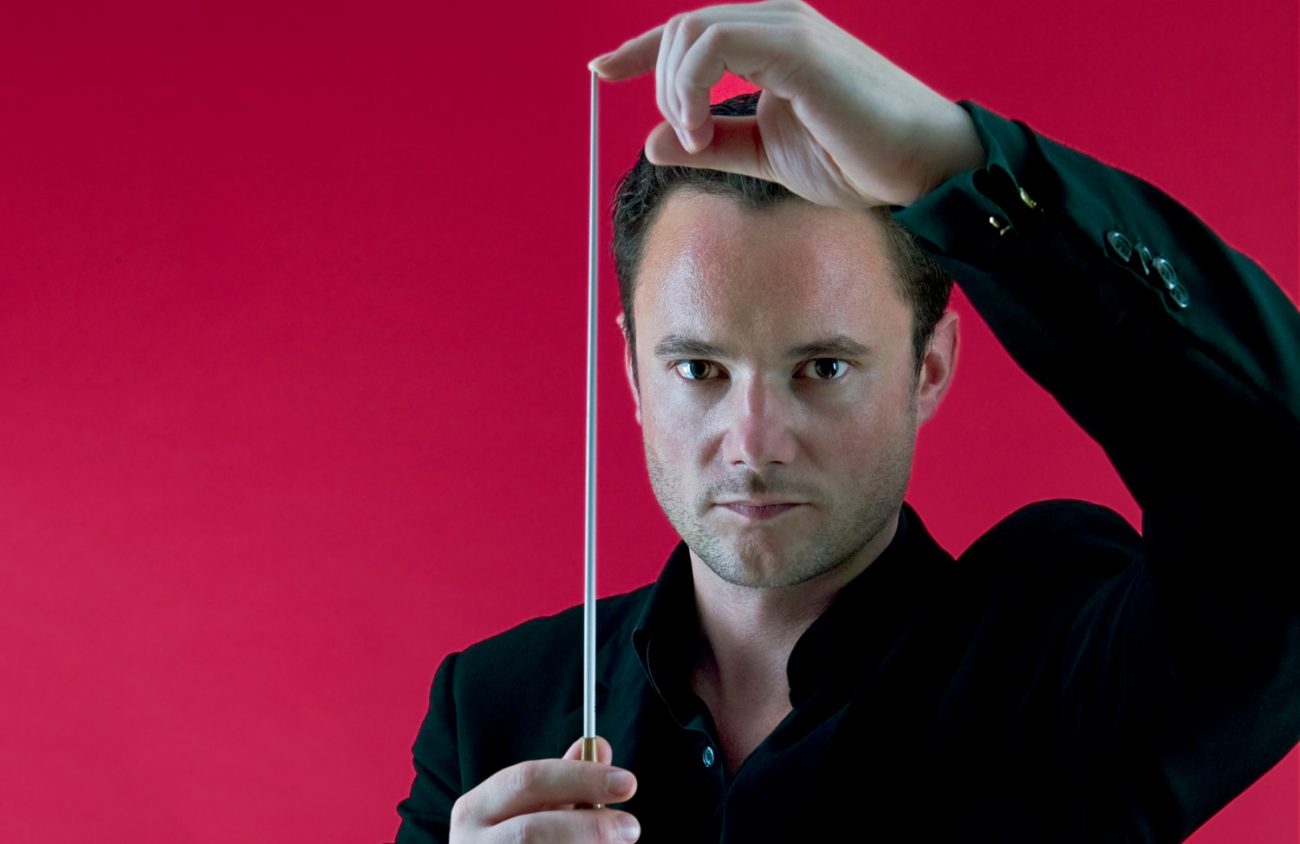
Once a jewel in Eugene’s cultural crown, the Oregon Bach Festival now looks as good as dead after last week’s unexplained — and inexplicable — firing of artistic director Matthew Halls.
The big problem is, no one — including Halls — seems to be clear on just why he was let go.
Until last week, Halls looked to be doing everything right. Audiences loved not just his music but also his Oxford-educated British charm. Musicians raved about him. Reviews were good. Ticket revenue was down, but OBF has never quite managed to pay its own way, and Halls had embarked on a clear rebuilding of the festival, making it smaller, tighter and better focused than it had been in recent years.
Halls seemed to be the perfect replacement for retired OBF founder Helmuth Rilling, the stately German eminence gris whose vision of Bach was big, loud and 19th-century Romantic. Halls brought a youthful and lighter approach to Bach, presenting smaller “historically informed” performances at the University of Oregon’s intimate Beall Concert Hall.
Then last week it all came tumbling down. In an Aug. 24 phone call from a UO official to his Toronto home, Halls was told his four-year contract with the UO, which operates the festival, was terminated. He was given, he says, no explanation. His contract was to have run through the 2020 festival.
The firing was done so quickly and in such secrecy that even the festival board of directors wasn’t consulted.
“The board was never informed of Matthew’s departure until after Matthew was told himself,” says Brad Stangeland, the board chairman. “I am still in shock.” The 17-member Board of Directors of the Friends of the Festival, as it’s formally called, is an advisory panel, but it consists largely of influential festival donors and supporters.
At a regularly scheduled board meeting Monday evening, university officials provided no explanation for the firing, two people with knowledge of the meeting said.
On Sunday, Aug. 27, right after Eugene Weekly broke the story of Halls’ firing online, the festival sent out an awkwardly worded press release titled “Oregon Bach Festival Looks to the Future” that only gets around to mentioning Halls’ departure in its second paragraph.
The release framed Halls’ sudden departure as part of a long-term strategy, eliminating the position of artistic director and instead planning to hire “guest curators” to coordinate with various parts of the university.
It also drew a lot of snark from its suggestion that future programming might involve such distant regions of the UO as the Public Policy and Management Department and the Food Studies Program.
But OBF executive director Janelle McCoy hinted in a phone interview this week that Halls may have been fired for violating unspecified university policies. “There’s a lot I can’t say,” she said. “There were personnel issues that were part of the decision-making.” Those, she said, must remain confidential.
An unconfirmed report from an OBF insider said Halls was the subject of a recent complaint to the UO that he had made an insensitive racial remark to an African-American singer at a post-concert reception during this year’s festival.
I tracked down the singer, internationally known countertenor Reginald Mobley. A long-time friend of Halls, Mobley said in a phone interview they were simply joking at the reception about a gala in which Mobley had performed in London that had been set in a “very antebellum, Gone With the Wind style.”
“Matt and I are old friends,” said Mobley, a Southerner by birth. “We always make fun of each other’s accents.” Halls, the singer said, quipped, “Do you want some grits?” in what Mobley called a “Jeff Sessions accent.”
A woman at the reception later came up to Mobley and asked whether he had been offended by Halls’ remark. “I said, ‘No,’” the singer said.
Mobley was appalled at the notion that this could be the reason Halls lost his job. “Matt is the only Brit I know who is sensitive to race issues and microaggressions,” he said. “He has done nothing but great things for the festival.”
The singer said he was, in fact, deeply offended — not by Halls’ joking but by the university’s response.
OBF spokesman Josh Gren said the incident with Mobley may or may not have factored in the decision to fire Halls. “It doesn’t appear [Mobley] was involved in the university’s decision,” Gren said. “Having said that, it would be inappropriate for the university to disclose details about a personnel matter.”
“I have no intention of returning to the festival at any time,” said Mobley, who added he’s performed here five times, starting with his first appearance in 2011.
Which brings up a bigger issue: Can the Oregon Bach Festival survive?
The news of Halls’ firing shot around the music world on Sunday when EW’s story was picked up by BBC commentator Norman Lebrecht’s influential classical music blog, Slipped Disc, under the headline “Brutal US Sacking of a British Bach Director.”
“I was a teacher and performer at this year’s OBF and loved every minute of it, but now I am afraid that Bach will now play only a minor role in future plans, if any at all,” bassist Jonathan Cable wrote on Lebrecht’s blog.
If OBF has a future, it looks much, much smaller than anything I can recall. The old OBF won a Grammy Award, performed at Hollywood Bowl and commissioned and premiered new works from such leading contemporary composers as Arvo Pärt, Krzysztof Penderecki and Osvaldo Golijov.
Now, it seems, they’ll be doing co-productions with the Food Studies Program.