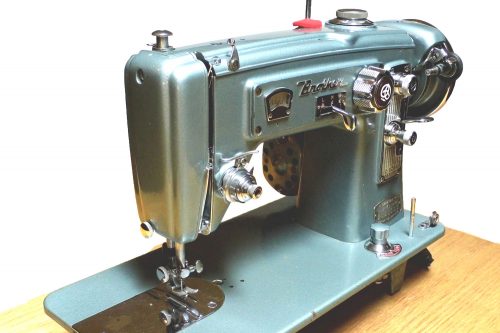
Modern sewing machines are usually made from plastic and end up in the landfill. But old-school vintage machines are made from metal, and, like the clothing they stitch, they are designed to be repaired. Stagecoach Road Vintage Sewing Machines brings its collection of restored sewing machines dating from the 1900s to 1970s for display and for sale Saturday, Nov. 18, in Eugene.
The owner and lead technician, Mike Kraemer, has been restoring these machines for more than 20 years. “We do this out of a great love for these beautiful precision machines. It’s a pleasure to work on something so beautiful and so perfectly made,” Kraemer says.
He says current machines are a monotonous stream of cheap plastic, which makes the older machines desirable for both their beauty and practical use. “We live in a culture of toss and replace,” Kraemer says. “We don’t feel that way. We’ve been rescuing the unloved heavy-metal sewing machines that were destined for the dump and bringing them back to their best.”
TR Kelly is another technician at the company. Kelly taught Kraemer the basics of sewing-machine repair in 1995, when Kraemer was working as an electronic cash register technician in Eugene. Kelly says they are the only people offering this service on the West Coast, and people travel many hours to get their sewing machines restored. “Nobody is making the basic metal sewing machine in this country,” she says.
Kelly echoes Kraemer’s thoughts on current sewing machines. “You can go to Bi-Mart and buy a machine for $200 and hope it lasts five or six years, but the older ones are meant to be worked on and last a lifetime,” she says.
“If you would compare this to anything, it’s like classic cars, but there’s a little more practicality to it because most of the people who buy these things, they want to use them,” Kelly says. Their machines are not only restored aesthetically, Kelly says, but the inside is completely cleaned out and brought up close to the standard of when they were brand new.
Stagecoach Road Vintage Sewing Machines works out of a 1947 Diamond T school bus, which used to be a mobile dental clinic before Mike Kraemer purchased it. The bus is parked on their property in Swisshome, where all of the committed employees of the company live, meaning it’s not just a job but a lifestyle.
The event they are setting up at the Valley River Inn is their biggest endeavor yet. Kelly says it’s not very practical to ship out heavy vintage machines because they can weigh up to a few hundred pounds, including their cabinets, so having them all in one place and ready to take home will be ideal. She expects there to be about 50 sewing machines for sale as well as bonus attachments and accessories to go with them.
The prices will range from a couple hundred dollars up to a $1,000, Kelly says. She adds that they hope to sell some machines, but she encourages anyone to stop by and admire the machines for their artistic value or to talk sewing with the crew.
Check out the vintage sewing machines from 10 am to 5 pm Saturday, Nov. 18, at the Valley River Inn in Eugene. FREE.