Almost everywhere he goes, veteran Robert Hendrix of Eugene brings along his longhaired Chihuahua. Although Little Man is a service dog, Hendrix often gets stopped, questioned and sometimes even harassed for having a dog with him.
“I don’t have an apparent disability, and he doesn’t look like a service dog,” Hendrix said.
This has made daily life, including public transportation use, challenging. Although Hendrix knows many Lane Transit District drivers, before boarding each bus he is asked the same two questions: Is this service animal required because of a disability? And what work or task has this animal been trained to perform?
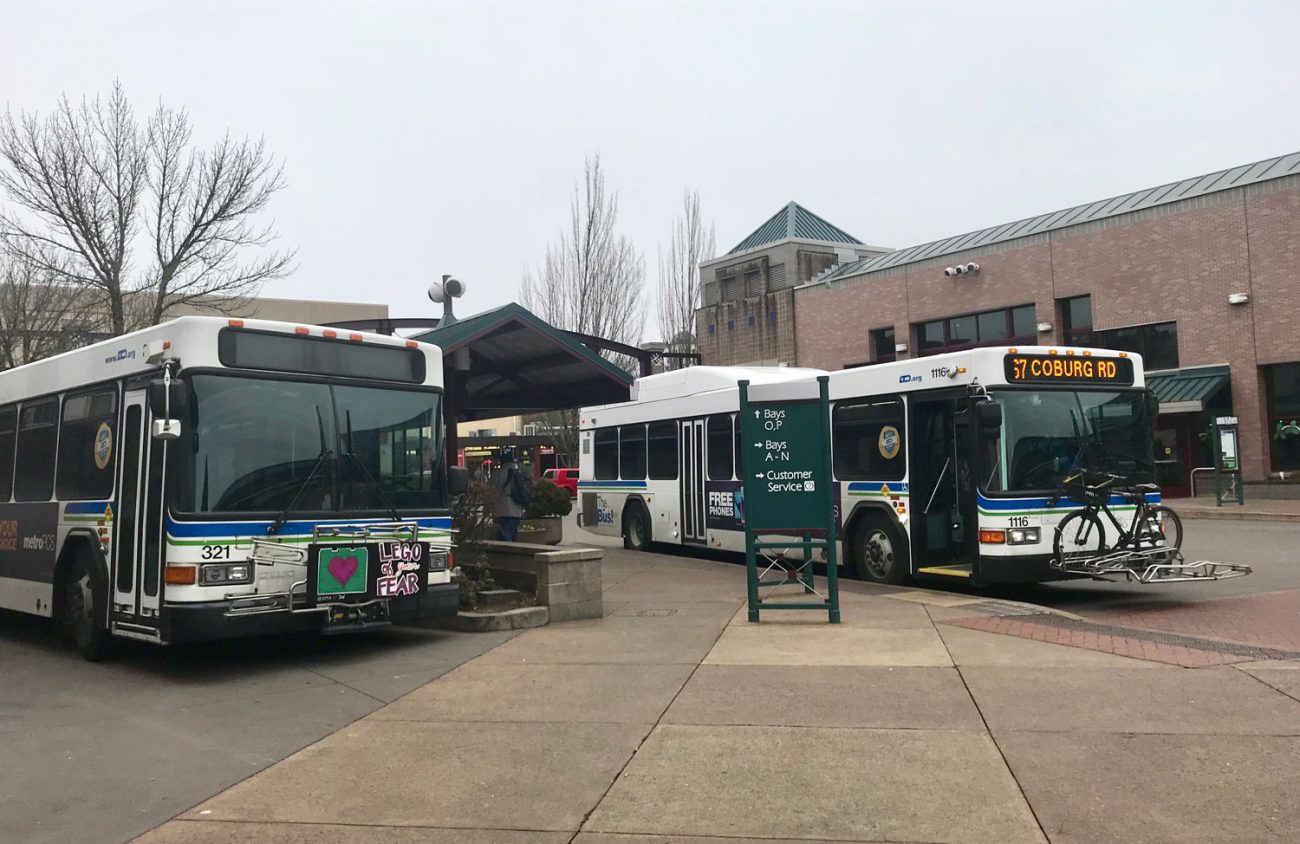
Over the past five years, LTD has witnessed increased frustration from passengers repeatedly answering service animal questions, according to Cosette Rees, LTD customer and accessible service manager. Motivated by his experiences with Little Man, Hendrix contacted Rees to find a solution.
Beginning Jan. 1, LTD will launch a voluntary pilot program to benefit passengers with service dogs. Anyone who participates will meet with LTD customer service representatives and, upon satisfactorily answering the two questions, will receive a paw-print sticker on their LTD card. The agency says the program will increase boarding speeds and eliminate time drivers spend questioning passengers with service dogs.
Some riders have to answer the questions two or three times a day if making transfers or taking multiple trips on an LTD bus. As a veteran and spokesperson for Eugene’s Veterans Advocacy Council, Hendrix worries that frequent questioning could trigger post-traumatic stress disorder episodes for veterans with service animals.
Service dogs are permitted to accompany someone with a disability anywhere the public is normally allowed. Though each state is required under federal law to permit service animals on public transit, Rees said Lane County’s pilot program is unique and hopes it can serve as an example for other transit districts.
Pets and emotional support dogs are allowed on LTD buses provided they are in a pet carrier.
The American with Disabilities Act became a law in 1990 and sought to address disability discrimination and accessibility. Back then, according to Hendrix, service dogs were primarily associated with hearing or visually impaired persons. Though no one is likely to protest a physically impaired person with a service dog, Hendrix said, those with non-apparent disabilities often face scrutiny.
Funding for the program came from an Oregon Department of Transportation grant and stipulates that a survey be conducted after the program to learn if anyone felt his rights were violated, as well as to garner general feedback on the program. LTD will then share the information with other national transportation agencies.
“LTD does a lot of unique things, so we get a lot of grants and funding because we’ve been recognized as relatively innovative in the services we provide,” says Therese Lang, LTD’s public information officer.
Passengers needing special assistance, including those with service animals, are eligible for half fare. Current cards will be expiring. All passengers with an Easy Access card will be asked to visit the LTD customer service counter to get a free replacement. This will allow LTD to ask if passengers want to be part of the service animal pilot project.
“One of the things we are trying to do is make a simpler, easier and more efficient voluntary option for our regular riders with service animals,” LTD accessible service specialist John Ahlen says.
Prior to the program’s launch, all bus operator, public safety officers and LTD employees who interact with customers will be specially trained to understand the program and that it is entirely voluntary. During training, LTD is also emphasizing that there are no breed or weight restrictions for service animals and encouraging employees to contact a supervisor if ever unsure about a situation.
“It’s a good thing for the customer, and it takes the pressure off the bus operator to have to ask the questions,” Rees says.
“People who don’t have obvious disabilities don’t want to advertise them and having a service animal is an identifier,” Lang says. “This program is a step in the right direction to make it easier for people to get on the bus without calling attention to themselves.”
Lang said she hopes the pilot program will be a model on the national level to better accommodate passengers with disabilities.
Hendrix says he appreciates how receptive LTD’s customer service department has been in accommodating accessible needs passengers. “I’m so excited about this program,” he says. “It won’t solve everything, but it will make things a lot easier for everyone.”