For one terrifying, exhilarating moment toward the end of writer/director Bong Joon Ho’s new movie, Parasite, I thought my brain broke, and for about 30 seconds afterward I was completely disoriented. I’ve had that powerful experience only a handful of times, usually under the influence of hallucinogens: I don’t know where I am, I don’t know who I am, meaning is completely escaping me, and I’d like to flee but, really, there’s no place safe to go.
That’s a great work of art right there — something that hits you raw, right in the serotonin. And it’s the best recommendation I can give this beautiful, darkly funny and emotionally crushing film. I’ve long suspected Bong was possessed of genius, ever since seeing his 2006 creature feature The Host, but this latest film confirms it. He is a modern master of filmmaking.
By now you may have heard about the ways Parasite foils all expectations — how it starts out one thing and ends another, etc., etc. — and, certainly, I went in expecting the unexpected, trying to guess in which direction the story was heading. Doesn’t matter. Still floored. Ignore the talk.
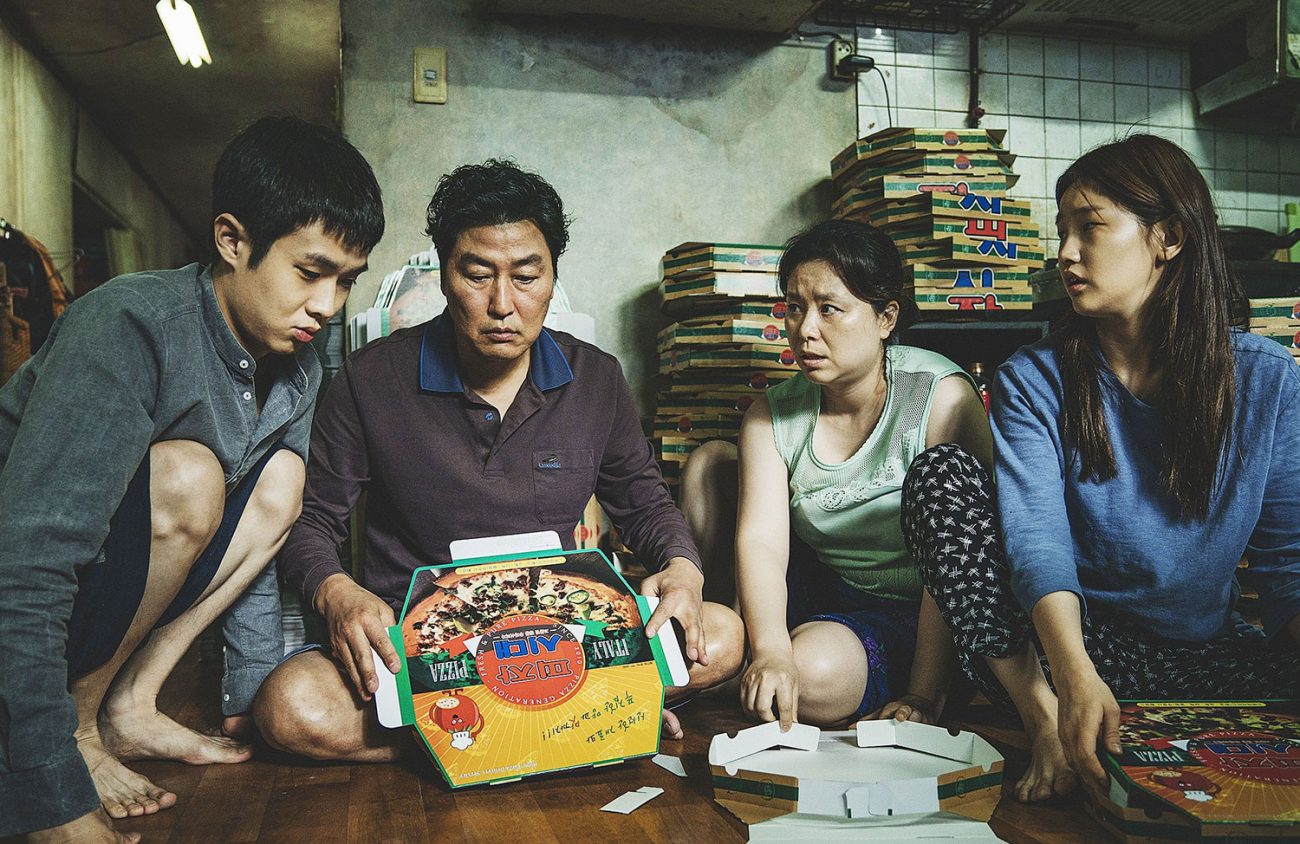
Ignore my talking, too, and just see the thing. But if you’re still curious, I can tell you in a general way that the film is about a poor Korean family, the Kims, all of whom slowly, deviously infiltrate the home of the wealthy Park family. The first half of the film is essentially one long grift, as each member of the Kim family fabricates an identity that gets them hired on as help.
This, in itself, is premise enough, but Parasite being a Bong movie, we’re only just beginning. There is, of course, a strong element of class politics to the story, though hardly in a doctrinaire way. The Kims, for all their poverty, are not particularly nice people, though neither are they altogether bad. Avoiding easy romanticism of the lower classes, Bong paints the family as a clan of intelligent, scheming people driven — partly by circumstances, but also by greed — to live by their wits.
A master of mythic compression, Bong elevates Parasite to the level of parable, which largely explains the “unexplainable” in his films — their ability to navigate vast realms of meaning and to crisscross genre elements with the easy economy of a fairy tale, all the while fulfilling all the requisites of cinematic entertainment: slapstick, dark comedy, suspense, horror and devastating moral gravity.
The cast is across-the-board fantastic, especially the great Kang-ho Song as the wily, adrift father Kim Ki-taek, and Yeo-jeong Jo as Park Yeon-kyo, the rich mom who is gullible and “simple” in a not-so-simple way. The movie, however, truly belongs to So-dam Park, who plays the Kims’ daughter Ki-jung, the ambivalent moral center of a film in which modern morality — and the world itself — is put on blast.
It’s odd, really, and bit baffling: Nothing I could say here could possibly capture the after effects I’ve experienced from watching Parasite, which mesmerizes and delights and then terrifies to such an extent that its apocalyptic elements only seep in long after the fact. Bong has pulled off the seemingly impossible, creating a film of breathtaking grandeur whose sum is even greater than the whole of its parts. (Broadway Metro, Cinemark 17)