Eugene School District 4J School District Superintendent Cydney Vandercar started off her update to the school board on Aug. 19 with a song. For community members tuning in, the meeting was strictly audio. The interim superintendent opted for a spoken-word rendition of the tune by Hannah Grace called “Praise You” she said she heard on an Advil commercial because in school she was always better at math than at singing.
“We’ve come a long, long way together; through the hard times and the good; I have to celebrate you; I have to praise you like I should,” she said, dedicating it to the educators, administrators and everyone else who had helped make the shift to online learning since COVID-19.
The three K-12 school districts that make up the Eugene-Springfield area released some of their plans for the fall in the past two weeks, with all three opting for a “hybrid” model that will keep classes online until “public health conditions allow” for students and teachers to meet in person, according to documents provided to the board by Vandercar. A survey given to parents by 4J showed that a vast majority of households want to see classes go to hybrid learning by the end of the academic year.
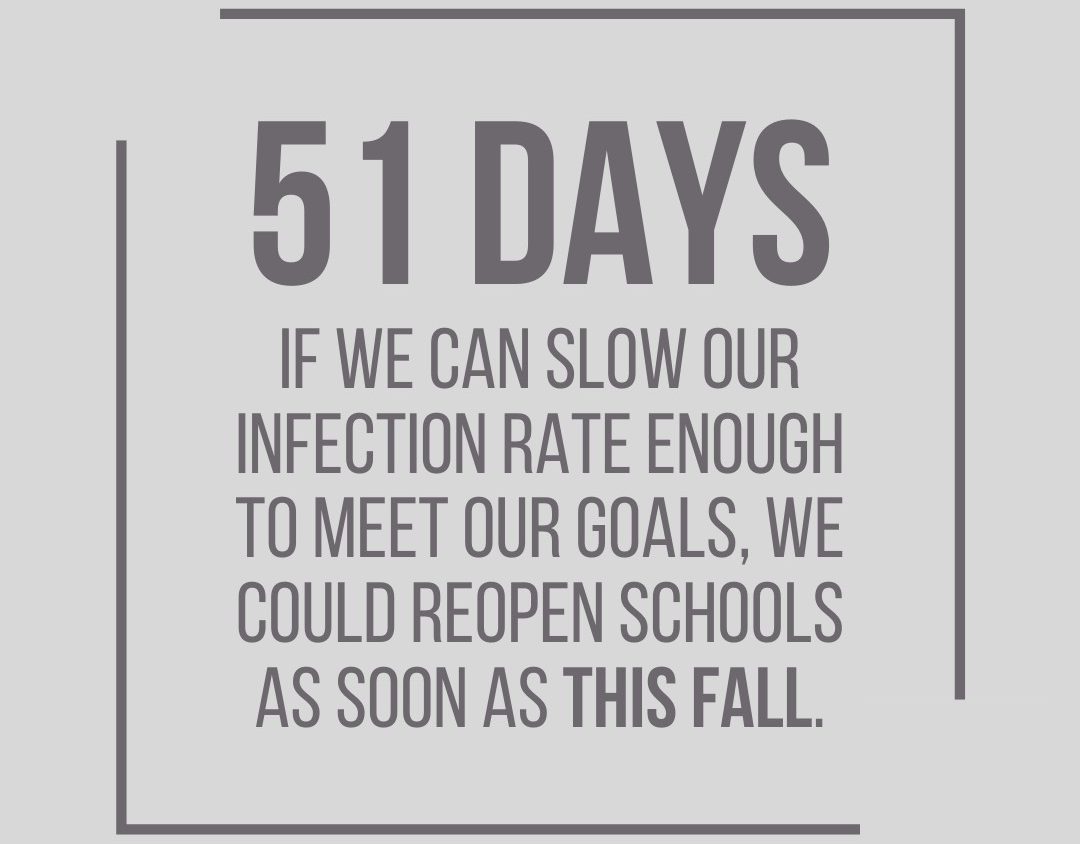
Gov. Kate Brown said in an Aug. 21 press briefing that Oregon’s daily cases need to make it down to 60 cases for schools to reopen for in-person instruction. Oregon is currently at about 300 cases per day, she said.
“Opening classrooms for in-class learning, including child care and K-12, is my priority,” Brown said. She added that new restrictions will be put in place if the current trajectory does not improve by the end of the month.
All three school districts — 4J, Bethel and Springfield — will use a Comprehensive Distance Learning (CDL) model for the first term of school until Lane County meets the local and statewide conditions for reopening. The eventual hybrid model that districts hope to reach sometime in the academic year would use a cohort model with 15 or fewer students and teachers going to in-person classes, the cohorts would alternate weekly.
Those cohorts would require 36-square-feet per person with furniture being removed from classrooms to allow for more room and all furniture with fabric would also be removed. Personal items would be restricted inside the schools because if a member of the cohort got the virus, other members in the cohort would likely have to quarantine for a 14-day period, according to the Springfield School District.
During the Aug. 19 4J meeting, the board approved an agreement with Oregon School Employees Association that would allow classified employees to telework for significant portions of the week.
Vandercar said 4J sent out a survey about the upcoming school year to families in the district on Aug. 18 around 10 pm and received 4,500 responses by the school board meeting at 7 pm the next day. Further plans for reopening will be made based on the responses coming in from this survey.
So far, the survey’s results show that 76 percent of respondents wanted to eventually move to hybrid learning after a term of CDL while 17 percent wanted CDL throughout the year. Less than 6 percent said they want to move to Eugene Online Academy, a program with online courses not taught by the student’s area school and is instead supplemented by in-person tutoring and other resources when appropriate.
If in-person instruction were to resume, 13.3 percent of respondents said they would need a bus ride to school. Parents responded to the survey that they would require childcare with 10.6 percent needing traditional childcare and 10.1 percent being open to sharing childcare duties with another family.
Toward the end of the 4J meeting, the board brought up the highest ever recorded transfer rates out of the district due to the pandemic and a switch to remote learning. The district has never hit their cap point of 3 percent transferring to other schools in its history, but it is coming closer than ever, which could mean the denial of any future transfers.