Fire-burned forest landscapes are not the first hiking destinations that jump to mind for many people.
Forest fires tend to elicit feelings of pain and loss, especially after a year like 2020 when so many hit so close to home here in western Oregon on top of COVID-19. It can be hard to visualize some of our favorite places, like the Delta Old Growth Grove or Opal Creek, ever being the same.
But, believe it or not, all the forested trails, campgrounds and riversides you know as lush, mossy sanctuaries have burned at one time or another in the past.
Forests recovering naturally from burns are some of the most interesting and beautiful to visit. Some signs of past fires are quite subtle.
For example, along the popular Brice and Goodman creek trails, you might see that one side of massive 5-foot diameter Douglas-fir trees are blackened to 20 feet off the ground — remnants from a past fire that these fire-adapted trees survived. Other fire effects are more noticeable along the trails.
A few favorites where you can see natural fire recovery at work — including fire-burned snags, wildflowers and thriving young trees include:
Bunchgrass Ridge Trail: Thirty years after the Warner Creek fire, this trail east of Oakridge showcases summer wildflowers, great views as well as a beautiful mix of live and dead old-growth trees.
North Waldo Shoreline Trail: High elevation and a hot fire in 1996 left a huge scar on the north side of Waldo Lake. Today, fire recovery is evident, views are gorgeous and plant life is thriving.
Middle Fork Willamette Trail at Chuckle Springs: The Tumblebug Fire of 2009 changed the lush forest along this stretch of the Middle Fork Willamette Trail, but left behind a huge variety of fire impacts from low to severe to explore.
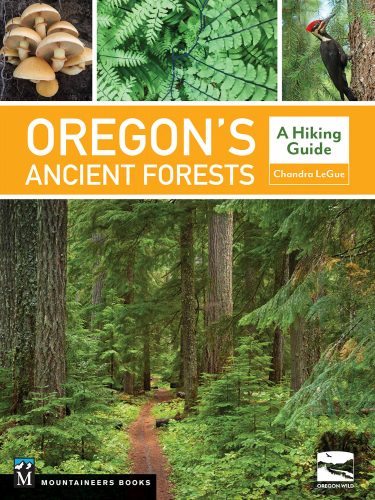
Chandra LeGue of Eugene is the author of the book Oregon’s Ancient Forest: A hiking guide and is the western Oregon field coordinator for Oregon Wild.
A Note From the Publisher

Dear Readers,
The last two years have been some of the hardest in Eugene Weekly’s 43 years. There were moments when keeping the paper alive felt uncertain. And yet, here we are — still publishing, still investigating, still showing up every week.
That’s because of you!
Not just because of financial support (though that matters enormously), but because of the emails, notes, conversations, encouragement and ideas you shared along the way. You reminded us why this paper exists and who it’s for.
Listening to readers has always been at the heart of Eugene Weekly. This year, that meant launching our popular weekly Activist Alert column, after many of you told us there was no single, reliable place to find information about rallies, meetings and ways to get involved. You asked. We responded.
We’ve also continued to deepen the coverage that sets Eugene Weekly apart, including our in-depth reporting on local real estate development through Bricks & Mortar — digging into what’s being built, who’s behind it and how those decisions shape our community.
And, of course, we’ve continued to bring you the stories and features many of you depend on: investigations and local government reporting, arts and culture coverage, sudoku and crossword puzzles, Savage Love, and our extensive community events calendar. We feature award-winning stories by University of Oregon student reporters getting real world journalism experience. All free. In print and online.
None of this happens by accident. It happens because readers step up and say: this matters.
As we head into a new year, please consider supporting Eugene Weekly if you’re able. Every dollar helps keep us digging, questioning, celebrating — and yes, occasionally annoying exactly the right people. We consider that a public service.
Thank you for standing with us!

Publisher
Eugene Weekly
P.S. If you’d like to talk about supporting EW, I’d love to hear from you!
jody@eugeneweekly.com
(541) 484-0519