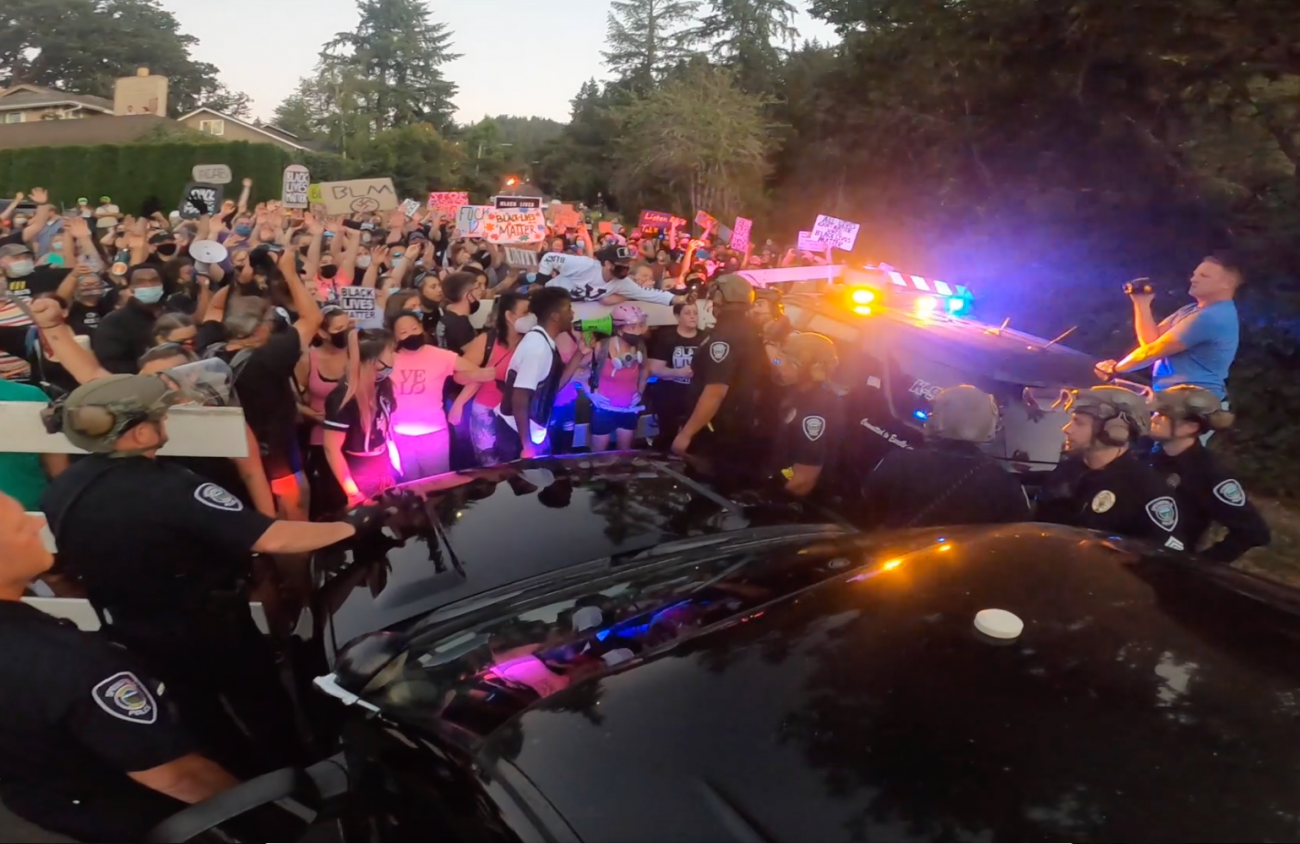
It’s been more than a year since the July 29, 2020, Black Lives Matter-related protest in Springfield’s Thurston neighborhood that was sparked by a noose decoration hanging in a resident’s yard. Now an amended federal lawsuit alleges that the Springfield Police Department unlawfully spied on protesters and collected information about their political activity, as well as their family, and infiltrated the event.
The Civil Liberties Defense Center, which represents four Black Unity protesters in a lawsuit against the city of Springfield and its police department, makes the allegations in the federal lawsuit amendment.
The city of Springfield declined to comment on the new allegations.
“Political surveillance of progressive activists is nothing new. And even though spying is a frequently used dirty and illegal trick, it usually goes unpunished because activists either aren’t aware they are being so heavily monitored or they don’t know what they can do to stop the cops’ activities,” CLDC Executive Director Lauren Regan, who’s also a staff attorney, says in a press release. “We hope this lawsuit will help activists in Oregon, and across the country, realize there are legal tools available to them to try and stop this pervasive practice by law enforcement.”
According to an Aug. 19 press release from the CLDC, law enforcement is prohibited under state law from spying on individuals who are not under criminal investigation. The CLDC added in the press release that SPD itself cited this Oregon statute at a Feb. 4 Police Advisory Committee meeting on why police didn’t monitor right-wing protesters.
In the amended federal filing, CLDC lists four examples of SPD violating ORS 181A.250. In one instance, SPD Officer (and defendant) Joseph Burke interacted with a Black Unity member and told the protester that Springfield employees were collecting information about the group’s members.
CLDC says in the amended filing that before SPD declared the July 29 Thurston protest an unlawful gathering, city officials were taking video and audio recordings without any reasonable suspicion that protesters were engaging in criminal conduct. And several city officials — not named in the lawsuit — were recording license plates.
SPD detectives Kody Lane and Robert Weaver infiltrated the Black Unity protest, pretending to be supporters of the march. The detectives then collected information about protesters’ social and political views, associations, activities unrelated to an official investigation of criminal conduct.
CLDC and four Black Unity protesters initially filed a lawsuit against the city of Springfield, SPD and several police officers on March 8. The filing alleged that SPD engaged in aggressive and racist tactics against protesters, and that police officers violated protesters’ rights under the First, Fourth and 14th Amendments.
Since the July 29 Black Unity in Thurston, the city of Springfield paid $31,250 to an external investigator to review SPD’s response. In the report, the investigator provided 38 recommendations for the police department, including calls for increased internal investigations on use of force, a need for better on-the-ground commanding and transparency. And Chief Rick Lewis retired from SPD June 1.
In addition to awarding economic damages to the Black Unity protesters who filed the suit, the plaintiffs are also demanding that the city of Springfield develop a five-year plan to reform SPD, mandate community policing reforms, reform use of force policies and provide plaintiffs with all records that SPD gathered on them to be destroyed.
Read the amended filing here.