One of my favorite films of this past year was Paul Thomas Anderson’s Licorice Pizza, an endearing vision of young, star-crossed love that is so sentimental, stylized and saturated in uber-nostalgia for 1970s California as to be nearly narcotic in its effect.
It’s interesting to me, then, that another of my recent favorite films should present itself in many regards as the polar reversal of Licorice Pizza: gritty, downbeat, aggressively unsentimental and drenched in desperation and bad behavior.
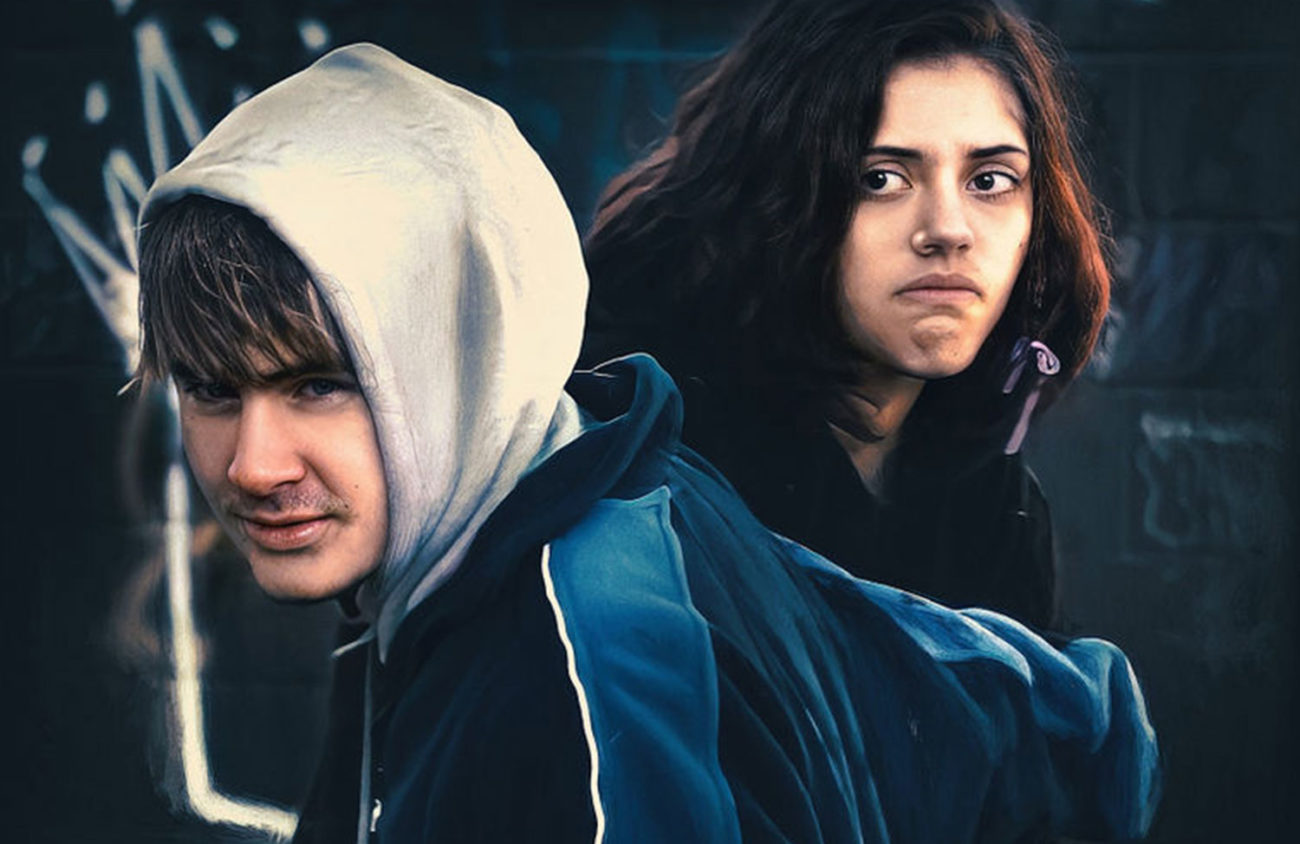
Maxie, written and directed by Eugene filmmaker Jarrett Bryant, tells the story of Maxie (Miles Dixon) and Sidney (Liv Tavernier), a pair of strung-out kids slouching toward recovery as they struggle to survive, homeless and broke, on the streets of Oregon’s most vaunted liberal city.
Shot in and around Eugene and Springfield during the early stages of the pandemic, and cast almost exclusively with local actors, Maxie is a compelling work of contemporary cinema verite — a street-level view of homeless youth and drug addiction that draws its significant dramatic force from the unadorned realities of a futureless existence.
Yes, there is the buzzing thrill of seeing familiar locations come to life on the big screen, from our downtown bus station to Alton Baker Park to the darker alleyways where shit sometimes goes haywire.
But these pleasures, for me, quickly became incidental in the face of Bryant’s multiple accomplishments as a filmmaker — which extend to a screenplay that does rare justice in capturing the complex humanity of a segment of the population that, for all our focus on social concern and media speculation, is routinely maligned and misunderstood.
Maxie, a privileged kid from south Eugene, and Sidney, a teenage girl raised in a Springfield trailer park, are portrayed with an authenticity that is impressively shorn of judgment, avoiding any easy assessments of good versus bad. We see them in the raw, nerve endings exposed, with every scab, twitch and sneer on full display.
Whether trying to score, scaring up the money for a motel room, washing their clothes at the laundromat or testing the limits of their loyalty to each other, Maxie and Sidney are revealed in all their fear and uncertainty, as the consequences of their actions pile up behind them. Demons real and imagined nip constantly at their heels.
The atmosphere of the film is claustrophobic and haunted, though not without its moments of humor and levity. The tension of the film ratchets up in the second half, as Sidney’s brother Nathan (Malakhai Schnell) hatches a plot against Maxie in a dire bid for revenge and liberation from a street debt.
And yet, for all this social and personal urgency, Bryant’s film seems decidedly unconcerned with churning out another tragic Syd-and-Nancy set piece or extra-curricular morality play; rather than making this or that particular point, Maxie regularly foils our expectations by hewing close to its subject matter, showing us the impulsive decisions, outsized emotions and caged fatality of addicted kids caught at ground zero of a burgeoning social and economic catastrophe.
In other words, like it or not, this is the hard truth of our contemporary scene, and the difficulty we have in looking at it with any honesty or clarity seems inversely proportional to the liberties we take in expressing passionate opinions about it, opinions based largely in fear rather than fact. Maxie, in this regard, is a strong corrective to the easy pieties, liberal or conservative, with which we comfort ourselves about the ills besetting us.
Abortion, prostitution, gun violence, death, drug abuse, institutional hypocrisy, family dysfunction, issues of class and chronic poverty — this is tough stuff, but Bryant navigates it deftly, without exploitation or, worse, undue sentimentality. Moreover, he does so with an artistry and naturalism that steer clear of off-putting political cant.
Because, at its core, this is a movie about two messed-up, confused, big-hearted kids who, despite it all, are struggling with universal issues of love, identity and belonging, and trying to make it work against almost impossible odds. Maxie wouldn’t work nearly as well as it does without the strength of its narrative, which gains momentum as it heads toward a truly suspenseful and surprising final act.
Much like Gus Van Sant’s My Own Private Idaho and Larry Clark’s Kids (two standout films from the ’90s about youth on the streets), Maxie distinguishes itself by really listening to and really seeing its subjects, for lack of a better term: how they actually talk, what they actually feel, their justifications, their confusions. Such witnessing bestows a kind of dignity, the dignity of our attention, which is an act of grace, however ragged.
Maxie opens Friday, April 29, at Broadway Metro; BroadwayMetro.com.