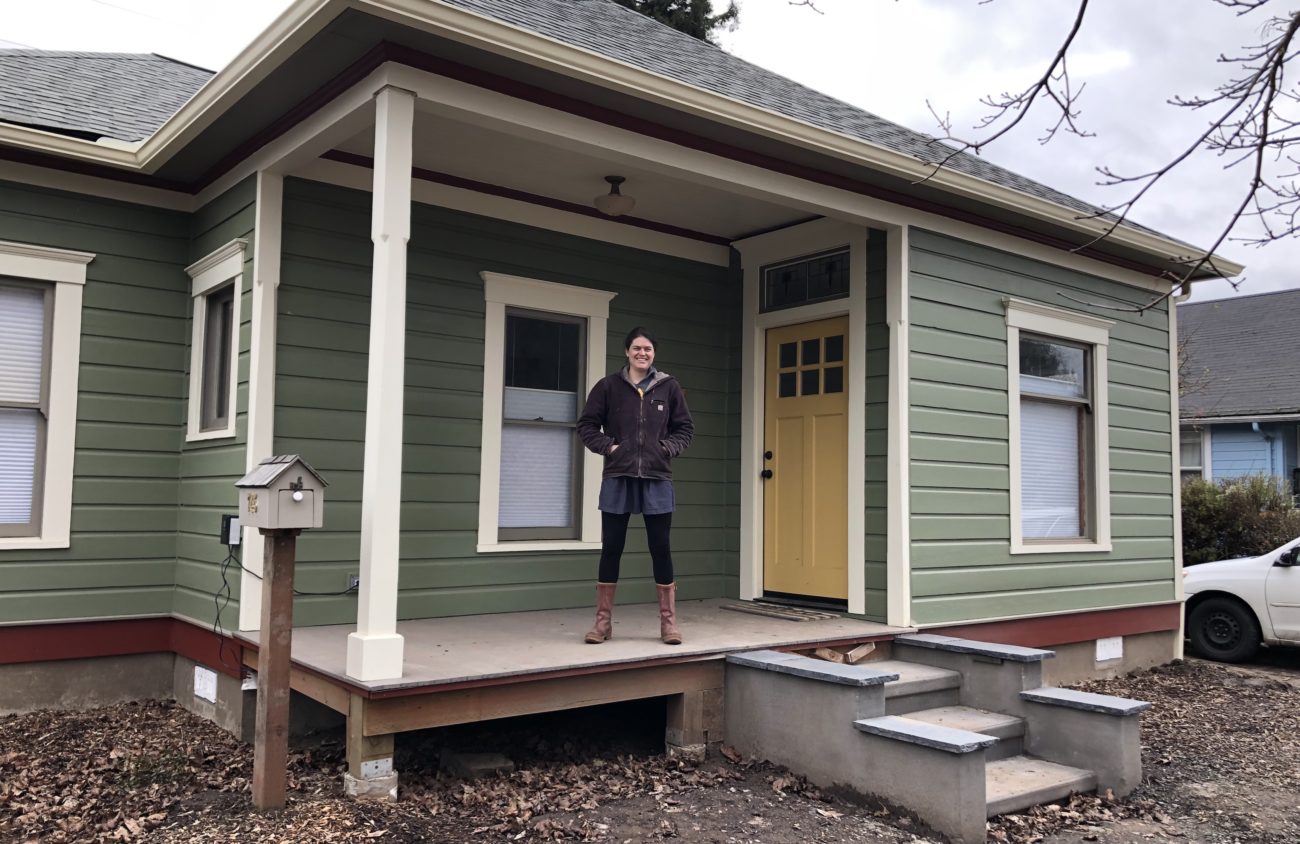
When Selah Meyer first bought her home in Springfield’s Washburne Historic District in January 2020, she walked through it with her parents and didn’t know what she was going to do. Her father, John Meyer, said the house had “good bones,” but her mother joked that she could always burn it down and build something new.
With the help from family and friends, Meyer stripped the house to its bones and rebuilt it, preserving the house to early 1900s aesthetics.
“The idea was that nothing could be just painted over,” Meyer says. “Everything had to be taken down, refinished, sanded, primed — whatever — and then reinstalled.”
After 21 months of renovation, Meyer says she feels like she’s finished with the building. Her work hasn’t gone unnoticed. The city of Springfield recognized Meyer’s efforts by awarding her its first-ever Preservation Excellence Award at a Sept. 21 City Council meeting.
Meyer bought the home in January 2020 for $120,000, and she would spend another $85,000 to renovate the home, as well as countless hours and enlisting help from family and friends.
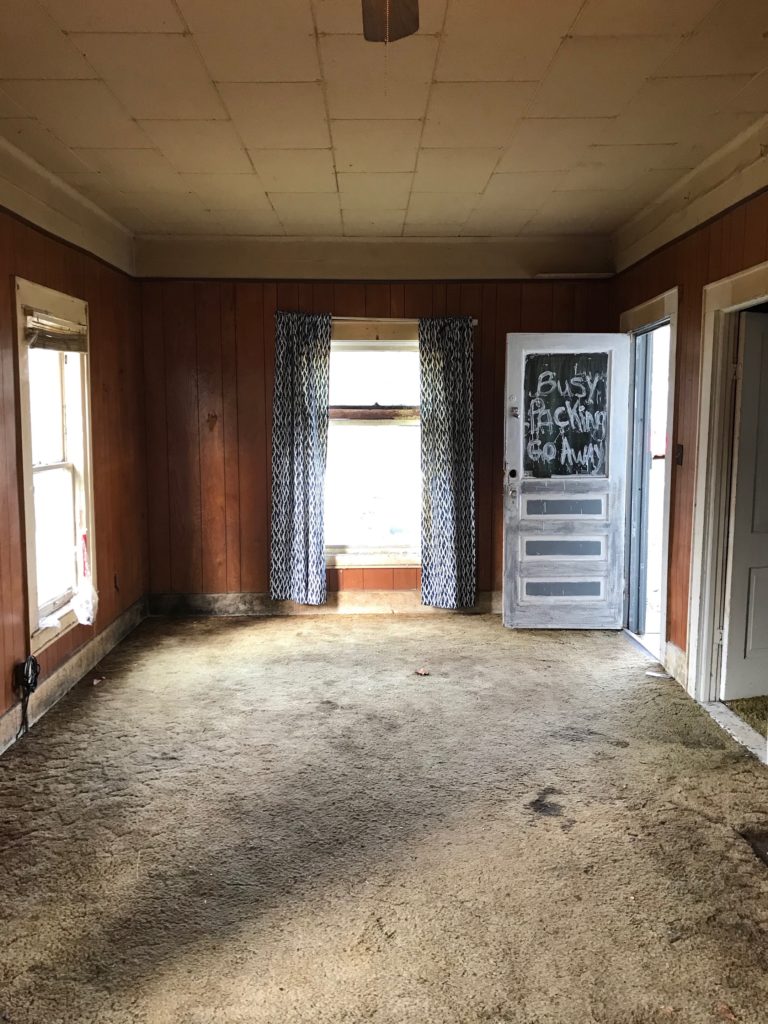
Shortly after Meyer bought the home — and ruled out her mom’s suggestion to burn it down — she says the plan was to make it last for another 100 years and preserve the house’s historic details. She says that her father remarked at the time that she had basically bought it for its parts. She says that she made sure to reuse the wood.
“All these materials were milled and cut down approximately 100 years ago. They’re all better quality than what you can buy now — they don’t warp, they don’t twist, they’re not cut,” she says. “And they’re beautiful because they’ve been aging for 100 years.”
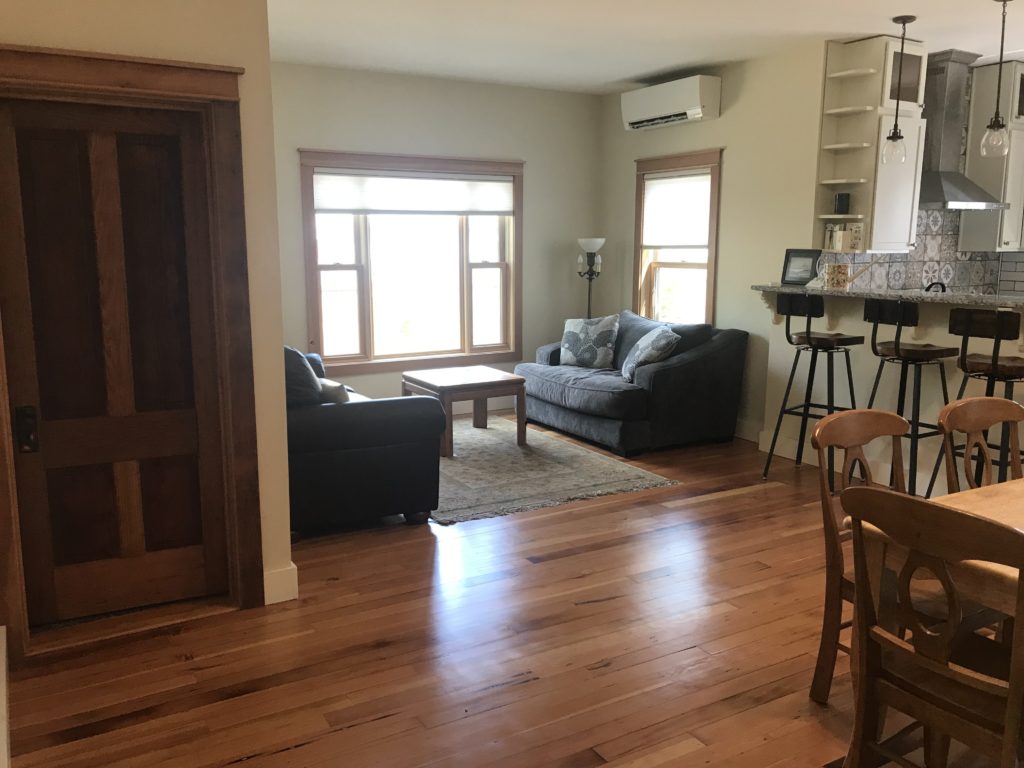
During the first couple months of owning the house, Meyer says she stripped the interior down to its studs, then had a friend lift the house and put it on a new foundation. Over the next 22 months, among a long list of projects, she removed the whole floor, down to its joists, and then relaid the floor using some of the reclaimed materials.
While Meyer worked on the house, she still went to work for her full time job as an emergency room and intensive care unit nurse, sometimes staying with friends or living in a camper outside of her house. She says her shifts were six days on and eight days off. But those days off were then spent on the house, finding building materials, putting on a roof and researching details from the early 1900s.
Meyer says her parents have experience living in and renovating old houses from the late 1800s, which offered her some ideas. And John had salvaged an old beadboard, a decorative panel of vertical wood planks, from a 1900s-era home in Seaside, which Meyer installed in her house. “It gives just a little bit of flair and a little bit of that Queen Anne [architecture] look to an otherwise pretty traditional mill style home,” she adds.
To get ideas for deciding what to install in her home to match the 1900s aesthetics, she says she watched a lot of TV shows and old movies. Even brief on-location scenes from movies set in Chicago jump-started her creativity in what sort of faucet or shutters she should install. “You can learn a lot from one or two shots in a movie,” she says.
To find vintage and antique materials to go along with her house, Meyer traveled to Hippo Hardware and Old Portland Hardware and Architectural in Portland and Vintage Hardware in Astoria.
Meyer says she’s finished with the larger renovation tasks, and that she’s happy she was able to work on it with her father, John. “But I was very happy when it was over and I could just sit back and enjoy it,” she says.