What makes a movie a cult movie?
Certainly, the modern tendency to hail a film’s “cult” status immediately upon release belies one of the essential ingredients of cultishness, which is time, and by extension, devotion and love. A small but passionate audience — of oddballs, fetishists, specialists and nerds — adheres itself over time to a particular film, whispering its title among themselves like a shibboleth, an identifying password that says as much about its fans as the movie itself. Films gain a cult following almost by accident, it would seem, over the years.
“Dude, you haven’t seen Birdemic? Oh, you’re in for a treat. Do you still own a DVD player?”
Assuming, then, that cultishness is not something that necessarily and automatically inheres in a movie, there are yet some identifying characteristics discernable in so-called cult films, many of them paradoxical and none of which need to occur in tandem: “bad” acting, either in the form of melodramatic overreach or a complete lack of affect; a narrative bombast that looks simultaneously like a celebration of Hollywood grandeur and its mockery; a schizophrenic mash-up of genre elements; an outrageous level of cinematic ambition coupled with a low level of technical or financial means and/or ability; and an atmosphere of bewilderment and awe that signals, all at once, a winking self-awareness of the film’s limitations, or an utter obliviousness to them.
The one indispensable mark of all cult films, however, and the one that subsumes all other considerations, is something that can never be imitated, replicated or subjected to a check-list, and that is earnestness. From The Room to Pink Flamingos to Plan 9 from Outer Space, true cult status derives, ultimately, from the filmmakers’ stubborn, defiant, monomaniacal belief in their vision, against all odds and to hell with the rest. The results of such unhindered passion are akin to watching a drunk dance at a wedding — we are aghast and fascinated, affirmed and relieved, inspired and let off the hook, both for our dreams and our inability to achieve them.
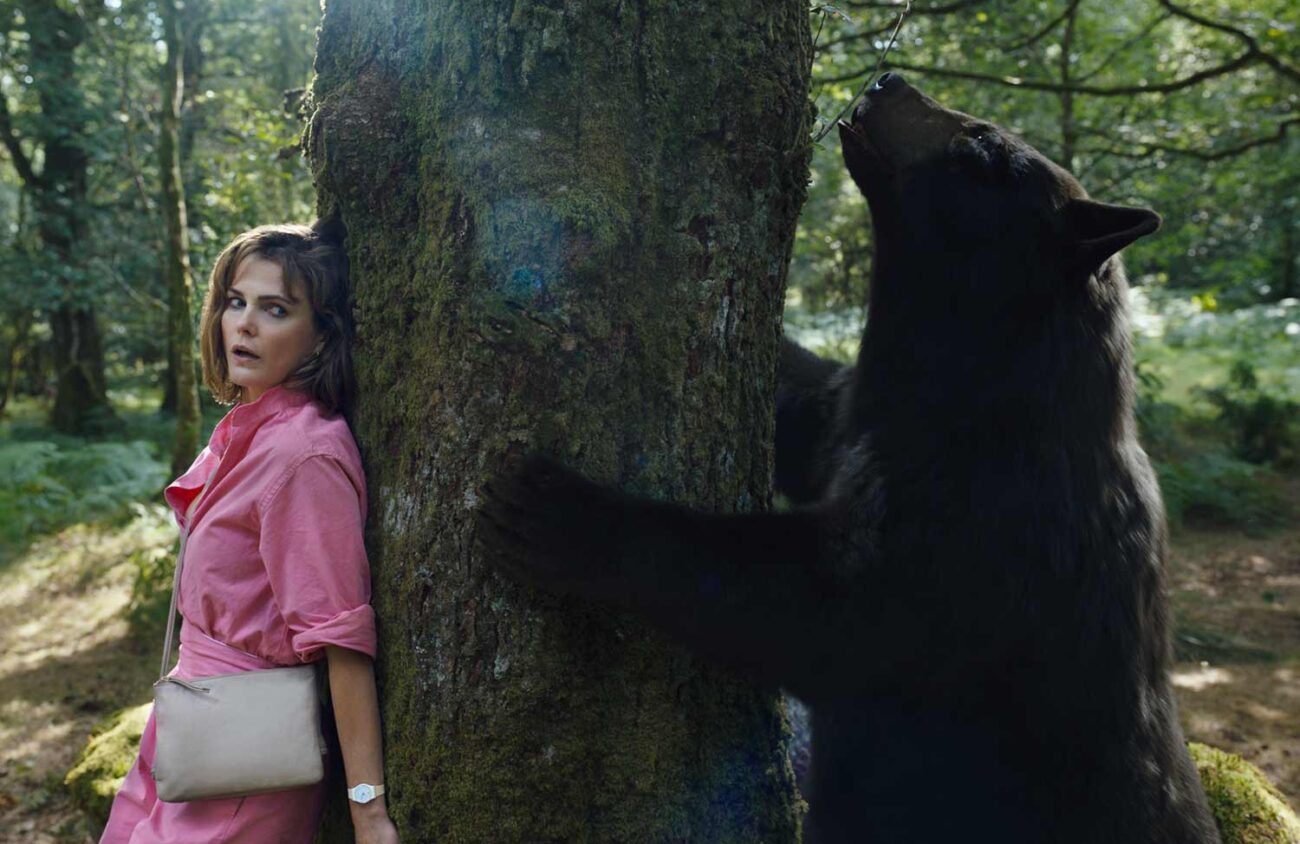
Which brings me, at last, to Cocaine Bear, a film that virtually roars for compulsory cult status. It almost gets there. Directed by Elizabeth Banks, the film is based loosely (very, very loosely) on the 1985 true story of a black bear in Georgia’s Chattahoochee National Forest that hoovered up millions of dollars of cocaine jettisoned by a drug-running plane right before it crashed. In real life, the poor bear died, and Banks has indicated that the movie could be considered a kind of redemption for the bear, whose fictionalized counterpart goes on a Scarface-level rampage in search of yet more blow. Say hello to my big furry friend!
To keep this delicious but rather limited premise in motion, a series of subplots are employed, including a lovelorn and belligerent park ranger (Margo Martindale) and her would-be swain (Jesse Tyler Ferguson); a single mother (Keri Russel) searching the forest for her daughter (Brooklynn Prince); and a brutal goodfella (the late Ray Liotta) going after his lost stash. The overall tone of the proceedings, then, is a combination of horror-comedy and chase film, with a cruel undertone that favors the bear while treating its human obstacles as largely expendable — props for ever-crueler mangling, dismemberment and disembowelment.
That, of course, is not the problem; cartoon violence is cartoon violence, and an abiding misanthropy opens the way for a series of screenwriter Jimmy Warden’s one-liners and jokes, which are often sharp enough but fall oddly flat, eliciting little from the audience but a smug chuckle that seemed to say, “Ah, yes, this is the kind of film this is, I get it.”
And this is part of what holds the film back. It is bawdy, outrageous and gruesome, but also strangely chaste, as though it is so self-consciously aware of its desired cultishness that it wears it like a costume it will take off at the end of the weekend, before it goes back to its respectable day job. It lacks the earnestness of its transgressions and absurdities, which themselves come across as a series of requisite marks to hit for a passing grade.
Perhaps this is unfair. I did not not enjoy the film. It mostly held my attention, at least until the very end when, ironically, I got a bit sleepy with all that coke flying around. Many of the action sequences were well done, as were the special effects — and I will resist dinging the film for having a decent budget. And it was bittersweet to see Liotta, in an inverted reprise of his career-making Goodfellas role, in what would become his final appearance on screen.
My issue, I think, is that the movie refuses to commit to its once-in-a-lifetime premise, either by going all-in on the horror (and thereby creating true comedy), or jumping the shark into sheer ridiculousness, with the bear trading its cubs for a bump and making 4 am phone calls promising “this will be the last time, I swear.” Earnestness leads to outrageous risks and reckless metaphors, and Cocaine Bear, in the end, is just too bearish. It bogarts its own stash, and that never makes for a good party.
Cocaine Bear is showing at Broadway Metro, Cinemark 17 and Regal Valley River Center.