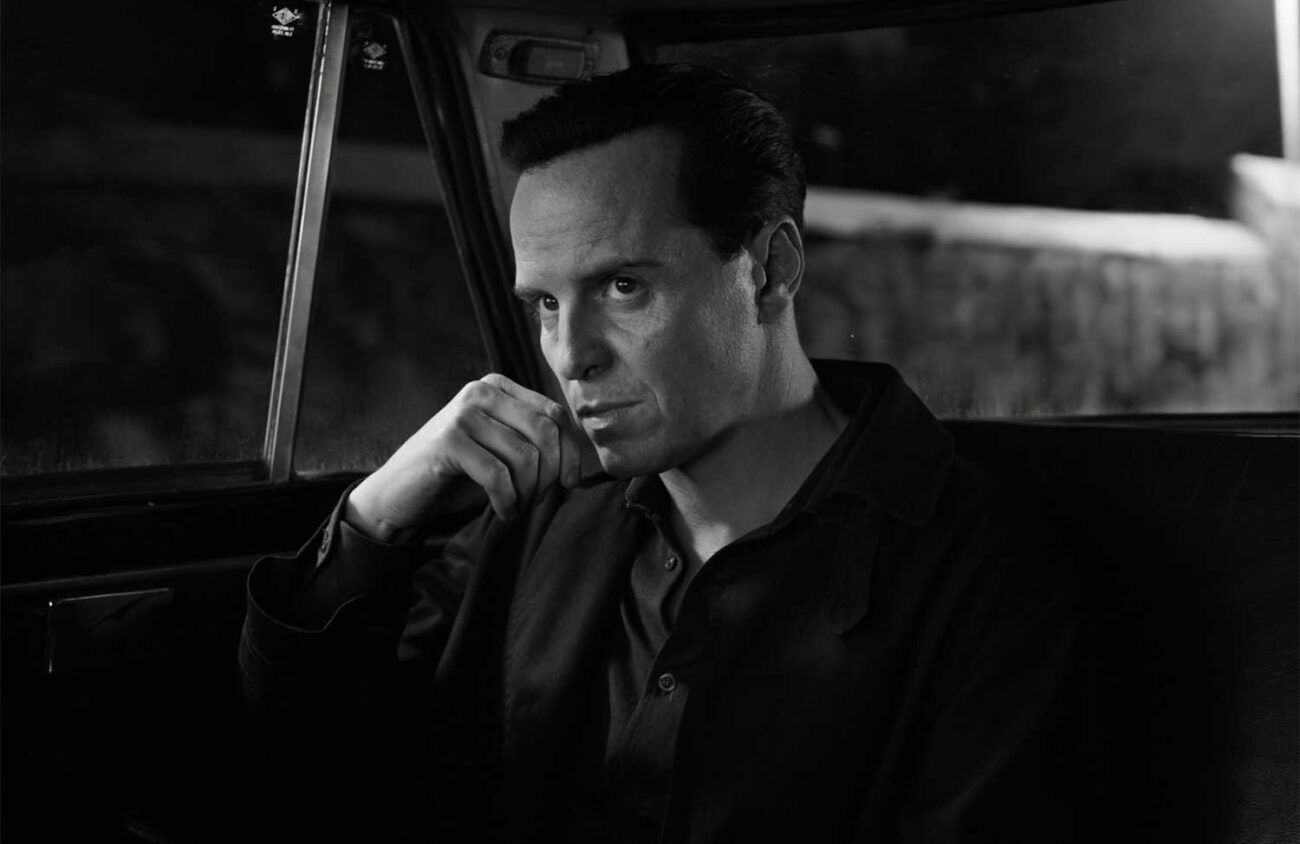
Patricia Highsmith’s 1955 novel The Talented Mr. Ripley has been made into a movie twice, the more recent attempt, in 1999, featuring Matt Damon in the title role. Watchable as they both are, neither film adaptation comes as close to capturing Highsmith’s dark, unsettling story of a young conman who turns to casual murder as does the new Netflix series Ripley, an eight-parter that debuted April 4.
First off, Andrew Scott is deliciously creepy as Ripley, so much so my wife almost couldn’t watch it after a couple episodes (though she couldn’t look away, either). What keeps even the easily unnerved from bailing is that cinematographer Robert Elswit shot the entire series in black and white so luscious that every scene looks like an art masterpiece. The sheer photographic beauty traps you in the show’s unrelenting, claustrophobic suspense. “I know it is great and gorgeous, but the story makes me so unnerved I cannot watch it,” New York Magazine senior art critic Jerry Saltz posted on Instagram. “Watched the first episode jumping out of my skin — yelling at the TV.”
Set largely in Rome, this Ripley sticks close to Highsmith’s story while alluding to the deep shadows of film noir classics of the 1950s and ’60s. It adds, as a character, Baroque painter Caravaggio, a murderer himself, who pretty much invented that noir look with his dramatically lit scenes of the dark side of Catholic iconography and the underbelly of Roman nightlife. Also added: a scene-stealing Maine Coon house cat named Lucio, as in Lucifer, who makes repeat appearances at key moments in the drama. A must-see.
A Note From the Publisher

Dear Readers,
The last two years have been some of the hardest in Eugene Weekly’s 43 years. There were moments when keeping the paper alive felt uncertain. And yet, here we are — still publishing, still investigating, still showing up every week.
That’s because of you!
Not just because of financial support (though that matters enormously), but because of the emails, notes, conversations, encouragement and ideas you shared along the way. You reminded us why this paper exists and who it’s for.
Listening to readers has always been at the heart of Eugene Weekly. This year, that meant launching our popular weekly Activist Alert column, after many of you told us there was no single, reliable place to find information about rallies, meetings and ways to get involved. You asked. We responded.
We’ve also continued to deepen the coverage that sets Eugene Weekly apart, including our in-depth reporting on local real estate development through Bricks & Mortar — digging into what’s being built, who’s behind it and how those decisions shape our community.
And, of course, we’ve continued to bring you the stories and features many of you depend on: investigations and local government reporting, arts and culture coverage, sudoku and crossword puzzles, Savage Love, and our extensive community events calendar. We feature award-winning stories by University of Oregon student reporters getting real world journalism experience. All free. In print and online.
None of this happens by accident. It happens because readers step up and say: this matters.
As we head into a new year, please consider supporting Eugene Weekly if you’re able. Every dollar helps keep us digging, questioning, celebrating — and yes, occasionally annoying exactly the right people. We consider that a public service.
Thank you for standing with us!

Publisher
Eugene Weekly
P.S. If you’d like to talk about supporting EW, I’d love to hear from you!
jody@eugeneweekly.com
(541) 484-0519