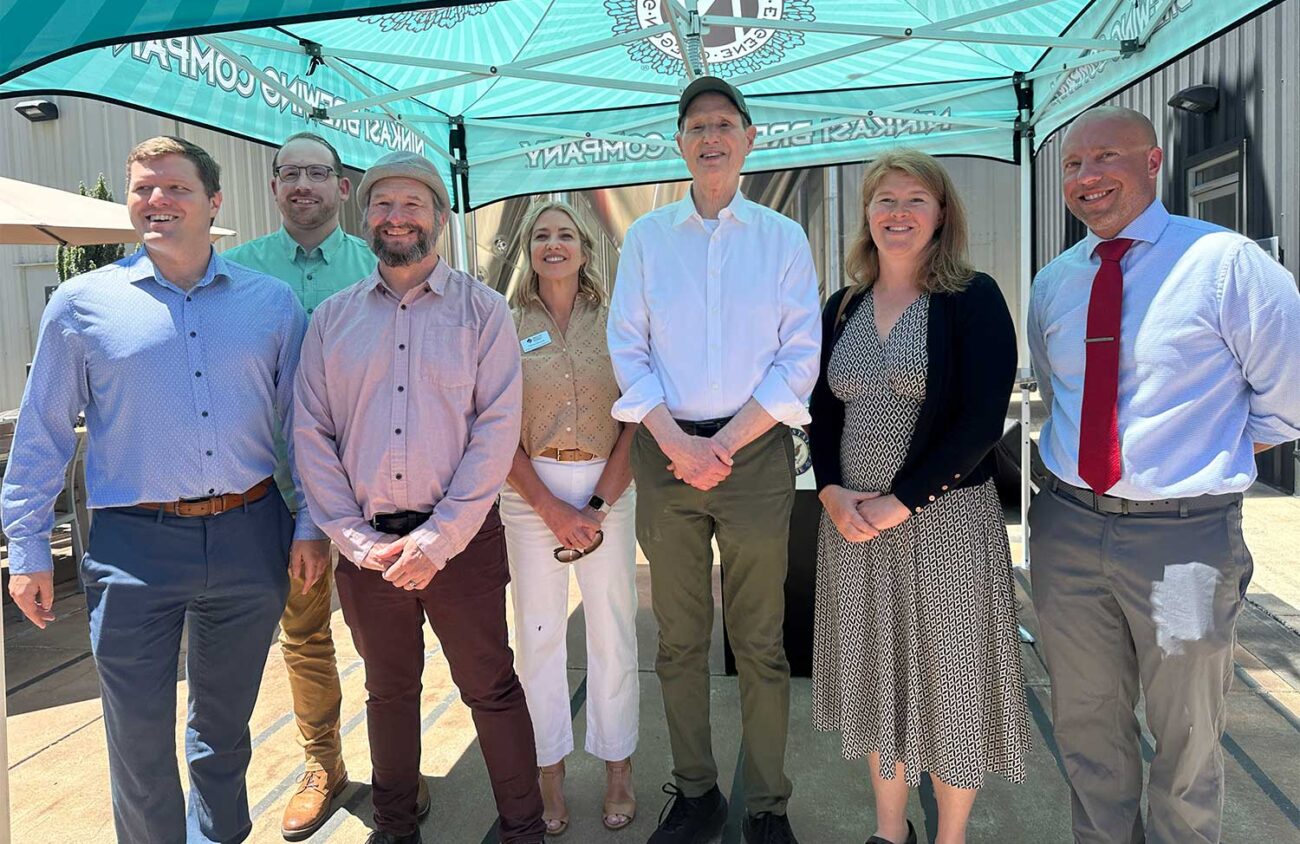
Sen. Ron Wyden exclaimed to a crowd of small business owners, academics and reporters gathered at the Ninkasi Brewing Co. Tasting Room on June 28 that his upcoming tax relief legislation is “one big deal” for small businesses and working families.
Wyden, chairman of the Senate Committee on Finance, said that Oregon is “overwhelmingly a small business state” and will benefit greatly from the research and development tax credit included in the bill.
Essentially, this bipartisan bill adds tax credits that individuals and businesses can claim to reduce the income tax they own.
The Tax Relief for American Families and Workers Act of 2024 passed the House with 357 votes in March. It also includes an $1,800 claimable credit off of income tax, per child, going up by $100 annually until 2025. “It would help 16 million kids nationally and 160,000 kids in Oregon have a better shot at having a roof over their head and food on the table,” Wyden said.
However, the main focus of Wyden’s visit to Ninkasi Brewing was on the benefit that small businesses will receive from this bipartisan package.
According to Lauren Lanahan of the University of Oregon Lundquist College of Business, who spoke at the event, returns from these benefits for small businesses can create an “economic spillover” effect into the surrounding economy, where returns are as large as three times for research and development endeavors.
And, Lanahan adds, these benefits are tax credits for research and development that ideally would drive further research within Oregon.
Jacques Zaneveld, CEO and founder of Lazarus 3D — a Philomath-based firm that creates realistic human models (blood and guts included) for surgeons to practice on — says that as a small business owner, he can invest even more of his capital into research and development, without having to worry about giving part of his ownership up to investors.
“We’re basically subsidizing a lot of R&D in order to develop these products and keep them at a reasonable price for patients in hospitals,” Zanevald tells Eugene Weekly after the press conference. “We have very limited runway in order to achieve a lot of success to get the next round of capital. And this really extends that quite a bit.”
Ninkasi Brewing co-founder Jamie Floyd says this bill will help his business have more breathing room as to how and when it examines the Oregon-grown hops the brewery uses in its beer. Yes, even researching the flavor profiles and quality of ingredients used counts as research and development to be claimed for tax credits.
Some disaster relief is also contained within the legislation as well. Essentially, any kind of compensation for damages or losses from a natural disaster — including the train derailment in East Palestine, Ohio, in February 2023 that spilled over 300,000 gallons of hazardous chemicals into the environment and atmosphere — does not need to be included within gross income when calculating income tax owed to the federal government.
This bill includes an authorization to the U.S. president to negotiate and enter into a tax agreement with Taiwan. While we have no formal recognition of or even an embassy in Taiwan, the American Institute of Taiwan — a wholly owned subsidiary of the federal government — will be the avenue through which Biden or any following president can negotiate a tax agreement with the island nation, according to the bill.
Other line items include increasing low-income housing tax credit to 12.5 percent from 2023 to 2025 and lowering bond-financing thresholds to 30 percent for bonds issued before 2026.
Wyden said he is more than excited to bring this to the Senate floor in July, but is still facing pushback from Republican Senate leadership that wants to delay the bill until 2025. Wyden said this is affecting business owners now and needed to be passed yesterday.
Read more about the legislation online at Congress.gov.