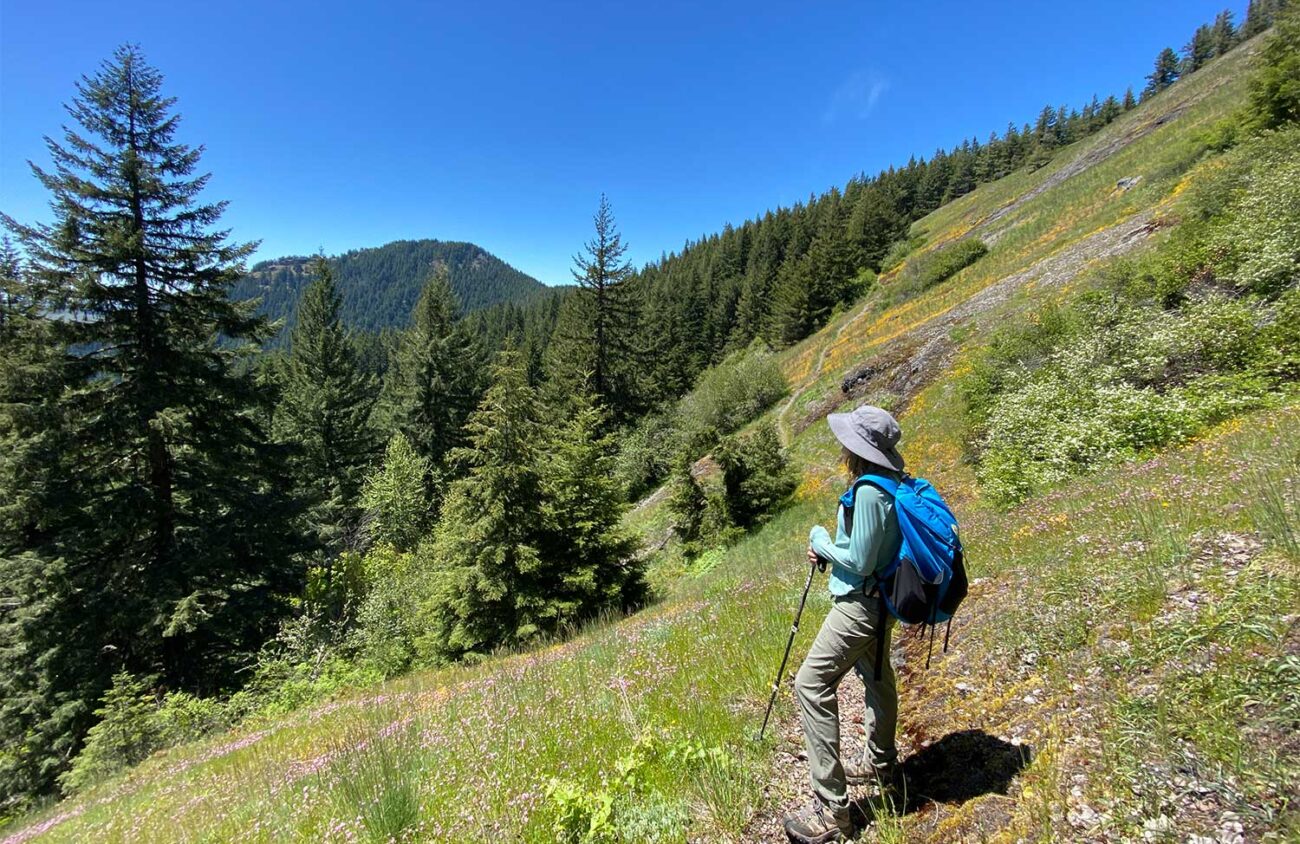
The U.S. Forest Service is proposing to rescind the 2001 Roadless Area Conservation Rule, which prohibits the construction and maintenance of roads in inventoried roadless areas. As a whole, the Roadless Rule protects approximately 58.5 million acres of land across the country, including Iron and Hardesty mountains in the Willamette National Forest.
Environmental advocates say repealing the law would mark a major step back in conservation efforts in the U.S. “More roads means more fragmentation of wildlife habitat, more erosion into streams, more spread of invasive weeds,” says Chandra LeGue, senior conservation advocate for environmental nonprofit Oregon Wild.
Inventoried roadless areas are designated by the USFS and are federally protected. In Oregon, there are almost two million acres of inventoried roadless areas, and repealing this law may open previously untouched land to logging and road construction as well as to mining operations. Public comment for this proposition ends Sept. 19.
Approximately 500,000 acres of Oregon forests lie within municipal watersheds. Tumalo Mountain, located seven to 10 miles west of Bend, provides a significant chunk of the drinking water for the city. Tumalo Mountain and the surrounding forests lie within a vast roadless area. LeGue says if the Roadless Rule is repealed, roads constructed in this area could lead to “more erosion and impacts on watersheds.” Parts of the McKenzie River watershed are designated roadless, such as the Hagan Research Natural Area. The McKenzie River watershed is the primary source of Eugene’s drinking water.
Constructing roads in forests increases erosion because roads are usually cut into hillsides. This changes the natural flow patterns of water, channeling runoff through culverts and drainage ditches. According to a 2011 U.S. Forest Service commissioned report on roadless areas, building roads disrupts the natural filters that distribute rainfall and snowmelt evenly, increasing the amount of soil disturbed.
According to the Oregon Department of Environmental Quality, when erosion occurs, suspended sediment particles can accumulate in the water supply. This is known as turbidity. An increase of turbidity can stress municipal water treatment centers and harm wildlife like native fish. Erosion can also release dangerous pollutants from the soil including heavy metals, which are harmful to animal and human health.
One argument made by proponents of repealing the Roadless Rule is that more roads will allow for the Forest Service to better manage wildfires and wildfire risk. In an email to Eugene Weekly, environmental coordinator for the Umatilla National Forest Shannon Dunfee writes, “Roads improve access for wildland firefighting when timing is critical, and lives are at risk.”
LeGue says this idea is misguided because “there’s actually a lot of evidence that shows that more roads equals more fire.” More people means more fire, because “people bring the fire with them,” LeGue says.
Opening previously inaccessible areas to vehicle traffic creates risk not only because people love to start campfires, but also because the cars themselves can start a fire. In 2022, a faulty catalytic converter ignited multiple brush fires on Highway 199, which officials say started a six-acre fire in Josephine County. The Oregon Department of Forestry recommends drivers maintain caution when driving through forested areas and specifically asks drivers to not drag chains from their vehicles, which can cause sparks — igniting fires.
Oregon is already home to an expansive network of roads, many of which extend into forests. LeGue says protecting these nearly two million acres of roadless land is vital to ensure that Oregon remains home to some of the world’s most pristine and untouched forests.
LeGue says people should fight back against increasing attacks on public lands and natural resources because, “If they’ve had an experience that they value in a wild place, they’re not alone and they can do something about protecting those experiences they’ve had.”
The public comment period for repealing the Roadless Rule ends Sept 19. Visit OregonWild.org or mail letters to the Director of Ecosystem Management Coordination at 201 14th Street SW, Mailstop 1108, Washington, DC 20250-1124 to submit a public comment.