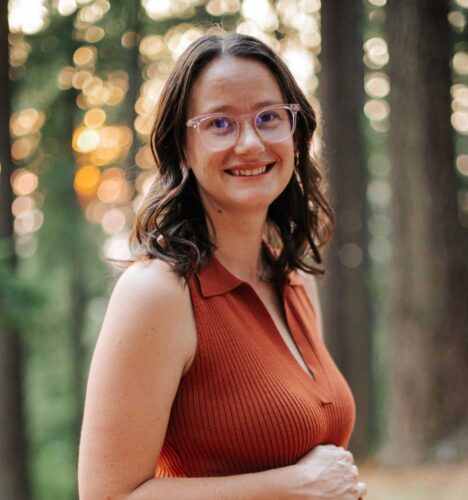
On the morning of Sept. 10, Sarah Reighley, a woman who was born Deaf, arrived at BestMed Urgent Care on West 11th Avenue seeking medical assistance for a bleeding head wound after hitting her head against a wall. Less than 10 minutes after she checked in, she alleges that the receptionist informed her, using a pen and paper, that the doctor was uncomfortable treating her because the facility did not have an operating Video-Relay-Interpreter (VRI).
A VRI is a device that virtually connects a sign language interpreter into the appointment to provide communication between the doctor and a deaf patient.
Reighley says she informed the receptionist that she has many other ways to communicate with the doctor. This includes speaking with her own voice, writing everything down, lip-reading and using voice-to-text on her phone — the same methods she uses to communicate throughout her daily life, as well as in most of the health care settings she has experienced.
She says that despite this information, the receptionist maintained that the provider was still uncomfortable. Instead, the receptionist wrote down the address for the BestMed location on Willamette Street — a 15-minute drive — and informed her that they have VRI available.
Reighley says at the second location, she was not offered VRI, yet was still treated shortly after she arrived. At the same time, her appointment at the West 11th location was displayed as “canceled” in her patient portal.
“I’ve heard a lot from my friends about being denied medical care because they’re deaf, but it has never happened to me,” she says.
Reighley says she has been to the West 11th Avenue Urgent Care a total of five times, and was only offered VRI one time prior. She says that though she is willing to use VRI, it is not her preferred method of communication in the doctor’s office because it “doesn’t feel personal,” and is occasionally uncomfortable to have a stranger accompanying her in the private setting.
“I’m confused why the doctor was uncomfortable because if we used paper and pen, we would be fine,” she says, noting that this is a frequent method for her in doctor’s offices.
“Being denied care at the first location because of my Deafness left me shaken and made me wonder: What if it had been life-threatening?” she says.
BestMed Urgent Care declined to comment.
Under the Americans with Disabilities Act, “hospitals must provide effective means of communication for patients, family members, and hospital visitors who are deaf or hard of hearing.” The ADA clarifies that this applies to all hospital services and programs, including clinics such as urgent care.
Chad A. Ludwig is the founder of Bridges Oregon, which is the only culturally and linguistically specific nonprofit organization providing human services to Oregonians who are Deaf, deafblind and Hard of Hearing. “Federal law requires health care providers to ensure effective communication, whether through interpreters, captioning, or the patient’s own preferred method,” he says. “Turning someone away is both unlawful and unsafe.”
Reighley says she has since filed formal complaints with the Oregon Medical Board, Bridges Oregon, National Association for the Deaf and Oregon Health Authority. She has also filed a formal complaint with Solv, BestMed’s parent company. At time of publication, Oregon Health Authority has responded to her, saying that they have reviewed her concerns and agree that follow-up is necessary. There are no local advocacy groups or agencies specifically for Deaf and Hard of Hearing people.
She has also shared her story on her Instagram account, Instagram.com/sarah.reighley where she shares her experiences as a Deaf person and has more than 20,000 followers.
Disabled “people have a hard time seeking and having active health care because they are afraid,” she says. “We are made to believe that we are the problem.”
Ludwig agrees. “Far too many Deaf and Hard of Hearing people delay or avoid medical care out of fear of being denied services,” he says. “That creates real risks to health and safety.”
“Deaf and Hard of Hearing patients continue to face barriers to care, and ADA compliance is still inconsistently enforced in medical settings,” Reighley says. “I want it to get taken care of now. Because it is happening now.”