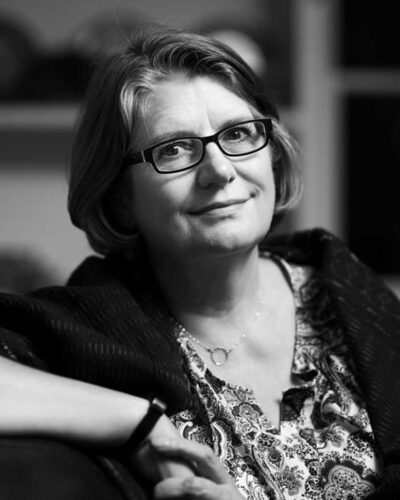
When Eugene Weekly gave me the chance to do a piece for this year’s Winter Reading issue, I knew exactly whom I wanted to talk to. From memoirist Debra Gwartney I’ve learned two critical things: to have compassion for myself as a mother, and to “write cool when the action is hot.”
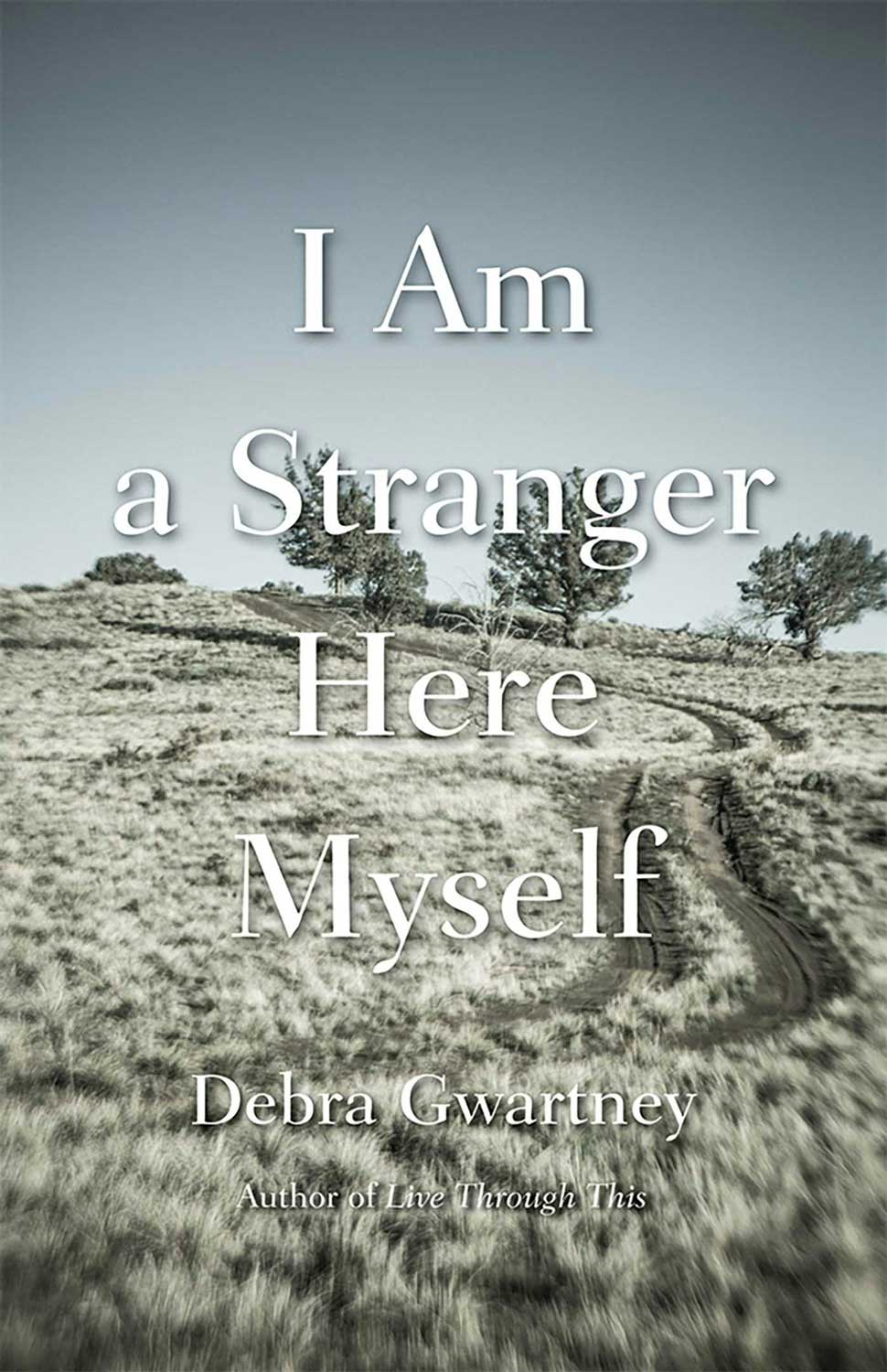
Debra Gwartney is the author of numerous acclaimed essays and two book-length memoirs, Live Through This, a finalist for the National Book Critics Circle Award, and I Am a Stranger Here Myself, winner of the RiverTeeth Nonfiction Prize and the Willa Award for Nonfiction.
Gwartney is a contributing editor for Poets & Writers and is co-editor, with her late husband Barry Lopez, of Home Ground: Language for an American Landscape.
“Fire and Ice,” an essay about Lopez’s death and the Holiday Farm Fire, was selected for Best American Essays and won a Pushcart Prize. She’s a former editor of Eugene Weekly and has reported for publications including The Oregonian and Newsweek. Gwartney has also taught reporting and writing at the University of Oregon, Portland State University and Pacific University. She lives in western Oregon.
We recently sat down to discuss writing. Our conversation has been edited for length and clarity.
What are your favorite books, the ones you read again and again?
I read fairly widely for pleasure and escape. I’m a fan of Elizabeth Strout novels as well as Claire Keegan’s and many others. Lately, I’ve been on an Edith Wharton kick. Old novels are soothing to me. As for favorites, when I’m stuck in my writing, I turn to poetry to remind me of what a gifted writer can do with language, with cadence and rhythm. Sharon Olds and Ada Limon inspire me, and my new favorite is Diane Seuss because she is ruthless. I seek out those poets to remind me that my job is to tell the story and to let metaphorical aspects emerge organically. Lately, I’ve reread Rilke’s Letters to a Young Poet. It’s a good book for moments of despair, which we all enter into when you just don’t think there’s anything new to say. And I return to Vivian Gornick’s The Situation and The Story, as she spurs me on when I need to be spurred.
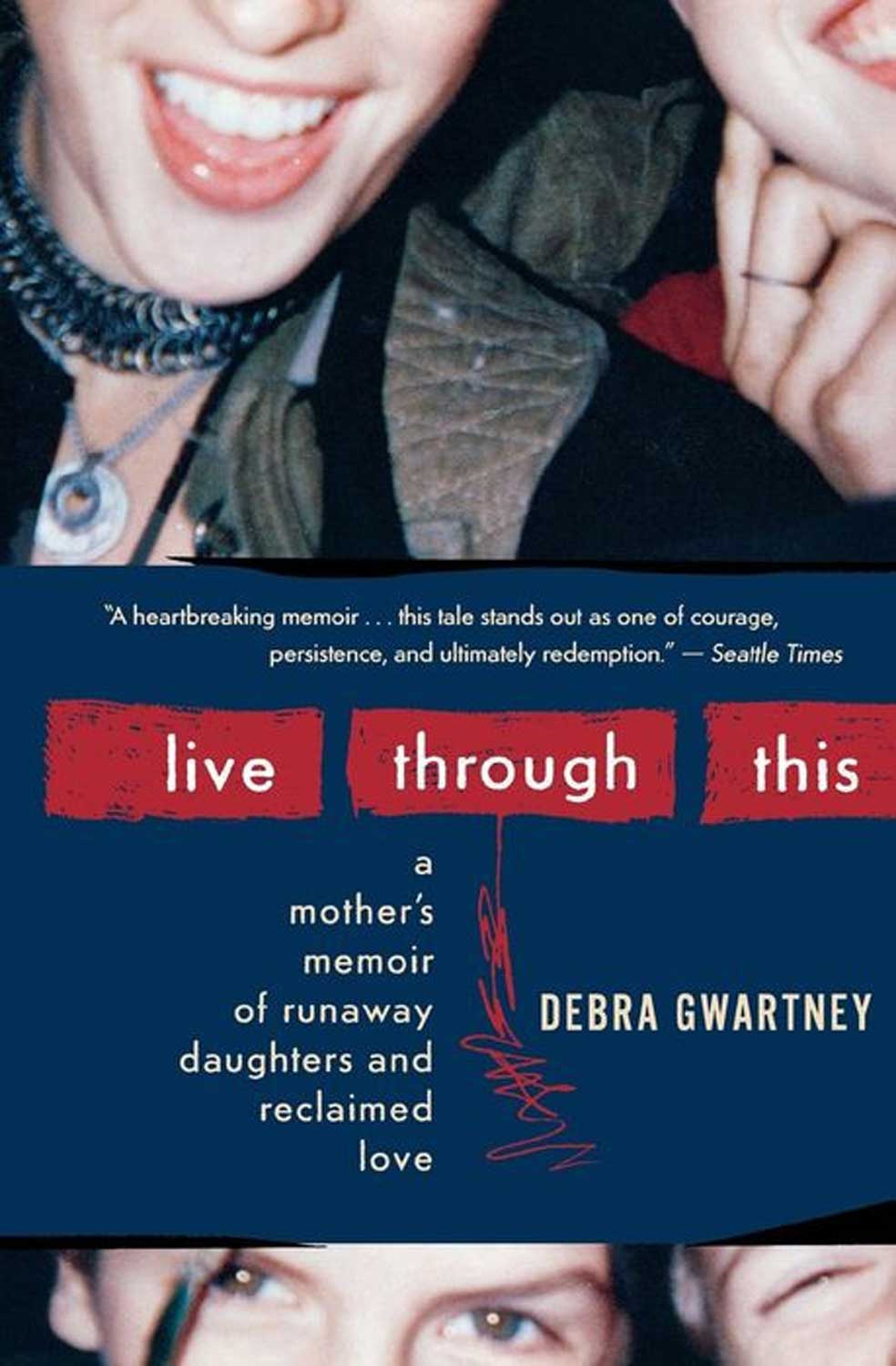
In Live Through This (a gripping memoir about motherhood), you write, “sometimes the past simply refuses to be finished.” This line deeply resonated with me. How do we cope with the pains of a past that won’t stop haunting us?
I looked at how many mothers have gone through trauma with their teenagers, and I thought, “Why is my story one that should step up?” I remembered then what Patricia Hampl says to writers in “Memory and Imagination,” which is that if you don’t tell your story of this time, of this place, of these people, then someone else is going to tell it. And if you are called to do so, then you have to find a way. When I was struggling with the structure of my second book, Barry said to me, “If it calls you back, then you know that you need to keep going.” That’s part of living with the past. People have different ways of expressing themselves — art, dance, etc. My way is to write.
You’ve written memoirs and essays about deeply painful experiences in your life. Research shows that writing can help to heal the emotional trauma of our lives. Has this been your experience? And if so, how?
Catharsis is not my central aim in writing personal narrative. I am interested in making art, if I can, from my life experiences. I challenge myself to be self-curious rather than defensive. What I’ve come to understand is the divide between the narrator and the character — in memoir, the character doesn’t change, the narrator changes. It’s the person looking back saying, “Oh, wait a minute, I’ve let myself hide behind my own self-delusions for a long time.” And if I can step out from there, I’m going to discover the narrative. As one of my teachers reminded me, the goal of all memoir is self-awareness.
So how, then, does your narrator change in Live Through This?
She realizes that her children are not an extension of her — that they get to be their own people. I had expectations of them and myself and of what a family looks like. Releasing us from that helped me get to the point where I understood I can’t mold them into being the people I think they should be. They have to be themselves.
In a craft talk for Tin House, an independent press in Portland, you suggest, “When the action is hot, write cool.” What does this look like in practice?
When something is traumatic, your job as a writer is not to insist the reader feel a certain way, but to make room for the reader’s own emotional response. So first, I address language and sentence structure. We put words like very and always and never in our writing, and there’s rarely a reason to use such extreme language. Once you start pulling those out, it cleans up the prose. I find that layers of adverbs and adjectives used to create emotional resonance often do exactly the opposite. I am drawn to uncluttered sentences and images that ring with clarity, to writing that doesn’t overdo the tugging of heartstrings.
For instance, there’s an essay in Short Reads called “Happy Birthday” by Nicholas Dighiera that I use in writing workshops. By the end, you’re falling apart because it’s beautiful, but he does not over-emote, and he doesn’t blame. He tells his story honestly, with vulnerability. He gives readers room to step in and feel for ourselves.
How do you think of “truth” in memoir?
In This Boy’s Life, Tobias Wolff writes, “Memory has its own story to tell.” I have an essay coming out in The Sun in a couple months that was a hard story for me to write. It’s about something from my childhood that I’ve never revealed. I’ve thought a lot about the idea of “truth” while writing it. Others might say the incident didn’t happen in the way I recall. But with memoir, the story isn’t about what you remember as much as why that memory still has its hooks in you. And so I decided to dig into that. I wrote many drafts, and I kept asking myself, “What is it that I need to face about this experience?” I had a teacher who suggested that at the top of every page, you write: “What remains unsolved in me?” I think that’s how you get to authenticity in personal narrative.
You’ve also worked as a reporter and were editor of Eugene Weekly 30 years ago. What did you like about being the editor of an alternative weekly?
While in graduate school at the University of Arizona, I had an opportunity to work for the Tucson Weekly, which was a fabulous paper, and I developed an admiration for alternative news. Editing Eugene Weekly gave me permission to strike out on stories that no other publication would dare touch.
As a writing teacher, what suggestions do you have for people who are just getting started crafting a memoir?
Read as much as possible. One exercise I suggest is to take a personal essay and three highlighters, and highlight in one color the “narrator,” one color the “character,” and in one color the “backstory.” This can show you how those three elements co-exist: the reflective narrator, the character who’s in the action, and then the exposition that holds it together.
I’m a huge believer in scenes, which are narrative building blocks. I think scenes are the way to go because then you’re putting yourself in the moment and asking the reader to step in and then build from there. Scenes also train you to remember that this type of writing must be done in increments. I often suggest writing three or four scenes. Don’t yet ask yourself how they’re related. Somewhere deep in your psyche, you know they’re related, but it’s too soon to ask yourself to explain.
So simply write the scenes and then just live with them for a while and think, “Where’s the through line? What am I trying to do here?” It’s easy to give up, but it’s so important not to. I support women writing their memoirs because they’ve been told forever that their versions aren’t important. But they absolutely matter so much.
Debra Gwartney’s list of must-read memoirs:
- The Sisters Antipodes by Jane Alison
- Mothers and Other Fictional Characters by Nicole Graev Lipson
- Borrowed Finery by Paula Fox
- Stay True by Hua Hsu
- Fierce Attachments by Vivian Gornick
- Fun Home by Alison Bechdel
- Let’s Don’t Go to the Dogs Tonight by Alexandra Fuller
- Boys of My Youth by Jo Ann Beard
- Love and Trouble by Claire Dederer
- The Bill From My Father by Bernard Cooper
- Out There in the Dark by Katharine Coldiron
Nicole Dahmen is a professor at the University of Oregon’s School of Journalism and Communication and the Clark Honors College.