The FBI has asked a local photographer to identify protesters at ICE protests at the Eugene Federal Building, bringing up questions of press freedom in Oregon.
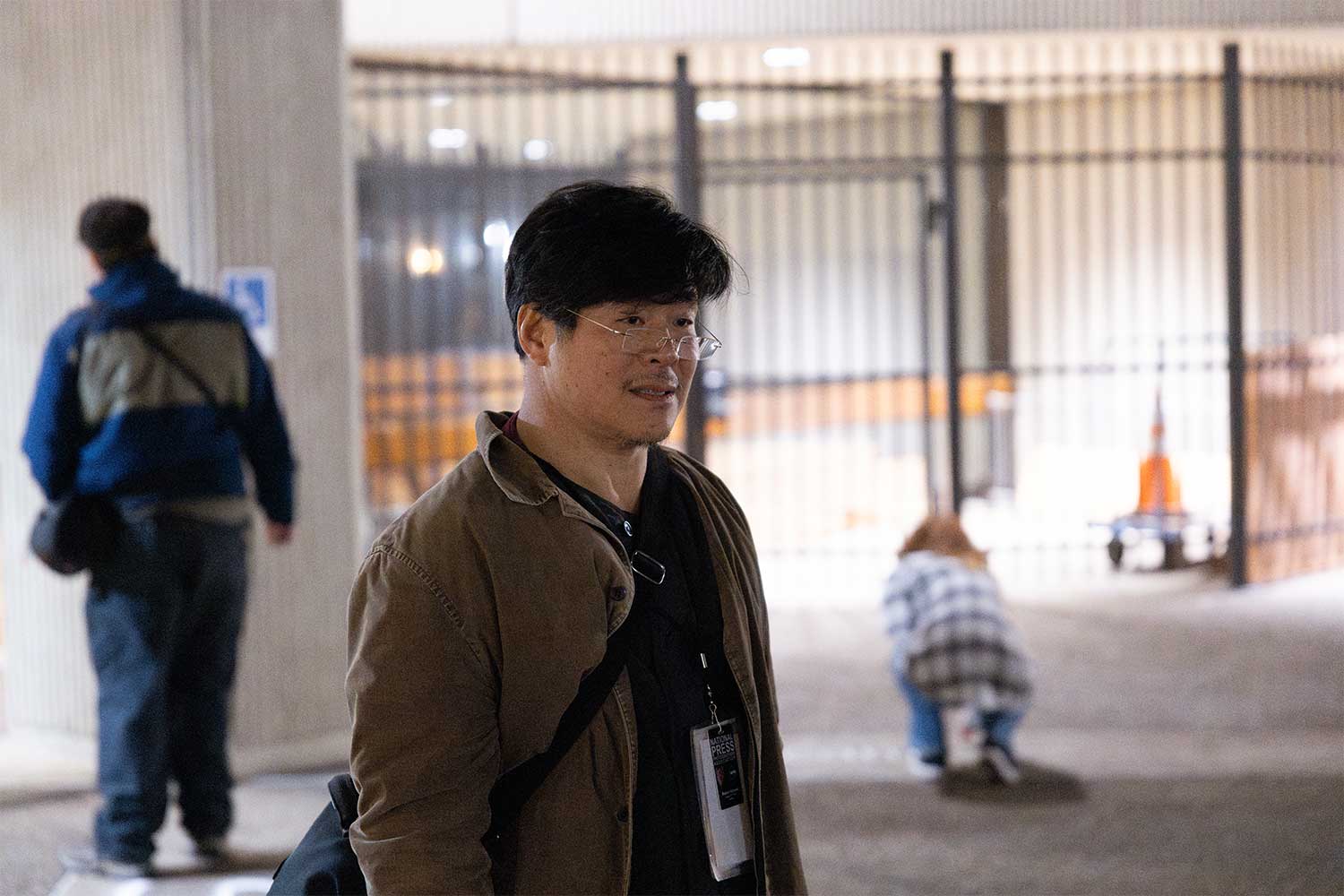
Local photographer Robert Scherle was at his home Feb. 4 when federal agents knocked on his door. He said he was collecting donations for Oregon Community Asylum Network, a group which works with asylum seekers and other immigrants, and he opened the door thinking it was donations for OCAN’s fundraising auction.
The agents showed him their badges, Scherle says in an interview with Eugene Weekly during a Feb. 5 protest at the Federal Building, and says they told him, “You’re not in trouble.”
The agents said they were wondering if he had any photos of the protesters who damaged the Federal Building.
The agents also asked if they showed him photos whether he could identify people.
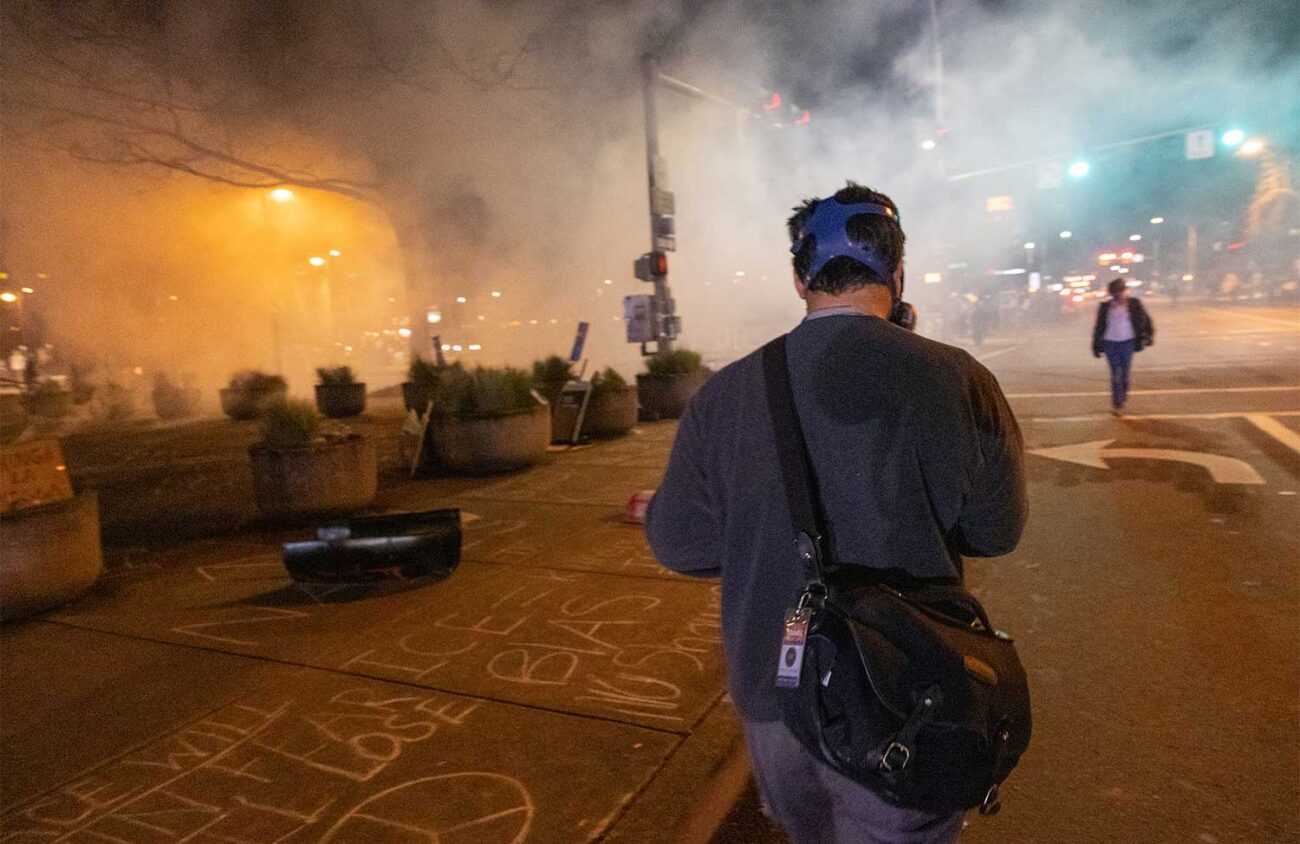
Scherle says he told them, “I didn’t see anything, I had a gas mask on, and they were wearing Black Bloc.”
Black Bloc is a protest tactic where people wear black clothing and masks to disguise their identity.
Eugene activists have been protesting increasingly at the downtown Federal Building since President Donald Trump took office in 2025. Protests, vigils and other events began to occur every weekday after Immigration and Customs Enforcement began using more and more brutal tactics against immigrants,
And after the deaths of Renee Good and ICU nurse Alex Pretti at the hands of ICE agents in Minneapolis while protesting and documenting ICE’s tactics, some protests in Eugene have heated up.
On Jan. 27, a protest at the Federal Building culminated in federal agents using tear gas, pepper balls and more. A Jan. 30 protest was declared a riot by the Eugene Police Department and a Jan. 31 protest also resulted in federal agents setting off flash bangs and shooting pepper balls and tear gas into the streets.
At the Jan. 30 protest, anti-ICE messages were chalked and spray painted on the Federal Building and several windows were broken. Video showing a federal agent breaking out glass from inside the building has called into question who actually broke one of the windows the protesters were banging on.
Scherle is well known in the area for his protest photos. He posts his photos to Facebook, Instagram and other social media outlets as well as with independent news outlet DoubleSided Media. He photographs at protests clearly marking himself as media with a press pass.
Local activist Carol Scherer says she was also questioned by the FBI about protester identities. She had been at the Jan. 27 and “got pepper spray and was bumped twice” by federal agents at the protest. She didn’t witness the later events that day or on Jan. 30 as she says she is 80 years old and her hip surgeon had cautioned her not to fall down.
She says one of the FBI agents was the same one who talked to Scherle, and that they originally approached her saying they’d “like to know what sort of harms are being done to the activists.”
Scherer says of the broken windows, “I said, those agitators or infiltrators could be federal agents. I said, I’ve been around long enough to know about the Civil Rights Era, Vietnam War, Black Lives Matter. I didn’t mention Fred Hampton,” the Black Panther leader shot and killed by police in 1969.
She adds of the agents, “They seem to be more in a fishing expedition.”
In Oregon, journalists are protected from disclosing confidential sources, and under the state’s Shield Law, “No person connected with, employed by or engaged in any medium of communication to the public shall be required by a legislative, executive or judicial officer or body, or any other authority having power to compel testimony or the production of evidence, to disclose, by subpoena or otherwise.”
Eugene Weekly does not turn photos or information over to law enforcement.
Reached for comment, the Federal Bureau of Investigation Portland Public Affairs office says that the FBI is continuing to seek information to identify rioters “who smashed windows and breached the federal building in Eugene” on Jan. 30, pursuant to an ongoing investigation.
The FBI continues, “During our investigative efforts, we have interviewed members of the public who were taking images and/or video on the ground that evening and asked for footage. Should an interviewee identify themselves as a member of the media and produce identification or credentials, we have processes in place to request information that adheres to the Constitutional right ensuring freedom of the press.”
There is no federal shield law, but Eugene Weekly reached out to the Reporters Committee for Freedom of the Press. “Federal law and the First Amendment establish strong protections limiting the government’s ability to seize newsgathering material, and would give journalists the ability to negotiate or challenge in court a demand for a photographer’s footage,” RCFP says.
RCFP continues, “These guardrails are essential so that journalists can provide information to their communities without fear of government intrusion into their reporting.”
This story has been updated.