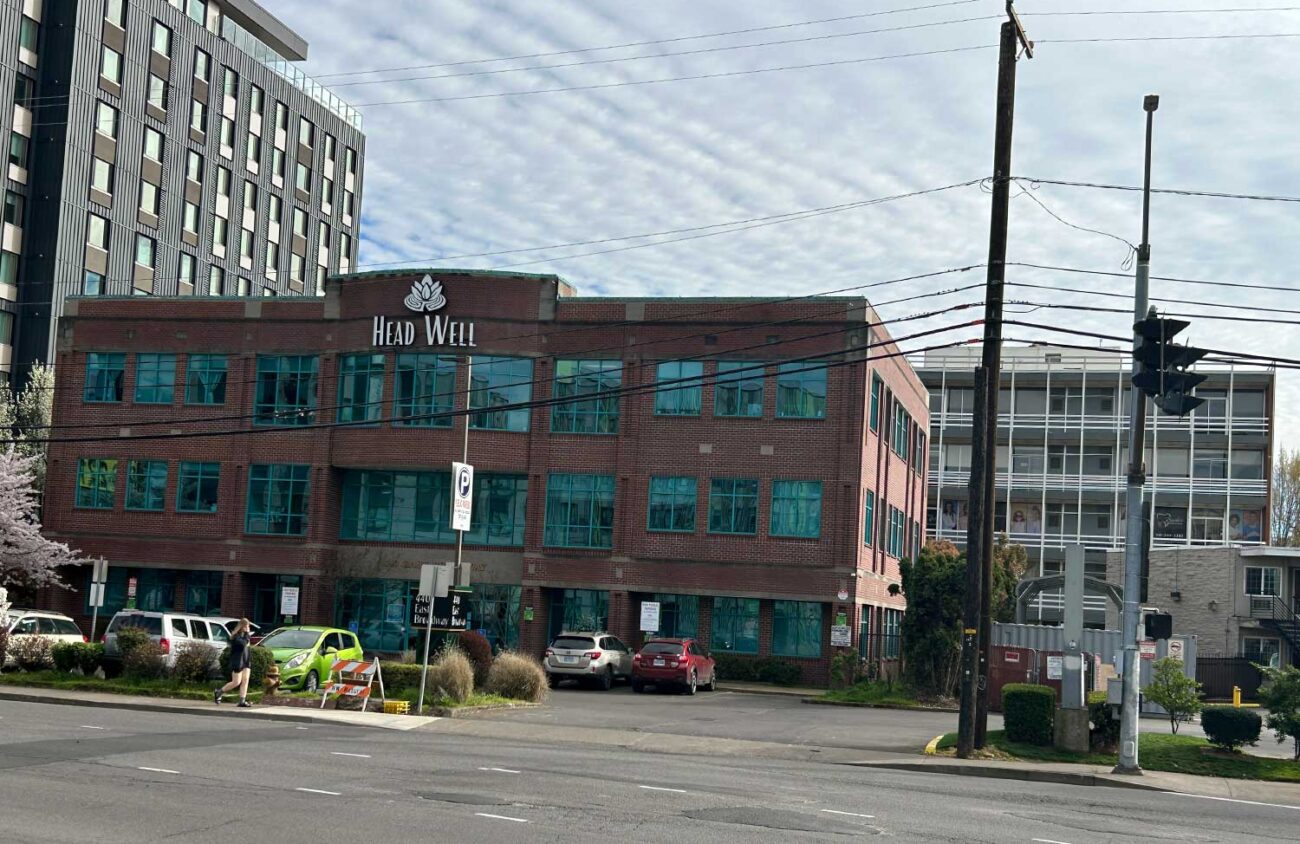
The owner of a cluster of three downtown Eugene office buildings is so tired of having unwelcome people walk across his property that he wants to surround the whole place with a 6-foot-high metal fence and remote-controlled gates.
But city planning staff say he’s not met the city’s rules that restrict high fences in the city center. The owner, Eugene businessman Lutfi Thabet, is contesting the decision.
The outcome has implications for the look and feel of downtown Eugene. Will it become a high-fence district?
If Thabet prevails, he would turn his two-acre complex of buildings into one of the first in the city’s central commercial district to be entirely surrounded by high fencing and electronic gates.
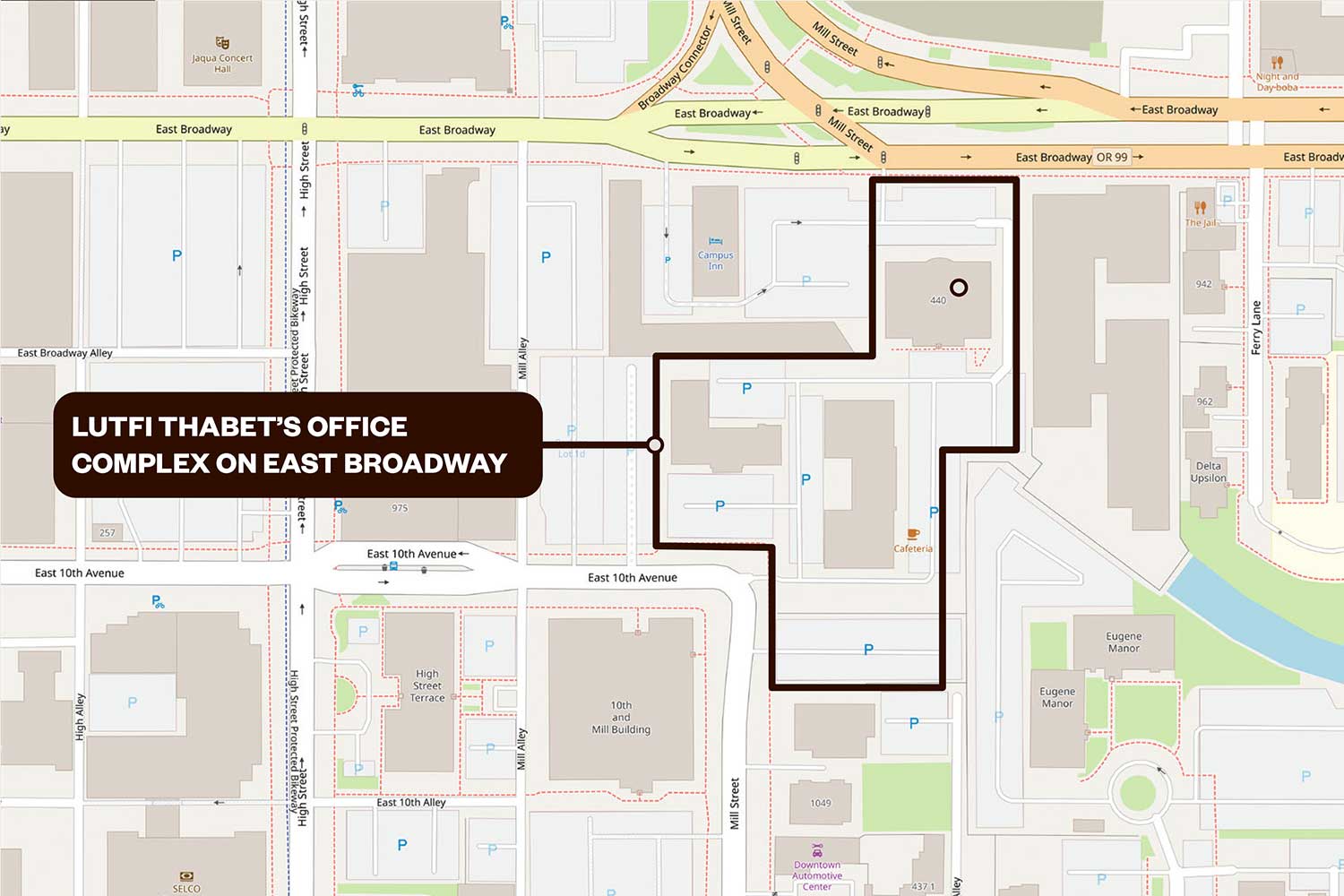
The buildings are at a prominent spot: on East Broadway at the south end of the Ferry Street Bridge.
In the planning application, Thabet’s consultant tells the city the high wrought-iron fences would stop “after-hours trespassing” and “overnight camping,” and eliminate areas on his property “where people could hide and potentially create security concerns” for tenants.
Currently, public access around Thabet’s three buildings is largely unhindered. Pedestrians often stroll across his property’s parking lots as a shortcut between East Broadway and East 10th Avenue. Vehicles also take that shortcut, Thabet tells Eugene Weekly.
Thabet’s fencing idea flies in the face of Eugene’s longstanding practice of discouraging building owners in the city center from erecting high fences where their property fronts onto public streets. Owners can, and do, put up high fences between one private property and another. And the city allows 3.5-foot-high fences along frontages that face a public street.
Also, in some neighborhoods, for example, industrial areas, the city allows high fencing to completely surround a property.
The downtown fence rules are “trying to make it more open and friendly” for pedestrians, says Jeff Gepper, a principal planner with the city. High fences are “sight obscuring,” for pedestrians, he says. “You feel like you are in a corridor.”
Thabet says he’s just trying to make his buildings “safer and better” for tenants, and deter vandals who a couple of times have damaged an elevator in one of the buildings. “We want to do anything we can do to make it more accommodating to our tenants.”
Big spikes at Olive Plaza
Thabet is not alone in his desire for all-around high fencing to keep out intruders. The city in 2024 let the owners of the 12-story Olive Plaza apartment complex at Olive Street and 11th Avenue exceed the 3.5-foot rule and put up 8-foot-high steel fencing and security gates around the perimeter of the building that faces city streets. The fences and gates are topped with wicked-looking outward-curving spikes. It’s one of the few city-center buildings where the frontages facing public streets are entirely barred with high fencing. The city justified its approval by saying the fencing would make the senior-citizen building safer and keep out people who otherwise might come onto the property and “hide and create potential security concerns for pedestrians and residents.”
Now, Thabet’s consultant cites that approval as a precedent for his request.
Under the city’s rules, a property owner can exceed the 3.5-foot fence height only if it shows that the higher height would create a “safe and attractive pedestrian environment” that is as good or better than the pedestrian environment that would be created by a 3.5-foot fence. The consultant and the city disagree on what exactly that means. The city’s planning staff says Thabet hasn’t met the rule. Thabet’s consultants counter that the proposed fencing is attractive and would benefit tenants. Thabet has appealed the denial to a city hearings official.
Convenience stores, office buildings
Thabet is a busy local entrepreneur. He heads the Eugene-based Buy2 regional convenience store chain. He has accumulated retail and office real estate in the metro area.
In 2019, he bought the three East Broadway office buildings in question from Eugene businesswoman Gretchen Pierce.
Thabet’s company paid $8.25 million for the properties, the deeds show. The three buildings are: the 33-year-old three-story brick building at 440 East Broadway that’s home to the Head Well therapy business; the five-story Hult Plaza office building behind it, built in 1964; and an adjacent two-story office building built in 1940.
The two-acre complex has an accessible layout. The public can easily walk onto the site’s large surface parking lots, interior driveways and walkways, landscaped areas and the exterior hallways of the Hult Plaza building.
Thabet has turned many of the surface parking spaces in the complex into public pay stalls that anyone can park in.
His plans show he wants to erect 6-foot-high wrought-iron fences and 6-foot-high electric gates on his property along East Broadway on the north side of the complex and East 10th on the south side of the complex. Those fences would tie into existing 6-foot fencing along his property lines with neighboring properties to the east and west. The effect would be to seal off Thabet’s property from any unauthorized visitors.
The city’s hearings official is slated to issue a decision in the next few weeks. Any appeal would go to the state Land Use Board of Appeals.
Bricks $ Mortar is a column anchored by Christian Wihtol, who worked as an editor and writer at The Register-Guard in Eugene 1990-2018, much of the time focused on real estate, economic development and business. Reach him at Christian@EugeneWeekly.com.