In fall 2022, Valentine Bentz was adjusting to life at the University of Oregon. Hoping to meet people, he decided to join the Grove Community Garden through the UO Student Sustainability Center, which supports the program. Though he grew up in a rural area with exposure to farms and ranches, he had limited experience in gardening. Yet, the experience spoke to him.
Three years later, now a senior, he is employed with the UO Sustainability Center, and the Grove Community Garden has been a highlight of his college career.
“It’s been one of the most meaningful things I’ve been a part of at the university,” Bentz says. “Connecting with the land I live on through growing food has been really amazing.” A learning garden is a working garden designed as a classroom — a place where students don’t just study sustainability in theory, but practice it by planting, harvesting and tending the land.
Andrea Mull, the manager of the Lane Community College Learning Garden, has loved plants all of her life. “My mom had a big garden in our backyard, and I pretty much learned by osmosis, you know,” Mull recalls. For three years, she has been leading the Learning Garden, which celebrates its 20th year of being open. An alum group for the Learning Garden is being formed. The Learning Garden is funded through student fees.
For both Bentz and Mull, gardening has been a way to connect to the natural world, to community, and to themselves. Bentz appreciates the community approach of the UO Grove Community Garden because it brings everyone together to care for plants collectively.
When the garden was started in 2013 by Prof. Harper Keeler, who teaches Landscape Architecture, it operated under a system of individual plots that a student could rent and use to garden while taking Keeler’s urban farming class, which was so popular that students couldn’t get in until senior year. But after the return to in-person classes at the university in fall 2021, UO Student Sustainability Center director Taylor McHolm found that the original system was no longer working, student interest in the garden drastically dropped and some students would claim a garden plot only to leave it unused or unattended. To him, the change has been for the better.
“When we made that shift, we went from individual plot rentals to having 30 or 40 people coming out regularly just to be with one another and learn together,” he says. He has seen a variety of students participate in the garden, from those who are experienced gardeners to those who never thought they’d have an interest in gardening.
Bentz has experienced the pride in growing his own food and learning all that goes into taking something from seed to produce. “It’s really special to not just know where your food comes from, but to actually have a relationship with the soil and bring the food into existence,” he says.
Food grown at the LCC Learning Garden has been enjoyed by its student gardeners but has also been donated to the campus food pantry and the school’s culinary department. McHolm views the Grove Community Garden, which is located at 1801 Moss Street but will soon be moving a block north, as not just a means of students having groceries, but as a way of understanding the deeper workings of food systems.
“It changes how you understand the grocery store and the true cost of food. Gardening helps students understand how food plays a role in building and sustaining community,” he says. “If a student tries to grow a strawberry and fails, that’s actually a really helpful lesson.”
For people who don’t have a green thumb — the people who manage to kill a cactus — gardening may appear to be daunting. But the earth is kinder than many realize, and can be more forgiving.
Bentz believes the biggest mistake many new gardeners make is being too hard on themselves. Gardening can be challenging, and it takes patience.
In Mull’s 40 years of gardening experience, she’s learned not to rush. Urgency can often lead to poor timing. With gardening, procrastination is one of life’s few opportunities where it can be useful. “Trust that procrastination… that waiting a day or even a week can be the right move,” she says.
Though gardening can be exciting, and those new to it may be eager to create their own Eden, Mull advises taking it slow. Instead, she recommends building a garden incrementally over the years. “If you have a one-acre yard, don’t turn it all into garden. This year, turn a quarter of it into a garden… and then reassess.”
Bentz also sees a benefit in starting small. “Even just starting with one pot and one or two plants is a great way to get going.”
When asked what’s best for beginner gardeners to grow, Mull recommends brassicas — kale, cabbage, broccoli and mustard. Having gardened in six different states, Mull finds Oregon’s climate to be accommodating. “We’re really blessed here… we have sun, rain, and cold — and the cold is important,” she says.
She also recommends garlic and beans as great options, as both are easy to grow.
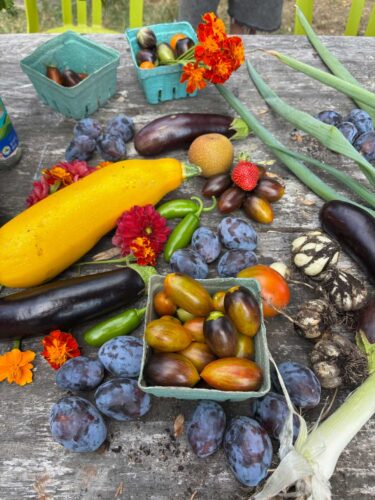
Bentz recommends arugula as a good plant to start with. He encourages people to think about how they’ll use what they grow. Some of his favorite things grown in the Grove Community Garden have been tomatoes and zucchinis.
But gardening isn’t just a matter of how — it’s a matter of why.
The mental health benefits of gardening are able to provide a reset for Mull and for students who are balancing a lot. Many of the students she has mentored in gardening at LCC come to the Learning Garden when they need a break from the weight of their academics.
Gardens also benefit those who don’t even eat their produce. Bentz recalls a story of a mail carrier who was impressed by the Grove Community Garden. “He said he’d been doing that route for years and had never seen the garden look so good.”
“That was a really cool moment.”
Lane Community College Learning Garden is at 4000 East 30th Avenue,Lanecc.edu.Grove Community Garden is on the University of Oregon campus, Emu.uoregon.edu/grovegarden.