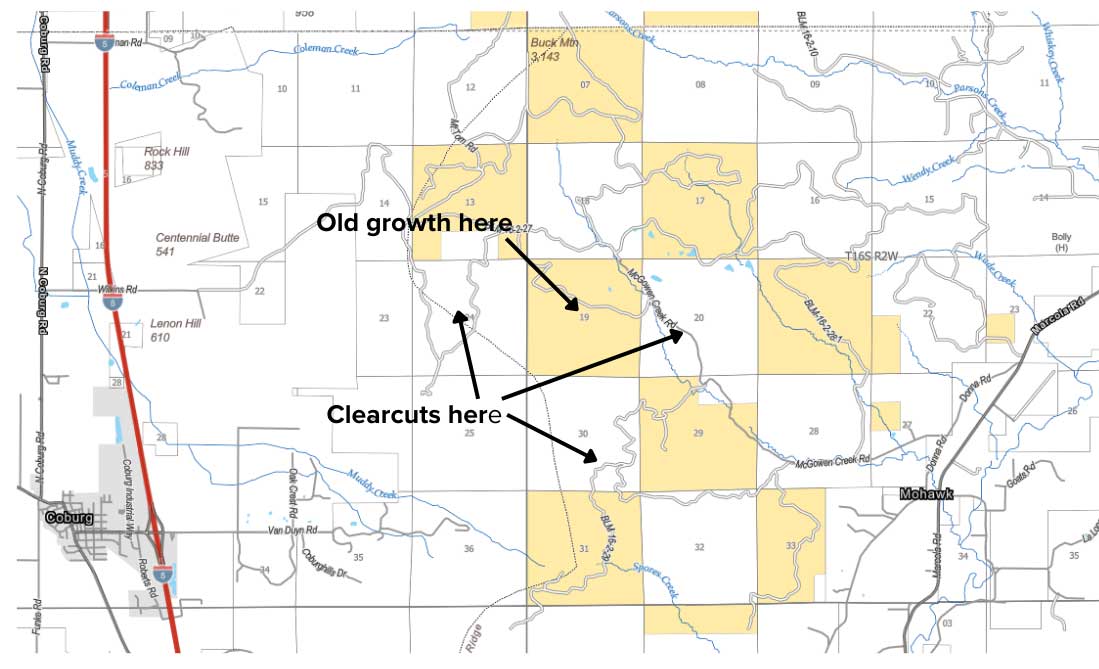
Tucked away amid clearcuts and logging roads in the Coburg Hills outside Eugene, the McGowan Creek Environmental Education Area is an ideal spot to wander among giant trees on a pleasant loop trail. Managed by the Bureau of Land Management (BLM), along with 2.5 million acres of other Western Oregon forests, this island of old growth is vital to wildlife, waters and for education and recreation for the local community. It’s under threat by the Trump administration.
To get there from I-5 in Eugene, take I-105 (Hwy 126) east a few miles to the 42nd Street exit. Turn left, and in a half mile turn right onto Marcola Road. Follow for just over six miles and turn left on Hill Road, then right in front of the Mohawk General Store on Donna Road.
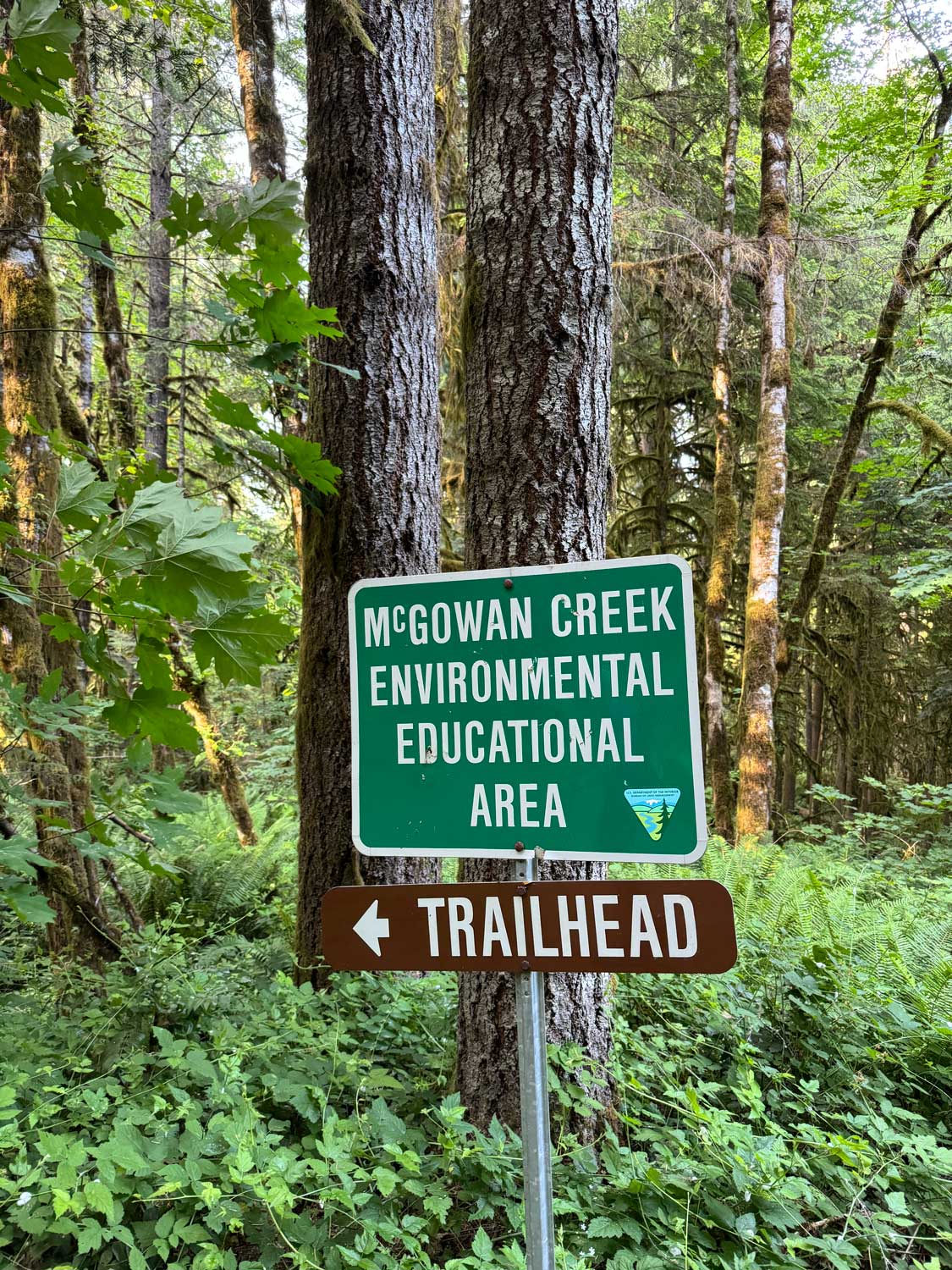
After 0.6 miles, take a sharp left onto McGowan Creek Road and follow for 3.5 miles. On the left, you’ll find Forest Road 16-2-20 with a locked yellow gate. Park at the top of the road here. From the gate, walk down the gravel road for about half a mile through plantations of Douglas-fir trees replanted after a past clearcut. Look for a trailhead sign on the right and follow the signs for the “Tall Trees Loop.” This one-mile loop has some ups and downs (including stairs) as it winds past huge Douglas-fir trees, hemlocks, redcedars, a green understory and other components of a healthy (if tiny) ancient forest. Look for newts and slugs on the trail, and listen for a variety of forest-loving birds in the canopy.
There’s good reason this small patch of old-growth forest is used as an education site: It’s instructive not only for forest ecology but also as a microcosm for the more policy-driven issues surrounding BLM lands in western Oregon. Take the “checkerboard” pattern of BLM lands you’ll find on maps. This is a product of a complicated history of a federal land grant to a railroad, and subsequent revestment to the government. Governed by the 1937 O&C Act that was interpreted to prioritize logging, BLM lands — including mature and old-growth forests — were heavily logged for decades before federal laws protecting threatened wildlife and clean water took effect and toned that down.
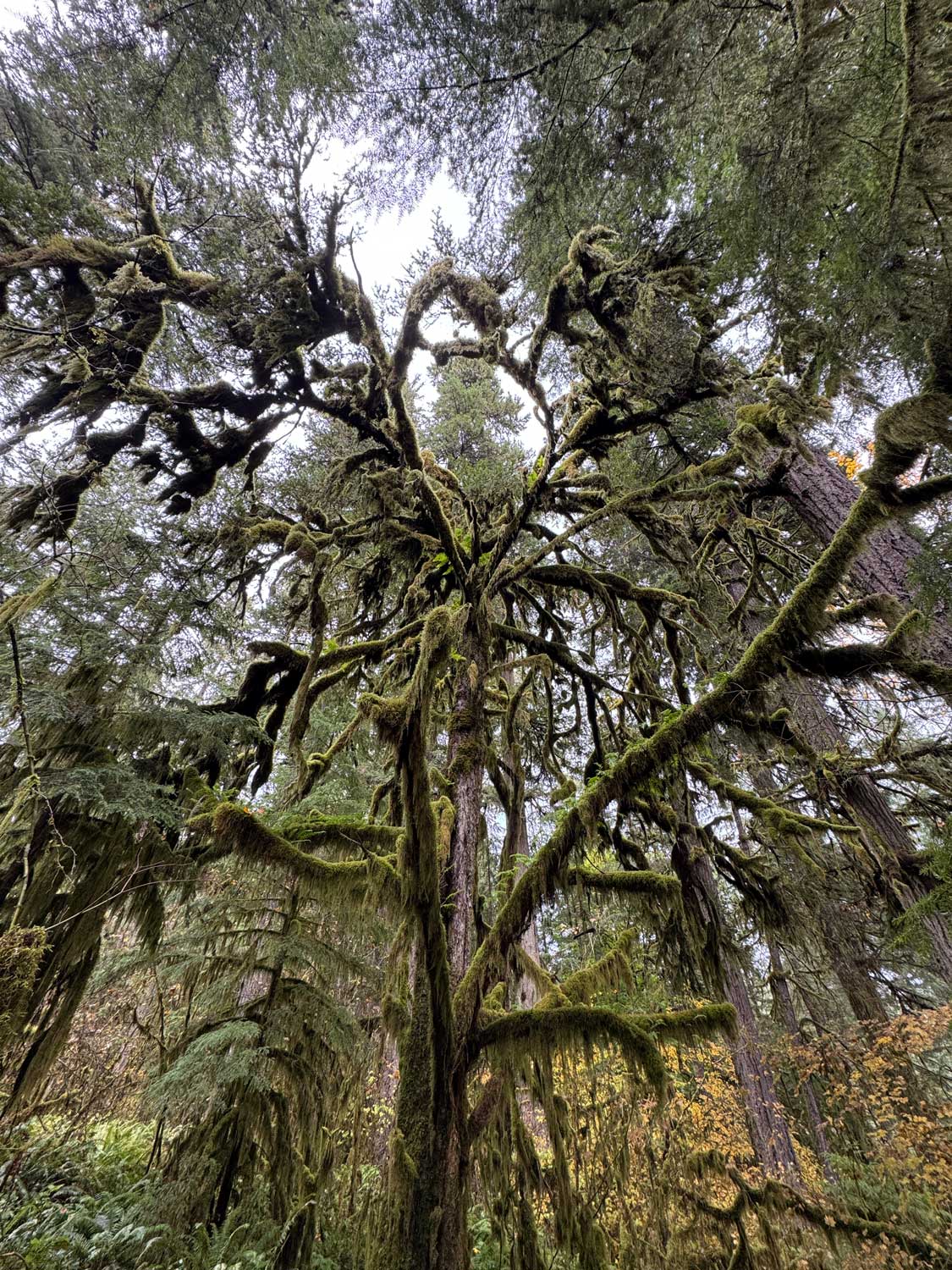
Despite this history, many small patches of BLM old growth (like at McGowan Creek) remain scattered across the checkerboard. Some have protection from logging with designations as research natural areas or areas of critical environmental concern, such as the well-known Valley of the Giants and Crabtree Valley. Others remain part of the land base from which the BLM produces timber.
And, while recreation hasn’t been emphasized as much as logging on BLM lands, you can find other nearby trail systems. Further up Marcola Road, Shotgun Creek’s trails and picnic areas have a lot to offer and Horse Rock Ridge is great for wildflower-lovers. Also nearby in the Coast Range, the Alsea Falls area offers waterfalls and mountain biking.
Being so close by is one of the things that makes BLM forest areas like McGowan Creek so special and important. Close to rural communities — and literally in the back yards of thousands of local residents — these patches on the checkerboard are providing wildlife and fish habitat in a sea of clearcuts and tree farms, filtering drinking water for local residents, and providing natural resilience to fire and climate change.
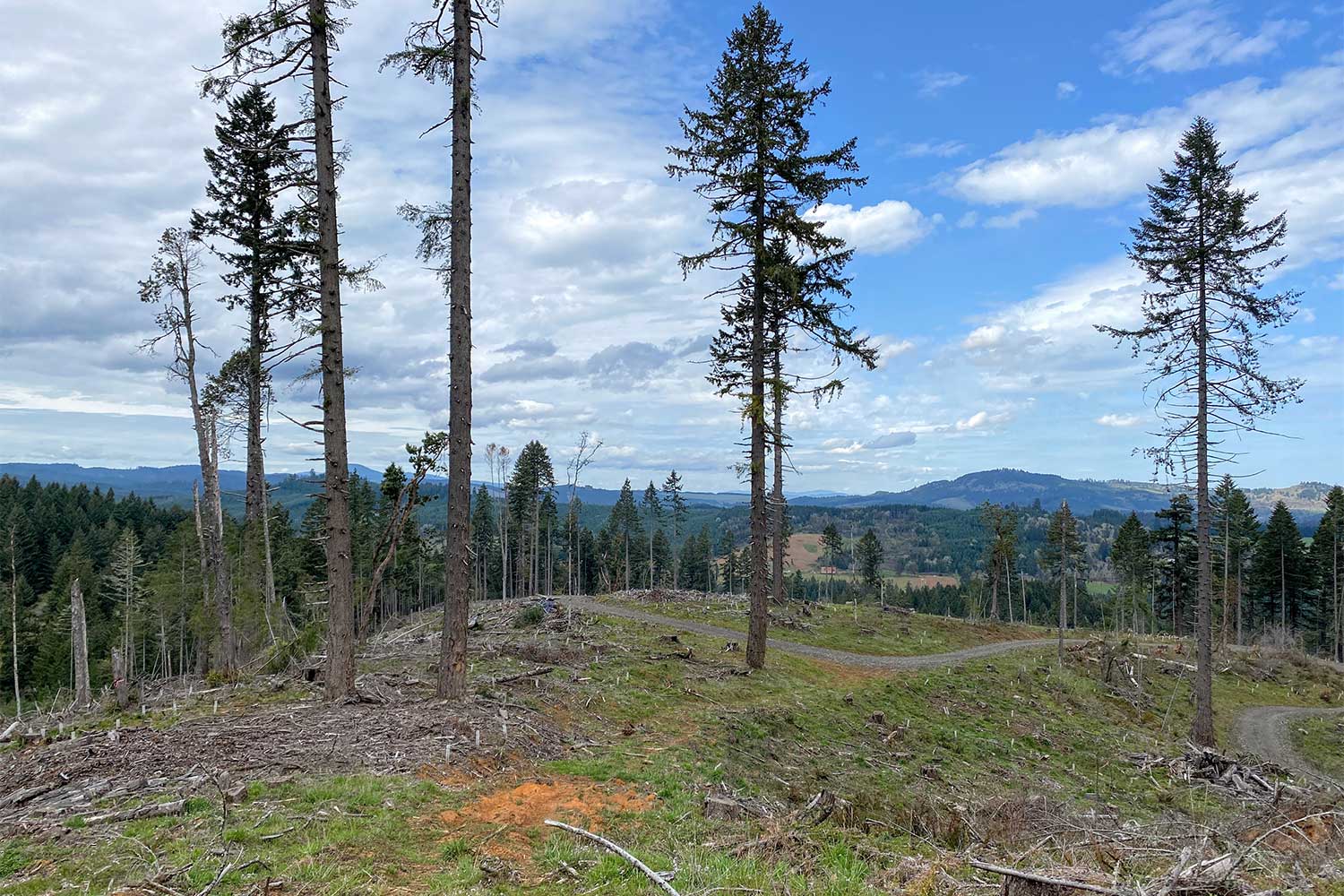
But despite increased logging levels in recent years, the BLM is under orders to prioritize logging, putting these other values at risk. The new Trump administration proposal threatens our backyard forests with a return to the days of unsustainable clearcutting. The current public comment period on this plan is open until March 23. More information can be found on the BLM’s project website Bit.ly/BLMComments and anyone can weigh in on the fate of these public lands.
Chandra LeGue of Eugene is the author of the book Oregon’s Ancient Forests: A hiking guide and is the senior conservation advocate at the nonprofit organization Oregon Wild.