The U.S. General Services Administration is planning to fence off large portions of the downtown Eugene Federal Building plaza and surrounding areas for two years, in coordination with the city of Eugene, according to records requested by the Civil Liberties Defense Center.
Eugene Police Chief Chris Skinner first announced the plan to fence off the Federal Building on Feb. 12 in a Police Commission meeting. The email records between the GSA and the city of Eugene, which begin on Feb. 19, do not give a timeline for when fencing may be installed.
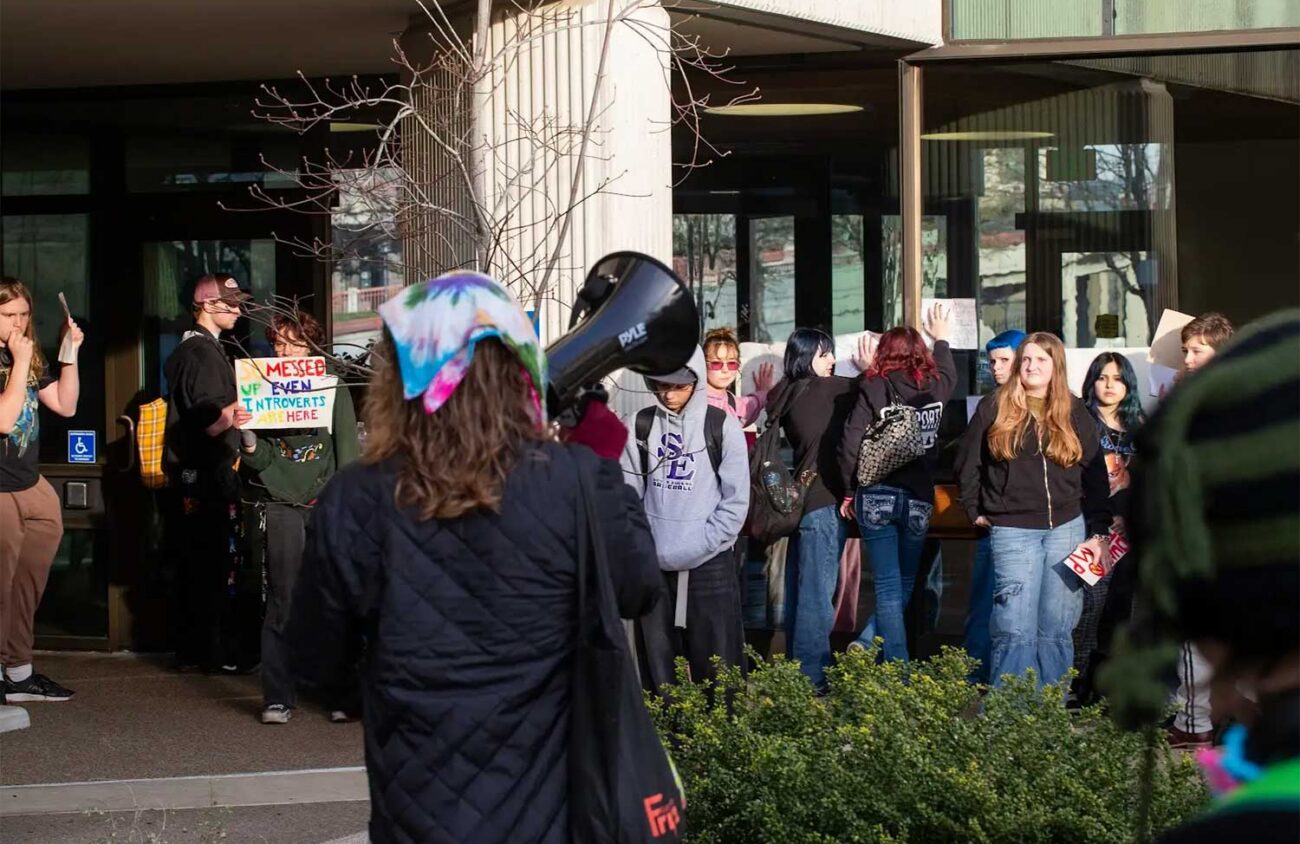
The announcement came after a Jan. 30 anti-ICE protest that the Eugene Police Department declared a riot. The Federal Building is home to an Immigration and Customs Enforcement field office, where several immigrants have been detained at routine hearings. Protests against ICE’s actions have been ongoing since early July 2025. While a few protests have involved property damage, the majority are vigils, sign-waving, singing and people in inflatable costumes.
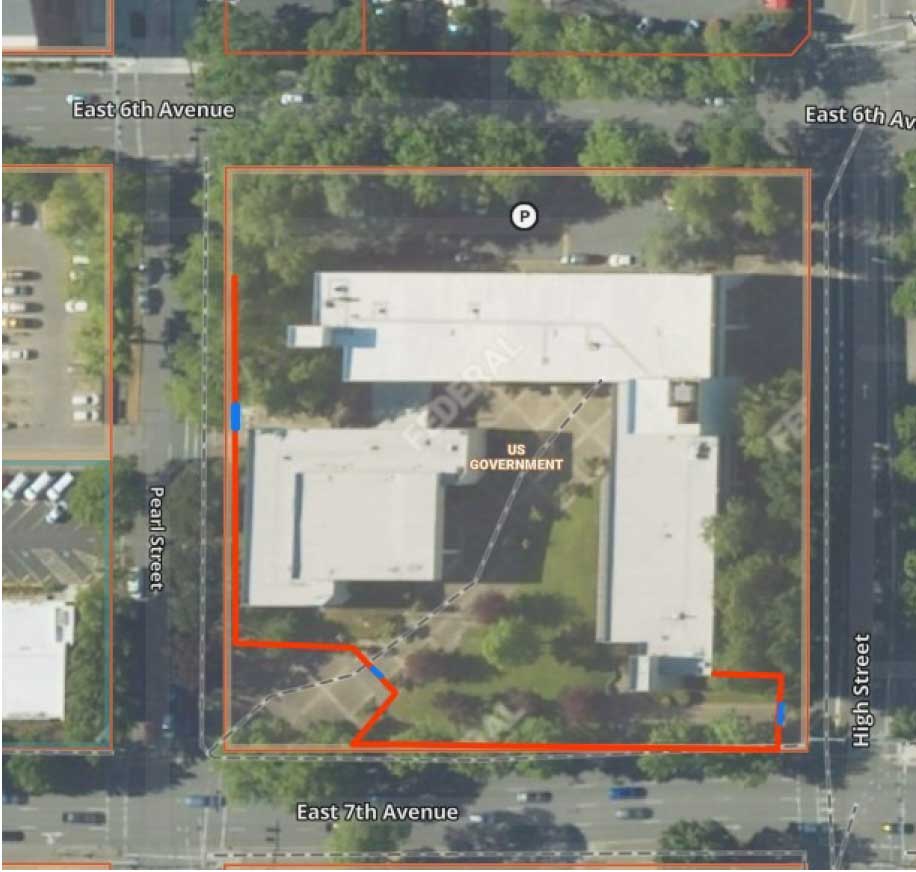
The records show that the GSA, which is tasked with overseeing the functioning of federal buildings, wants to cordon off significant portions of the Federal Building along Pearl Street and 7th Avenue with security fencing, possibly placing concrete barriers on the interior side. A designated portion of the plaza, which faces the intersection of Pearl and 7th, will remain unfenced to allow for “protesters to exercise their First Amendment rights,” records show.
In the emails, the GSA states the purpose for the fencing is to “protect the building, employees and facilitate repairs to damaged structures.”
In a statement to Eugene Weekly, CLDC director of litigation and advocacy Lauren Regan writes, “The federal government’s plan to conspire with the city of Eugene to close traditional public forums like the federal plaza and city sidewalks is totally unconstitutional.” The CLDC is a legal defense nonprofit for grassroots activists nationwide.
Regan writes that the GSA’s claim that it needs to fence off the property for two years in order to fix broken windows is an attempt to veil its true intention to limit the ability of the public to monitor and protest ICE activity.
“Both the city of Eugene and the federal administration are attempting to hide these unconstitutional plans from the public and did not engage in any public notice or process — whether pursuant to NEPA [National Environmental Policy Act] or any city government process,” she writes.
Regan writes that the CLDC will file a constitutional challenge to the plans and seek an immediate injunction, stopping the construction of “military style fencing from shutting down the First Amendment rights of the Eugene community.”
Part of the proposed fencing may be situated upon city sidewalks on Pearl Street and 7th Avenue. The GSA must receive permits from the city of Eugene’s Planning and Development department before moving forward with constructing fences on city property.
In communications reviewed by Eugene Weekly, Ryan Anderson, Oregon field office facility manager for the GSA’s Public Buildings Service, outlines two options for the installation of fencing.
Option one requires the partial closure of the city right-of-way on Pearl Street from the building’s plaza to the property line. It appears, according to EW and Regan’s review of the records, that the fence would not affect the street but would block pedestrians from using the sidewalk.
Option two would end the fence at the existing concrete walls along Pearl Street, negating the need for a closure.
In an email to Eugene Weekly, Elle O’Casey, director of communications for the city of Eugene, writes, “Because the building is on federal property, the city cannot apply local fence codes or prevent the project from moving forward. The city cannot approve or deny right-of-way use permits based on who is applying for the permit.”
O’Casey writes that the GSA is required to get a right-of-way use permit if any work involves the use of public property, including sidewalks. She writes that because the city has not yet received a permit application from the GSA, she is unaware of the timing, duration or where the fence may be placed.
In an email to the Weekly, the GSA says it “is installing a temporary security barrier along the perimeter of the Federal Building at 211 East 7th Avenue in Eugene. This measure is necessary to ensure the continued safety and security of the building occupants and the facility itself.”
The GSA, which attributed its comment to “a GSA spokesperson,” did not respond to questions about when the fencing would be installed, the projected cost, maintaining access to the plaza for free speech activities and if the fencing would block sidewalks on Pearl Street.
Anderson writes in the emails to the city that, to ensure compliance with the Americans with Disabilities Act, fencing may be placed on federal property along 7th Avenue to ensure a 4-foot clear path on the sidewalks.
The height of the proposed fencing was not mentioned in the communications or the planning documents.
In an additional records request to EPD regarding the proposed fencing, Eugene police are asking the CLDC to pay $11,476 for 197 documents relating to the project. In the cost estimate, Chris Stetson, EPD public records program supervisor, writes that it will take 207 hours to “review and separate exempt and non-exempt information.”