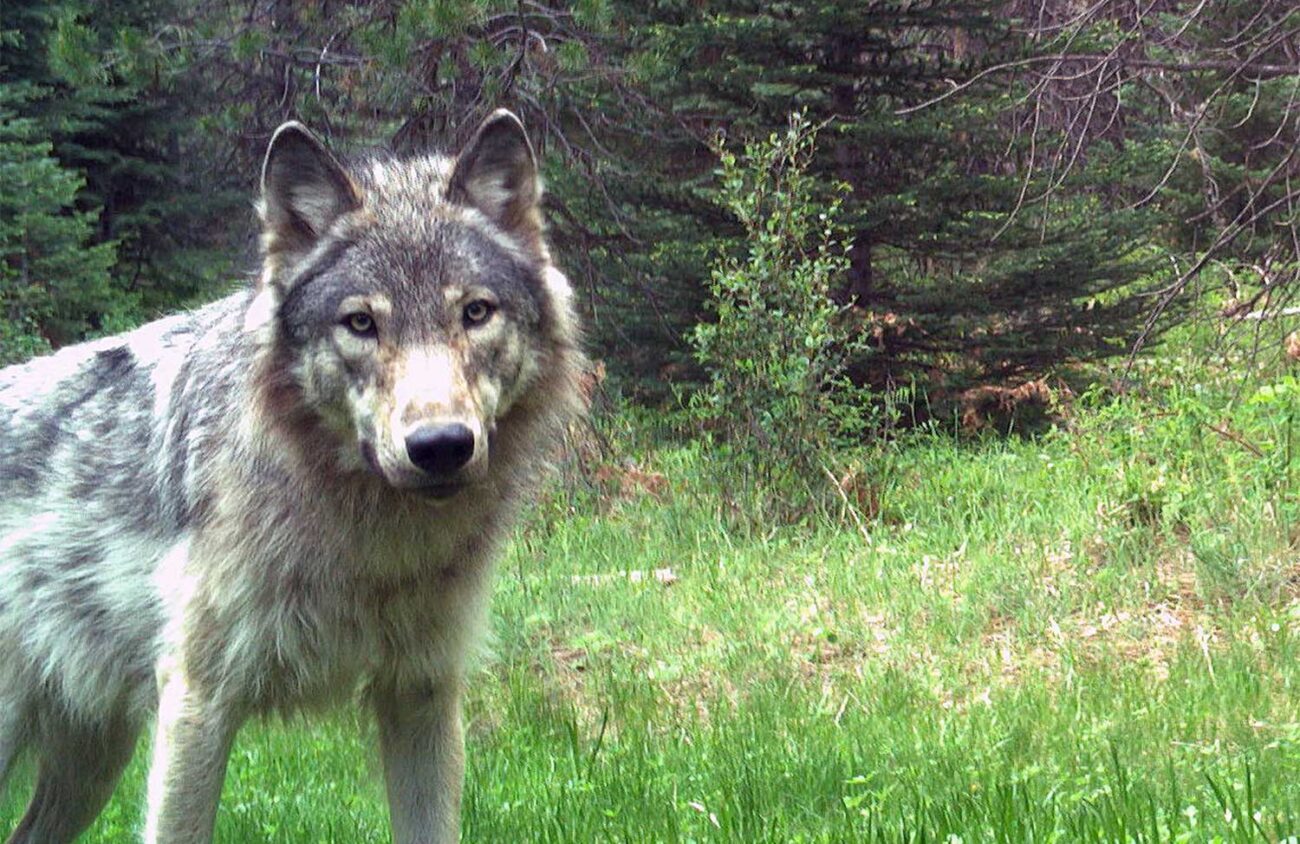
More than 100 years ago, Oregon waged a war on wolves to the point where they were extirpated — becoming extinct in the state. These days, wolves are back and growing stronger. Conservationists say their return is a net positive for Oregon’s ecosystems, but opponents say the predators are an unnecessary burden to Oregon’s livestock farmers.
Some provisions of House Bill 4134, “1.25% for Wildlife,” signed by Gov. Tina Kotek April 9, increased funding for farmers to adopt methods that prevent wolves from preying on livestock. It also increases reimbursement funds for farmers who lose livestock to wolf attacks.
As the wolf populations grow, interactions between wolves and livestock increase, sometimes resulting in wolves killing the livestock — something Bethany Cotton, Cascadia Wildlands conservation director, says they typically do not do. She says that while it does happen, it’s much rarer than people think.
According to the Oregon Department of Fish and Wildlife, the state has seen an average of 74 confirmed wolf-related depredations from 2022 to 2024. “It’s actually higher from buzzards and eagles, which usually target lambs during the lambing season, and it’s far smaller than the weather and other impacts,” Cotton says. She adds that over 60 percent of farmers who reported loss of livestock to wolves experienced just one loss a year and were later able to employ non-lethal deterrents to prevent further cases.
Cascadia Wildlands and other conservation advocates successfully lobbied for the passage of HB 4134. Parts of the bill increased funding for the depredation compensation program and for the distribution of nonlethal wolf deterrents like radio-activated guard boxes, which detect radio collars worn by wolves and deter them by emitting disruptive lights and noises.
Oregon Republican state Sen. Todd Nash, representing District 29, voted for HB 4134, saying, “I think that it’s responsible and if we’re going to have wolves on the landscape, ranchers should be compensated for their losses.”
Cotton says the benefits that wolves bring to Oregon’s ecosystems far outweigh the downsides. When Yellowstone National Park reintroduced wolves in 1995, elk populations had ballooned, with their grazing causing damage to the riparian zones. When the wolves returned, the elk regained a fear of predators, causing them to move more often, allowing the damaged zones to heal. The phenomenon of when changes in apex predator populations alter the populations of life at lower levels of the food chain is referred to as a “trophic cascade.”
“When they return, we have a much more balanced ecosystem,” Cotton says.
Cotton points out that wolves often target the sick and weak members of the prey species, which may reduce the spread of disease. “Sometimes people are like, ‘Well, the wolves are eating all the elk and so the hunters don’t like them’ while hunters are out for the trophy elk, which are the healthiest individuals and that’s the opposite of what a wolf would target,” she says.
The gray wolf is native to Oregon, and historical accounts show that they were abundant before mass colonization by American settlers. In 1843, the Oregon Wolf Association issued the region’s first recorded wolf bounty, offering $3 for a large wolf. Later, in 1913, the Oregon State Game Commission offered a $20 bounty on top of the $5 the state offered, making the price per wolf killed $25, which is roughly $818 today.
The last recorded bounty collection for a wolf occurred in 1947, claimed by someone in Florence.
A 2024 study conducted by researchers at Oregon State University found that after wolves were extirpated, elk populations grew, causing overgrazing and a decline in woody vegetation. The study also suggests that coyote numbers surged, negatively impacting smaller animals and birds. The first modern Oregon wolf pack, the Imnaha Pack, established itself in 2009 after a female, nicknamed Sophie by Oregon Wild, gave birth to pups near the Wallowa Mountains, making them the first documented wolves to be born in the state in nearly 60 years. ODFW killed the pack in 2016 after a series of depredations.
Now, Oregon is home to 25 wolf packs, the majority of which live in Eastern Oregon. “They are such incredible creatures; they have family structures that are so similar to ours,” says Story Warren, wildlife protection program manager for Humane World for Animals. Each wolf pack consists of a breeding pair and their offspring, with typically around six wolves to a pack in Oregon.
Cotton says the use of non-lethal deterrents combined with programs like the Wolf Depredation Compensation and Financial Assistance Grant, which reimburses livestock producers for confirmed depredations, are effective tools to prevent chronic depredation. “The single most effective method is human presence, and that’s often referred to as range riding,” Cotton says. “It’s important that range riding is done correctly.” Range riding is best performed at dawn or dusk, when predation is most likely to occur, she says.
Danielle Moser, wildlife program manager of Oregon Wild, says of deterrents, “If we can prevent conflict, it means we all win.” She adds, “Less dead livestock means less dead wolves, which means better coexistence.”
Nash, a cattle rancher, says wolves in Oregon are a burden on Oregon’s livestock farmers. “The emotional toll is the greatest toll it takes on everybody,” Nash says of depredation. “It’s not in these ranchers’ DNA to stand by and do very little to protect their livestock, so the emotional toll of knowing you’re going to have some sort of depredation is really significant.”
Nash adds that the financial burdens associated with not only the loss of the livestock itself, but also the added cost of things like improving fencing and ranch riding discourages farmers. Nash says when a wolf is in the area, it causes stress on the herd, which in turn, decreases conception rates. “All of those things add up and they’re actually more significant than the actual loss of something when it’s killed,” he says.
Cotton believes that some Oregon ranchers are fearful of wolves due to generations of teachings both in families and media that portray them as dangerous, evil animals. “We have to make sure that we acknowledge that fear and legitimate safety concerns are not the same thing,” she says. “Coexisting with wildlife on the landscape, especially when you’re ranching on public lands that belong to all of us, that are held in trust for all of us, is one of those costs of doing business.” There are seven packs of wolves in the western zone compared to the east side’s 18. The Indigo pack, the only pack whose territory extends into Lane County, is active with six members. The pack produced two surviving pups in 2024.