Earth Day doesn’t have to mean filling your cart with new “eco-friendly” products.
Too often, sustainability gets packaged as something you can buy — even when many of those products are just ordinary items wrapped in earthy colors and feel-good buzzwords. That kind of greenwashing makes it easy to forget the simplest solution: Using what you already have, which is usually cheaper, too.
Many companies profit from selling the idea that solving environmental problems requires another purchase, shifting responsibility onto consumers while continuing practices that create waste on a much larger scale. But reducing your footprint doesn’t always mean buying something new. Sometimes it means making better use of what’s already in your home.
Even when you do need something new to you, buying used is often the more affordable — and more interesting — choice. Large thrift chains like Goodwill can sometimes be unpredictable when it comes to pricing, but Eugene has no shortage of local spots that make reuse practical and accessible.
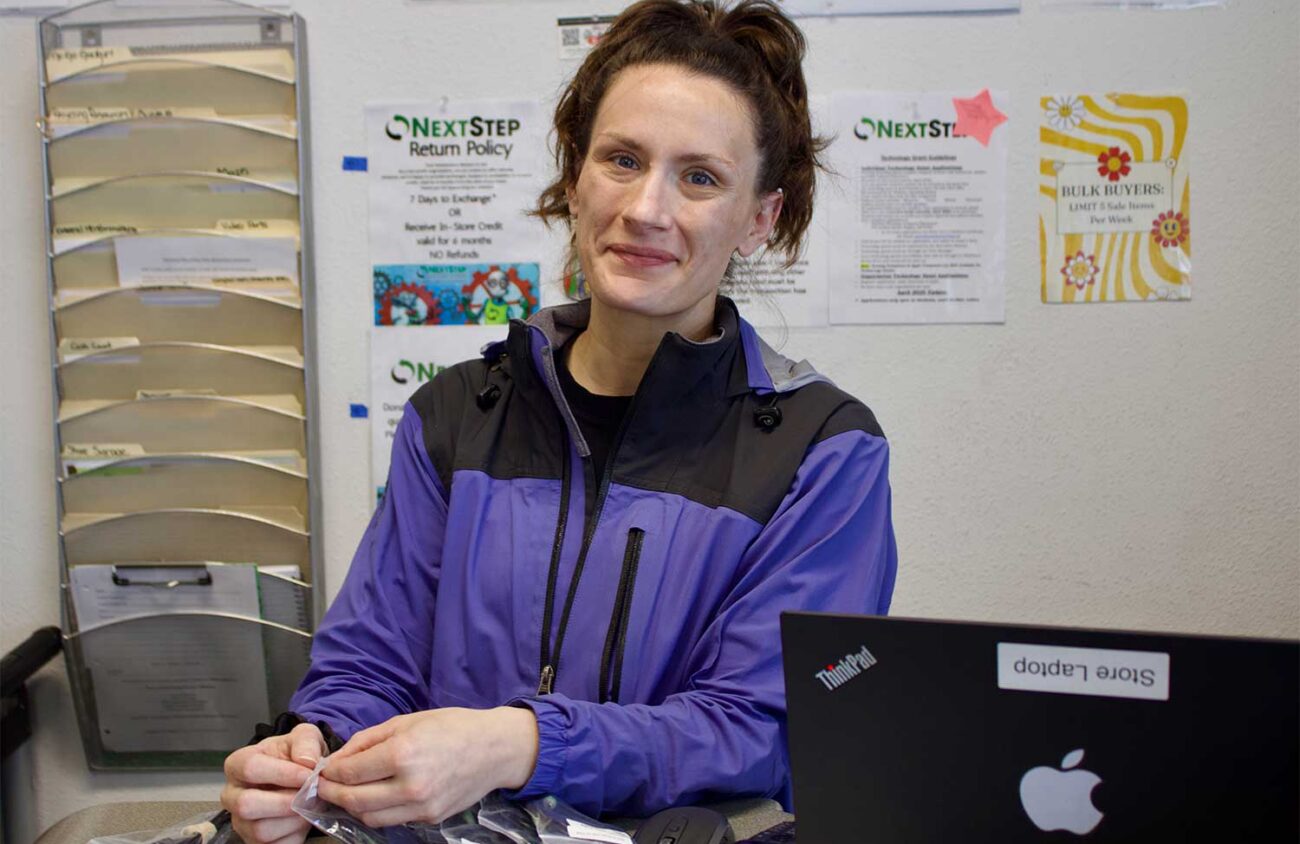
Places like BRING Recycling, MECCA and NextStep Recycling focus on giving materials and electronics a second life, often at prices far lower than buying new. “So many things people throw away that they don’t realize they can recycle,” says Jessica Ahrenholtz, executive director of NextStep. “Reuse is always our number one goal and priority.”
A yogurt container? That’s a flowerpot waiting to happen. A takeout container with a lid? Storage for buttons, beans, screws or your next lunch — whatever mysterious objects have been multiplying in the back of your kitchen. Some beekeepers even reuse food containers in their setups to help integrate queens into a new hive.
Organizations like BRING encourage exactly that kind of everyday reuse — the kind that doesn’t require buying new supplies or becoming a crafting expert overnight. According to Emily Reynolds, BRING’s director of education and outreach, the organization helps keep more than 2 million pounds of reusable building materials out of the landfill each year, giving those materials a second life in homes and projects across the community — something she calls just a “drop in the bucket” compared to the amount of waste produced in Lane County.
“We’re big proponents of repurposing glass jars for storage or bulk shopping and reusing old T-shirts by turning them into cleaning rags,” Reynolds says. “Broken dishes can become mosaic art, scrap wood can turn into garden beds and old drawers can be turned into shelving.”
Some of the most satisfying reuse projects start with things that seem destined for the trash.
Bubble mailers — the padded envelopes that pile up after online shopping — can be cut into strips and stuffed into crochet rugs that loop the plastic into tightly knotted rugs or integrated into the stuffing of cushions. It sounds strange until you try it. Then it becomes one of those projects that feels weirdly rewarding.
Even your collection of newspapers can become something new.
Got a few copies of Eugene Weekly stacked in a corner? That’s not clutter — it’s raw material.
Shred old newspaper, soak it in water and press it flat on a screen for a few days, and suddenly you’ve got handmade paper. Add seeds before it dries and you’ve got plantable paper — perfect for starting seedlings or handing to a friend who likes gardening more than you do.
Need firestarter? Roll newspapers into tight bundles. Need mulch? Shred it and spread it in garden beds.
Upcycling doesn’t have to stop at paper and plastic.
Electronics are another category people hesitate about — mostly because they’re unsure what to do with them. Ahrenholtz of NextStep says people often assume broken electronics are useless — or worse, that recycling centers won’t want them.
“A lot of times people bring us things and tell us it’s working when it’s not, because they think we won’t accept it if it’s broken,” she says. “But if it’s not working, then we can recycle it properly.”
For some people, trash becomes art.
Old stuffed animals headed for donation piles can be carefully opened, destuffed and reused in new projects. Yes, it sounds a little like Sid from Toy Story, but honestly, Sid was onto something — minus the fireworks and sibling sabotage.
Across Eugene, organizations are helping make reuse easier — especially for people who don’t know where to start.
Materials Exchange Center for Community Arts (MECCA), has long served as a hub for reuse in Eugene. Walk through the space and it feels a little like stepping into a treasure chest — shelves full of things that might look like junk somewhere else but feel full of possibility here.
“One thing MECCA does really well is encouraging people to look at things in a different way,” says Heather Campbell, executive director of MECCA. “Maybe something has a different meaning than its original intent for the second, third or fourth iteration of what it could be.”
Spaces like MECCA don’t just make reuse possible — they make it fun. Walk through the aisles and it’s easy to start seeing possibilities instead of problems.
Broken crayons, for example, don’t have to end up in the trash. Melt them down in silicone molds and suddenly those stubby leftovers become bright, swirled crayons that look brand new — sometimes even better than the originals. It’s a small project, but one that makes use of something most people assume is finished.
NextStep Recycling does similar work with electronics, appliances and cords — the things many of us shove into drawers and forget about.
“A lot of people think of us as a place to take their old junk, and they don’t realize how much we give back to the community,” Ahrenholtz says.
That work goes beyond keeping things out of the landfill.
“Providing technology to those with barriers to education or employment is a big part of our mission,” she says.
Even small items — the tangled mess of cords in a junk drawer — matter. “Any old cord and cable — the ones sitting in junk drawers — we’ll take those,” she says.
At its core, reuse isn’t about perfection. It’s about perspective.
“The most environmentally friendly product that exists is the one that already exists — the one that you already have,” Reynolds says.
Together, these organizations offer a reminder that sustainability doesn’t have to be complicated or expensive. Sometimes it’s as simple as saving a yogurt container, fixing a favorite bag or finally dealing with that drawer full of mystery cords.
If you’re not sure where to start, donating is always an option. Items that feel like clutter to you might be exactly what someone else needs. BRING accepts building materials and larger household items, NextStep takes electronics — working or not — including things like old holiday lights, and MECCA specializes in collecting materials that can be reused for art and craft projects instead of ending up in the trash.