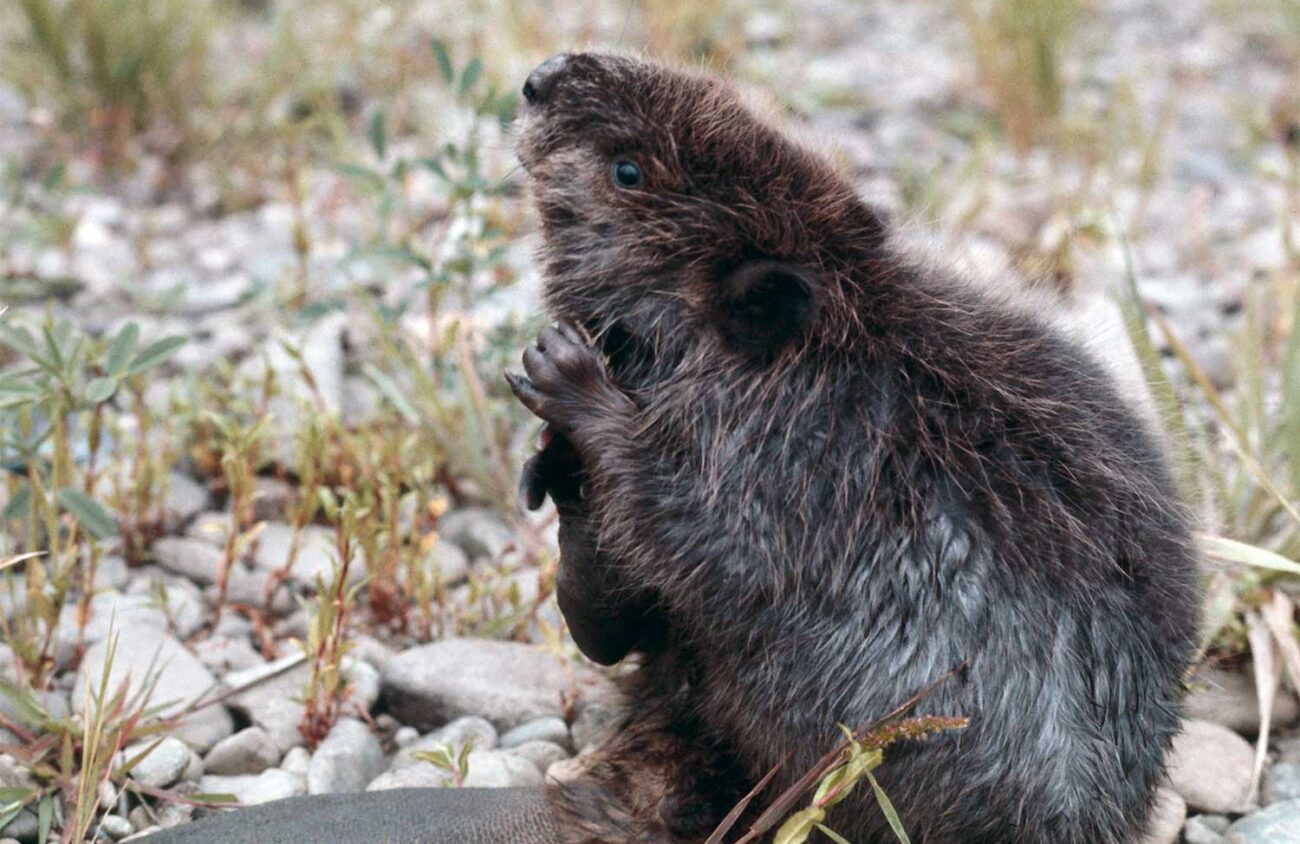
In late 2025 and early 2026, Eugene Water and Electric Board contracted the lethal removal of beaver from the Leaburg Canal using bows and arrows, describing it as necessary under federal safety guidelines to prevent flooding and damage. The public utility says it will continue to monitor the situation and may kill more beaver in the future.
The Leaburg Canal is part of the Leaburg Hydroelectric Project on the McKenzie River. The Leaburg Dam is set to be decommissioned in 2033. The canal may be modified and remain.
EWEB first notified the public of its efforts to control the beaver population in a comment under a poll in the Blue River Bulletin Board on Facebook, which asked members for their opinions on killing beaver in the Leaburg Canal. The vast majority — 111 of the 163 votes in the informal poll — said they were against killing the beaver.
In response, Adam Spencer, EWEB communications specialist, commented that EWEB hired a family-run wildlife services firm to “remove beavers from portions of the canal.” EWEB did not name the company to the Weekly.
In the Facebook comment, Spencer writes that EWEB had not previously announced it was killing beaver because, “it is just sad and we tried to spare everyone the heartache of hearing about the sad requirement we have to fulfill as part of managing the Leaburg Project. We don’t like doing this.”
He adds that EWEB was advised that it was more merciful to kill the animals quickly rather than cause suffering or harm to the beavers through translocation.
The wildlife service was hunting the beaver at night, when beaver are most active, using bows and arrows to reduce the noise levels gunshots would cause. Wildlife expert Sheanna Steingass says, “Bow and arrow is not what I would call ethical.” She adds that it leaves room for error that could cause undue harm not just to the beaver, but also adds an additional component of danger to humans.
In an email to Eugene Weekly, EWEB spokesperson Aaron Orlowski writes, “The team removed three beavers and one nutria between November 2025 and January 2026, at which point EWEB and the contractor decided that we would resume monitoring the situation before deciding if more animal control would be needed.”
Orlowski writes that beaver burrowing into the canal walls can create voids and weak spots inside the embankment that can weaken the structural integrity of not just the canal, but the dam itself.
“The Leaburg Canal is officially categorized as ‘high hazard,’ because a failure could pose a risk to downstream communities. Addressing these conditions is not optional; it is a safety requirement,” he writes.
In the Facebook comment, Spencer says that the Oregon Department of Fish and Wildlife advised EWEB to lethally remove the beaver due to the difficulties of relocating beaver populations.
ODFW carnivore and furbearer coordinator Samantha Fino writes in an email to Eugene Weekly, “Relocation is a tool available to mitigate beaver damage, but oftentimes it is not a recommended one. Whole family groups should be captured and are released into an unfamiliar area, and as such, the process is extremely stressful for them and they become very vulnerable in their new ‘home’ that they know nothing about.”
Fino adds that mortality of relocated beavers is high and once moved, the beaver can travel at least 20 kilometers from their drop zone, which could impact neighboring property or even introduce disease into other beaver populations.
Steingass says of relocation, “It is a little tricky, because beavers need a specific type of habitat, food and cover to be successful.” Steingass, environmental project and wildlife coexistence program coordinator for Benton County, continues, “But that being said, there’s actually a number of models that people are using now where we can actually model and look at potential habitats that would be successful for beavers.”
Steingass suggests working with landowners and other agencies seeking to reintroduce beavers into their environment for ecological restoration.
She says that EWEB and other agencies should work harder to use effective coexistence tools, like tree paint that prevents the beavers from chewing them, fencing and even “beaver deceivers” that control water flow.
Steingass adds that native beaver can play an important role in habitat restoration, especially in areas near the Leaburg Canal, where the 2020 Holiday Farm Fire burned 173,000 acres.
“Beavers are ecosystem engineers and keystone species, meaning they have a disproportionate impact on the habitat that they live in,” Steingass says. “Some of the positive impacts that beavers can have include raising water tables and saturating soils in watersheds to prevent things like drought.”
Fino says that while beaver can, in fact, foster habitats for species of the greatest conservation need, the ones at the Leaburg Canal were causing too much damage for the benefits to outweigh the risks. “The weakened canal was deemed a dam safety issue by the Emergency Regulatory Commission, who follow national dam safety guidance by FEMA and the Army Corps of Engineers,” Fino writes. “Beaver activity is considered by these entities as a high hazard, and as such, removal was the best course of action.”
Orlowski writes that “as long as there are canal embankments in place, burrowing activity will continue to pose a risk and EWEB will continue to monitor conditions and adjust wildlife management practices as needed to maintain compliance.”