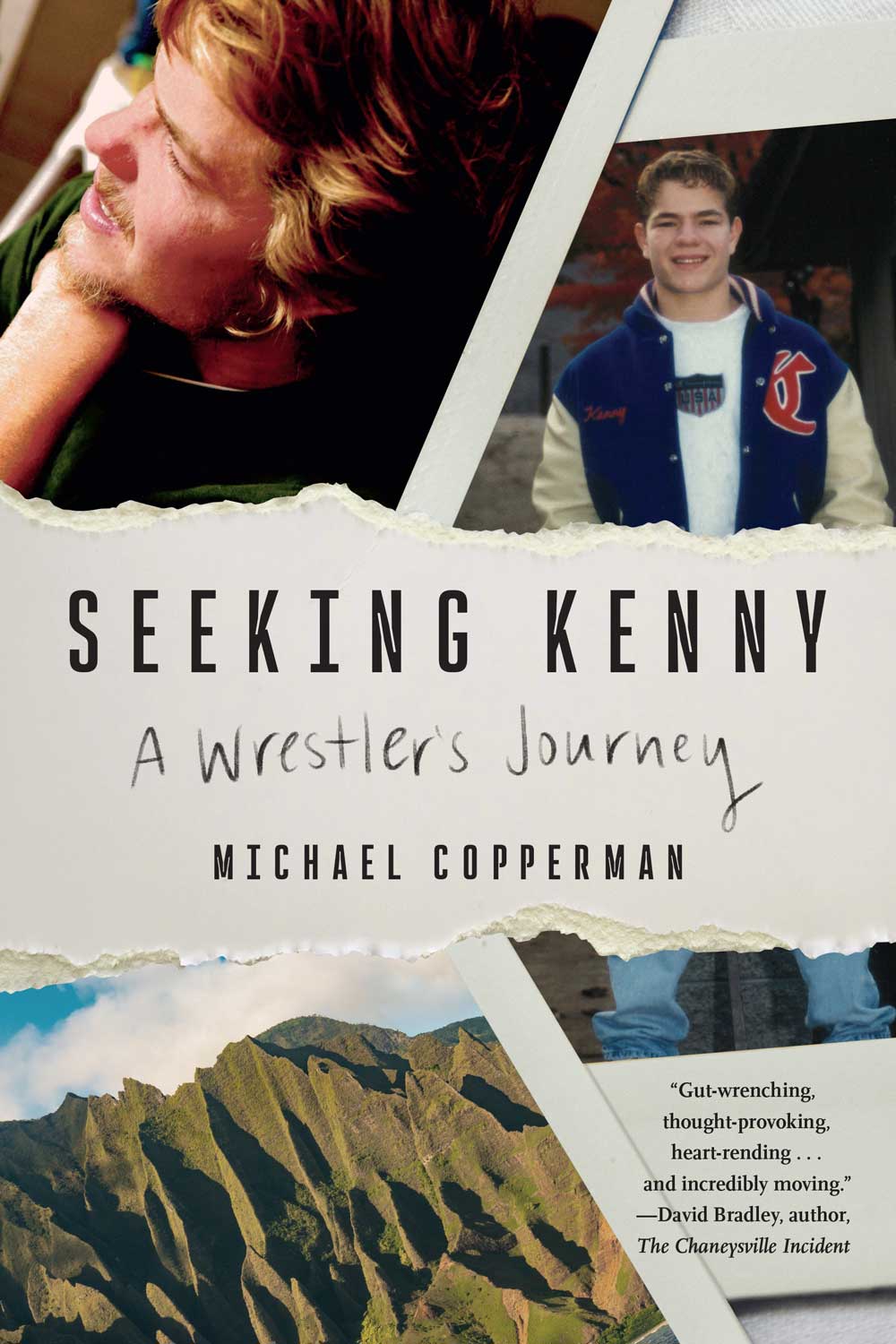
Eugene-born Kenny Cox was once the best high school wrestler in the nation, winning five Junior National titles, 10 Oregon championships and the 1997 ASICS National Wrestler of the Year award. Wrestling for Churchill High School, Kenny became a local legend and went on to wrestle for the University of Oregon.
After retiring from competitive wrestling during his time at UO, Kenny struggled with finding identity and adopted an unconventional lifestyle that embodied his enduring determination to take on challenges and adventures. In 2009, after spending 70 days in the remote jungle of Kalalau Valley, Kauai, hunting and scavenging for food, Kenny tragically died of acute hemorrhagic pneumonia and sepsis.
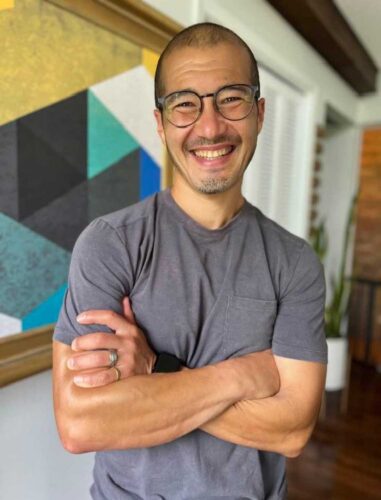
Seeking Kenny: A Wrestler’s Journey by Michael Copperman tells the story of Kenny’s life through interviews with Kenny’s family and friends, research, travel and his own experiences with Kenny. Copperman, who wrestled for South Eugene High School, describes the book as being told “from the point of view of someone who grew up wanting to be like Kenny Cox.”
He says, “It’s a book about me trying to understand what happened to Kenny, so I can also understand what happened to me.” Copperman, who was just a year younger than Kenny, shared Kenny’s intense love for and commitment to the sport. The two wrestled together in high school and later coached together at South Eugene.
Copperman, who now teaches writing at Michigan State University, depicts Kenny as a deeply committed athlete who took on the sport to the extreme, which he says was “inextricably linked” to the challenging travels Kenny engaged in later in life, which included going from Oregon to Baja California on foot. As Kenny became a wrestler, “he became more and more caught up in that idea of always pushing further, pushing harder,” Copperman says.
Copperman attributes Kenny’s determination to his character and being raised by his father, George Cox, to take on challenges and explore. George Cox, who, along with his wife Vivien, was interviewed extensively for the book, describes his son as a “boy of exploration and adventure.”
“He’s not a regular guy,” George Cox says. “He’s creative, he’s adventurous, he’s fun loving.”
Copperman interviewed Kenny’s parents for hours about his childhood, the family’s Christian beliefs and how they influenced him to become a committed wrestler, and their accounts of his trip to Kauai.
Cox is enthusiastic about the book’s release and commends the effort Copperman made to tell the story of his son’s life accurately. “Michael was very invested in [the] friendship and cared deeply,” Cox says. “He was very thorough, which gave us confidence he was going to be informed.”
Copperman also interviewed Kenny’s three sisters, past love interests and many friends that Kenny had wrestled with at UO and Churchill. “The heart of the story is both reconstructing his journey and adventure… but also really letting him emerge from the stories and accounts of those people who knew and loved him best,” he says.
Kenny’s success as a wrestler in high school slowed during his time at UO due to health issues related to cutting weight, resulting in Kenny leaving the team. Copperman details how Kenny struggled to find identity after leaving the world of competitive wrestling.
“I think that anyone who’s ever been a high school athlete, and then had that sport end… did experience a sort of loss,” he says. For athletes like Kenny, their sport gave them a “certain kind of pursuit” and a “certain sense of who they were.”
“All of a sudden, that thing is gone, and that was the thing which had told you who you were and that you were okay and right in the world, that you belonged and that you had a place,” Copperman says. “I think the greater the degree of success and commitment you had… left a bigger gap down the line.”
Although Kenny struggled with his identity after retiring from competitive wrestling, he was recognized by friends and family for possessing a strong sense of justice and unwavering kindness toward others.
“He treated each person as if they in particular mattered,” Copperman says. “That approach to the world is one that we could probably all learn a little something from, and probably more than ever…when so many of us are disconnected from one another.”
According to Cox, Kenny “had a strong will to see justice done, and a strong value system,” protesting the Iraq War and holding anti-capitalist beliefs. Cox recounts how Kenny aspired to be self-sufficient in rejection of materialism, doing his own home renovations and opting to rent his house out while living in a tent in his backyard.
“He had a desire to live off the land in community with other people that held his values,” Cox says.
Copperman says that Kenny’s story can help readers reflect on the ways they choose to live. “We might ultimately, as he concluded, find that after those journeys and that personal searching is done, that what we want is to find communities and people and a place that we want to inhabit.”
Michael Copperman will be in Eugene to release Seeking Kenny at Tsunami Books 5 pm July 5; at J. Michaels Books 5:30 pm July 16; and at the Oregon Country Fair at Chez Rays 2:30 pm July 10 and at Front Porch with Kevin Sampsell noon, July 11. Order online at UIpress.UIowa.edu/Books/Seeking-Kenny.