A $1 billion donation from Nike billionaires Phil and Penny Knight has faculty and graduate students at the University of Oregon feeling left out of the conversation and fearful for their futures.
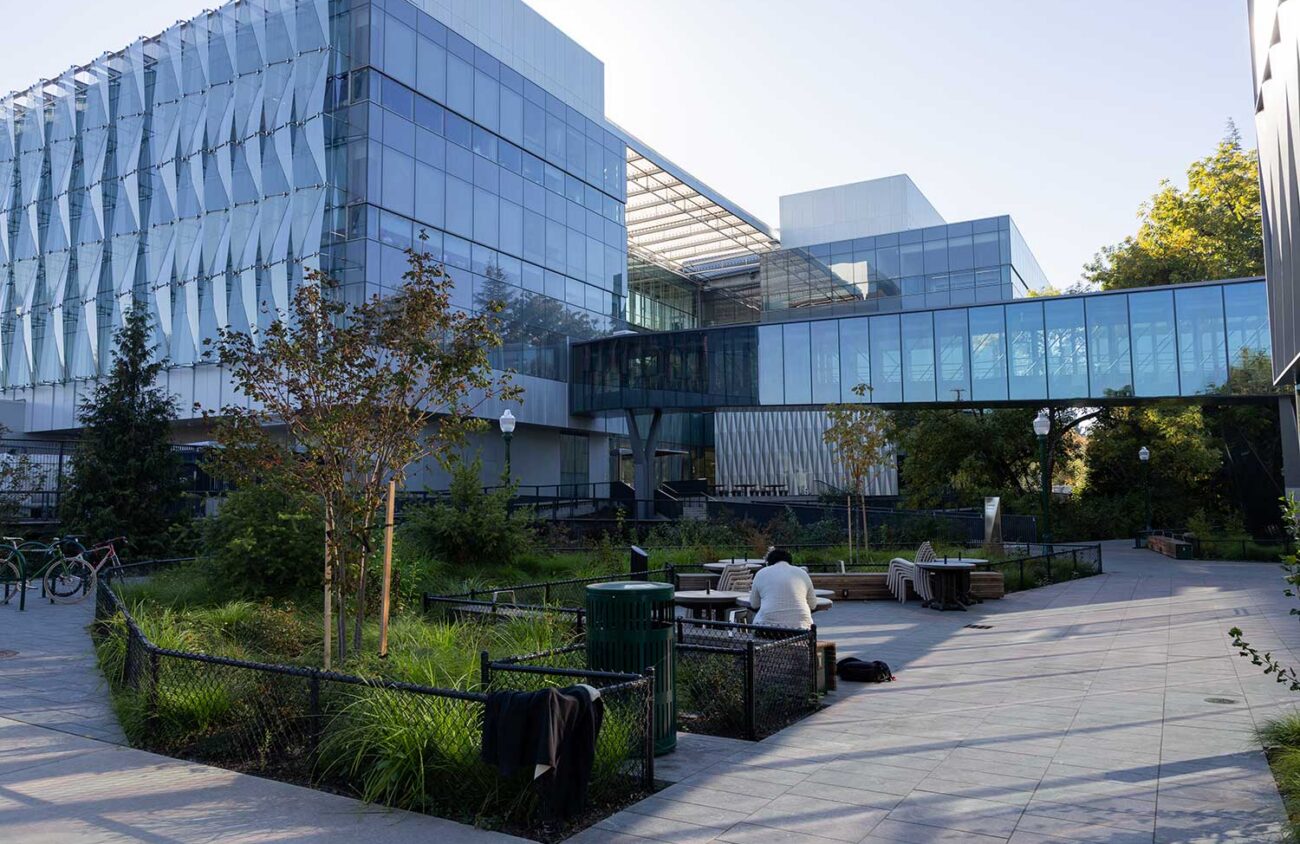
The university announced the record-setting donation Sept. 23, stating that the funds will be used to establish a new college of engineering at the Phil and Penny Knight Campus for Accelerating Scientific Impact on Franklin Boulevard. The UO says in its press release that the new college will bring new faculty and researchers to the university. Out-of-state tuition is the main source of the university’s income.
The $1 billion will not, however, be used to directly address the $65 million projected budget deficit the university is facing.
In May, UO President Karl Scholz, announced the $65 million projected structural deficit and since then, the university has been looking for ways to cut down on spending. In an email to the College of Arts and Sciences, the university’s largest academic department, CAS dean Chris Poulsen writes that university administrators are asking CAS to model budget reductions of five, ten and 15 percent from its 2027 general fund. The modeled reductions range from $11.3 million to $29.5 million.
Angela Seydel, the university’s director of issues management, responded to questions via email, writing that this summer, “Every dean and vice president modeled what various reductions of the Education & General Fund would mean for their areas. They then walked the president, provost, and chief financial officer through the implications. Those are scenarios, not proposals.”
French Professor Fabienne Moore says she’s concerned the university will begin sunsetting long-standing doctoral programs, like those within the Department of Romance Languages. In an “academic vision document” posted online by the Office of the Provost, the university writes that strong and healthy Ph.D. programs should have high publication rates, short time-to-degrees and external grant support.
The provost’s document outlines three tiers of Ph.D. programs, with Tier A programs being the “strongest,” Tier B programs being “strong with intentional investment” and Tier C programs being “candidates for restructuring or sunset.”
Moore says because her students often have to teach in a graduate employment role for several years to finish their degrees, they have little time to research and publish. “It’s one of those examples where I could see a generous donor actually changing the lives of doctoral students in the humanities if they were to fund a year of research,” Moore says. “I really think that the College of Arts and Sciences is not getting a fair share of the university budget relative to its size.”
The 2027 fiscal year general fund for CAS is $182.3 million, which accounts for approximately 11.79 percent of the projected revenue for the university’s 2026 fiscal year.
Moore says that while she is not against change, she is concerned that current changes within the UO are not moving towards a healthier university body. “I’ve observed that the pressure on the faculty, the staff, the graduate students and the undergraduate students has become really intense and it just makes people concerned,” she says of the projected budget deficit.
“When that email came through from Karl Scholz about the billion dollar donation, I gotta say, the first thing I scanned for was the $65 million deficit,” says Jacob Schmidt, a Ph.D. candidate in the UO’s History department. Schmidt says it was “very frustrating” to see that the email from Scholz ended in a statement that the donation is only to be used for the establishment of the new school, and will not be directly used to address the structural deficit. “Because just a single-digit percentage of that donation would cover this budget deficit for five years,” he says.
Schmidt says he’s confused why the Knight family would contribute such a donation when Oregon already has a college of engineering at Oregon State University. Both OSU and UO are public universities, meaning they receive state funding through the Public University Support Fund.
Schmidt asks, “Why should state money go toward competition between redundant programs versus having the best engineering school we can at OSU?”
Seydel writes that the new College of Engineering “builds on a decade of Knight Campus results and complements, rather than duplicates, engineering programs elsewhere in the state.”
But like Moore, Schmidt says he’s concerned that his department may see a sunsetting of its doctoral programs. “I think it’s a very shortsighted move and would be detrimental in the end.”
Seydel writes that proposed academic changes will be shared publicly in late October, and the university will welcome feedback on the proposals in November. She adds that in December, proposals will be finalized.
Kate Mills, associate professor of psychology and president of United Academics of the University of Oregon, the faculty union representing more than 1,700 workers on campus, says she does not understand why the current budget situation was not factored into negotiations for the $1 billion donation. “It does seem like the health of the overall school should matter right now in terms of us being able to be in a position to make the vision of this gift fully realized in the future,” she says. “Faculty are already so worried on this campus about their job security.”