For five decades, life in Oregon has centered on a simple planning principle: Almost all major real estate development will take place in cities, while rural areas are left relatively intact, mainly for farms, forests and scattered housing.
Now, a state agency looks to upend that. The Department of Land Conservation and Development has drafted rules to encourage the construction of apartments and other housing, plus commercial and light-industrial development, in and around so-called unincorporated communities in Oregon’s rural areas. There are at least 272 of these in the state. The agency doesn’t have an exact count.
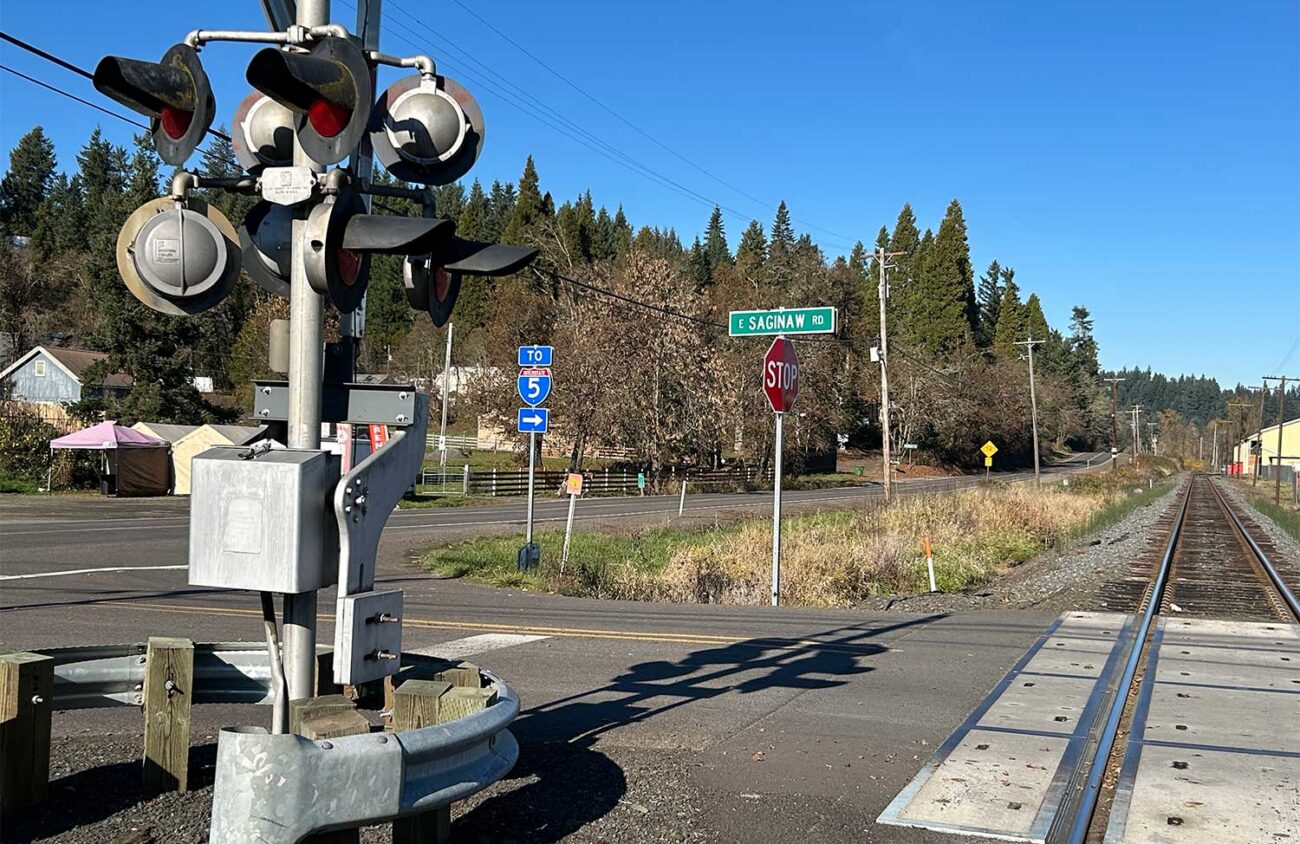
Lane County has the most of any: 35. They’re places like Marcola, Walterville, Jasper, Fall Creek, Pleasant Hill, Saginaw, Dorena, Lorane and Mapleton.
They typically boast a few dozen homes, a convenience store, maybe a church and an old wood-products mill, flanked by farms, orchards, plant nurseries, vineyards and timberland.
Under the proposed rules, at the discretion of county boards of commissioners, developers could pack them with new construction.
The rapidly drafted and still-nebulous plan by DLCD has sparked an angry backlash around the state from residents who live in and near these small, laid-back communities. More development would deplete aquifers, strain already-feeble fire protection during summer droughts and pave over farmland with spendy subdivisions, vacation homes and expensive short-stay rentals, they say.
The public comments pouring in have been almost exclusively negative — often scathing and incredulous. Of the more than 120 public comments received thus far, only a single one is clearly supportive.
A key hearing is set in Eugene on Dec. 4 at 2:15 pm in Eugene City Hall. That’s when the state Land Conservation and Development Commission, which oversees DLCD, will hold its first and only public hearing on the rules. The panel is set to vote on them in February.
Critics say the plan comes directly from Democratic Gov. Tina Kotek, who allies herself with real-estate-development interests even as she relies on the support of environmental conservationists at the ballot box. But DLCD staff say the idea came from their ranks, prompted by a general mandate from Kotek to increase housing construction.
The agency’s explanation of what it is trying to accomplish remains fuzzy.
Agency officials acknowledge their plan and rationale are evolving. That frustrates residents and activists who treasure the state’s rural-land-protection system and view the new plan as a wedge aimed at breaking it.
In April, early in the rule-making process, DLCD cited a 2024 state study that asserted Oregon needs nearly half a million new housing units in the next 20 years. Kotek has told state agencies involved in housing to work on meeting that goal. Allowing more housing in rural areas is part of “an all hands on deck approach,” says Jon Jinings, a DLCD community services specialist spearheading the new rules.
The rules would not mandate more development in unincorporated communities. Rather, they would let each county’s board of commissioners approve a developer’s plans, within broad parameters set by DLCD, says Palmer Mason, DLCD’s interagency policy coordinator.
But the draft rules are a “Trojan horse,” counters land-use lawyer Robert Liberty, a former executive director of land use nonprofit 1000 Friends of Oregon.
“This is not about supplying needed housing for families and others,” he says. “It’s about giving counties the power to create expensive subdivisions, Amazon warehouses, data centers,” in rural Oregon.
Urban growth boundaries
Oregon law and land-use rules have long required all Oregon cities to ensure they have a 20-year supply of bare land and potential redevelopment sites within their urban growth boundaries and city limits to satisfy projected demand for housing, notes Liberty. DLCD oversees that city planning work. Yet the agency has failed to inventory all these urban sites to determine if they can meet Kotek’s call for more housing construction, Liberty says.
The current system of concentrating development into urban areas works well, says Eugene commercial real estate broker Alan Evans. “Eugene is a great example of how growth can and should happen,” he wrote to the Land Conservation and Development Commission. “With increased densification and height, Eugene has added many thousands of new housing units inside its urban growth boundary,” he wrote in a letter opposing the DLCD draft.
Recently, DLCD has shifted its justification for its proposal. The agency now says more housing is needed in rural areas for people who work in or near unincorporated communities and also want to live in them. But DLCD officials admit they have no data quantifying or demonstrating that need, or a way to ensure rural workers could afford any housing that was built.
DLCD also lacks much information about which of the 272 unincorporated communities on its list are suited for intensive development. Agency officials don’t know which have community water and sewage treatment systems, and which rely on residents’ individual wells and septic fields. Developers and county boards of commissioners would need to determine that, says Mason.
Nor is the agency’s tally of 272 unincorporated communities a complete list. It’s just the total from 24 counties. The agency doesn’t know how many unincorporated communities exist in the other 12 counties.
‘What’s your goal???’
Scores of critics lambasted DLCD for pushing a plan that lacks basic research and a persuasive rationale.
“Oregon needs affordable worker housing inside cities,” wrote Paula Chakowski of Hood River.
“No justification has been provided for why this rulemaking is needed. What’s your goal??? No facts have been provided about the existing conditions of any of the unincorporated communities,” she writes. “There are not even any maps showing the size and locations of these communities. How can [the commission] make informed decisions about over 200 highly diverse [unincorporated communities] without this most basic of information?”
The plan doesn’t need approval from Oregon’s Legislature. It’s an administrative action by DLCD and its supervising commission.
DLCD stresses the plan would be optional for counties. The department would require any proposed development to meet basic thresholds, including that the unincorporated community had or planned to create water and sewage systems to handle the new development, the draft says. Developers could seek to extend utility lines, including water and power, from cities to unincorporated communities, the draft indicates.
Development could take place on vacant or otherwise available land within the existing boundaries of an unincorporated community, or the boundaries might be expanded into farm or forest land that could be rezoned for development.
In effect, the rules would pit rural residents who want to preserve the rustic, undeveloped character of their neighborhoods, against those who want to put more dense housing, stores and the like on their property, or else sell their land to speculators for development.
A good idea ‘in theory’
DLCD staff suggest they envision the rules resulting in some apartments, duplexes and stores being built in a number of the larger unincorporated communities that have adequate water and sewer systems.
But critics are deeply suspicious. Robert Emmons, president of LandWatch Lane County, a land use watchdog nonprofit, says the rules would create “small cities by allowing developers and speculators to convert cheaper farm and forest land in rural communities into unaffordable housing, data centers, [and] other commercial development.”
A couple of commenters say it might not be a bad idea to have more housing in rural areas for farm or forest workers. But the draft rules are too vague to accomplish that, they say, and developers instead would build high-end homes.
One commenter, Amanda Whittemore, a real estate agent in Brookings, likes the proposal.
“In theory,” she wrote, apartments and manufactured home parks could be built in unincorporated communities for people who can’t afford the high rents in cities.
“We are ready for the change and have been asking for it for many years,” she wrote.
Bricks $ Mortar is a column anchored by Christian Wihtol, who worked as an editor and writer at The Register-Guard in Eugene 1990-2018, much of the time focused on real estate, economic development and business. Reach him at Christian@EugeneWeekly.com.