In a corner of Portland, lanky, coltish Charley (Charlie Plummer) gets up and goes for a run. On his way out, he picks up a loose piece of cardboard and puts it in the recycling bin.
No one’s watching, the gesture is largely futile, and yet it captures so much about well-intentioned Charley, who came to life in Willy Vlautin’s 2010 novel Lean On Pete. Vlautin’s books chart the lives of the down-and-out, his plain language compassionate, his seedy neighborhoods fully realized, his characters’ unspoken loneliness palpable.
Writer-director Andrew Haigh’s Lean On Pete is a pitch-perfect adaptation, gorgeously made and difficult to watch.
Charley exists on the margins, not just of society but of his father’s life as well. His mother split long ago, and a move from Spokane to Portland left Charley without a social network. So he runs — and one morning he runs until he finds a racetrack.
Before long, he earns himself a job working for Del (Steve Buscemi, perfectly irascible), a worn-out, small-time trainer whose half-dozen horses include one that Charley immediately loves, by the name of Lean On Pete.
“They’re not pets,” Del’s jockey pal, Bonnie (Chloë Sevigny), tells Charley. But when you connect with an animal, it’s not always by choice, and Charley needs to connect with something. He doesn’t say much to people — he’s skittish, earnest and quietly desperate not to be judged.
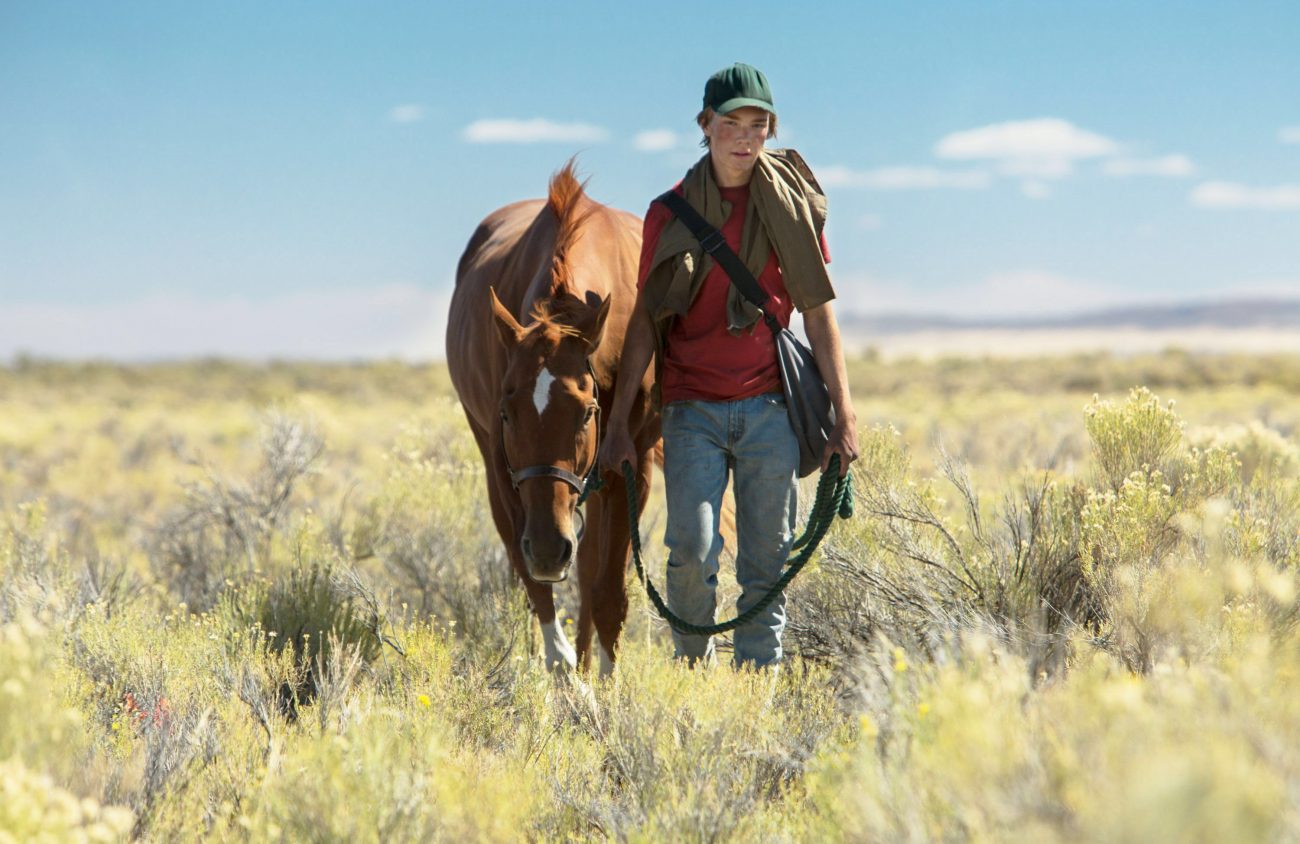
Pete doesn’t judge. In the languid pacing of Haigh’s film, Pete bit by bit becomes central in Charley’s life, as what little else the boy has falls away. And when that connection is threatened, Charley does something a little desperate, a little stupid and entirely understandable.
Lean On Pete is a lot of things — a reminder of how easy it is for people to slip through the cracks of society; a critique of the world that allows this to happen so swiftly and mercilessly; a devastating portrait of loneliness. (It is not a fuzzy boy-and-his-horse movie, and it will crush you if you are expecting that.)
As Charley goes in search of a long-lost aunt, he is at times the only human in Eastern Oregon’s scrubby, gorgeous landscape, and it feels like something beyond alone.
But under Charley’s thin, vulnerable face is a stubbornness that Plummer uses sparingly and to great effect. The world isn’t going to give Charley anything, so he braces himself and takes what he needs. Harshness isn’t in his nature, and these actions take something out of him.
Plummer and Haigh are the perfect pair for Vlautin’s story: Haigh’s eye for detail, for telling, silent moments, conveys much about Charley’s life — and Plummer is breathtakingly good as a young man trying to remain himself when the world keeps trying to beat him into something else.
What Haigh shows us of Charley’s life is honest, as unsentimentally depicted as Vlautin’s story was straightforwardly written — the dingy home; the worn-out racetracks and dusty fairs; the kindness and cruelty of strangers. Haigh understands the compassion of this story, and while the people in his film can be cruel to one another, the film is never cruel to them. It watches, and it understands, and it compels us to do the same. (Opens Friday at Broadway Metro)