Within the first few minutes of The Circle, a tiresome cinematic exercise in false dichotomies, Mae (Emma Watson) tells a friend that she’ll send him a text. If you think back very carefully, you may remember a time before text was a verb, but that time is not now, let alone the super-networked near-future of The Circle.
This small detail is fully indicative of the awkward film to come, in which a bigger-than-Google company appears to have no formalized orientation procedure, characters come and go as the half-baked narrative dictates, and Mae remains personality-free even as she attempts to change the world. Maybe. Sort of.
Mae’s just a temp when her friend Annie (Karen Gillan, stealing her every scene) gets her an interview at The Circle, a massive company that combines every online service and then some.
Mae is hired as a customer service rep, but her job is less relevant than her rise to the top: First she accidentally befriends the secretive Ty (John Boyega, criminally underused), the tech genius behind The Circle, and then she gets her life saved by The Circle’s creepy tiny cameras, which are basically everywhere.
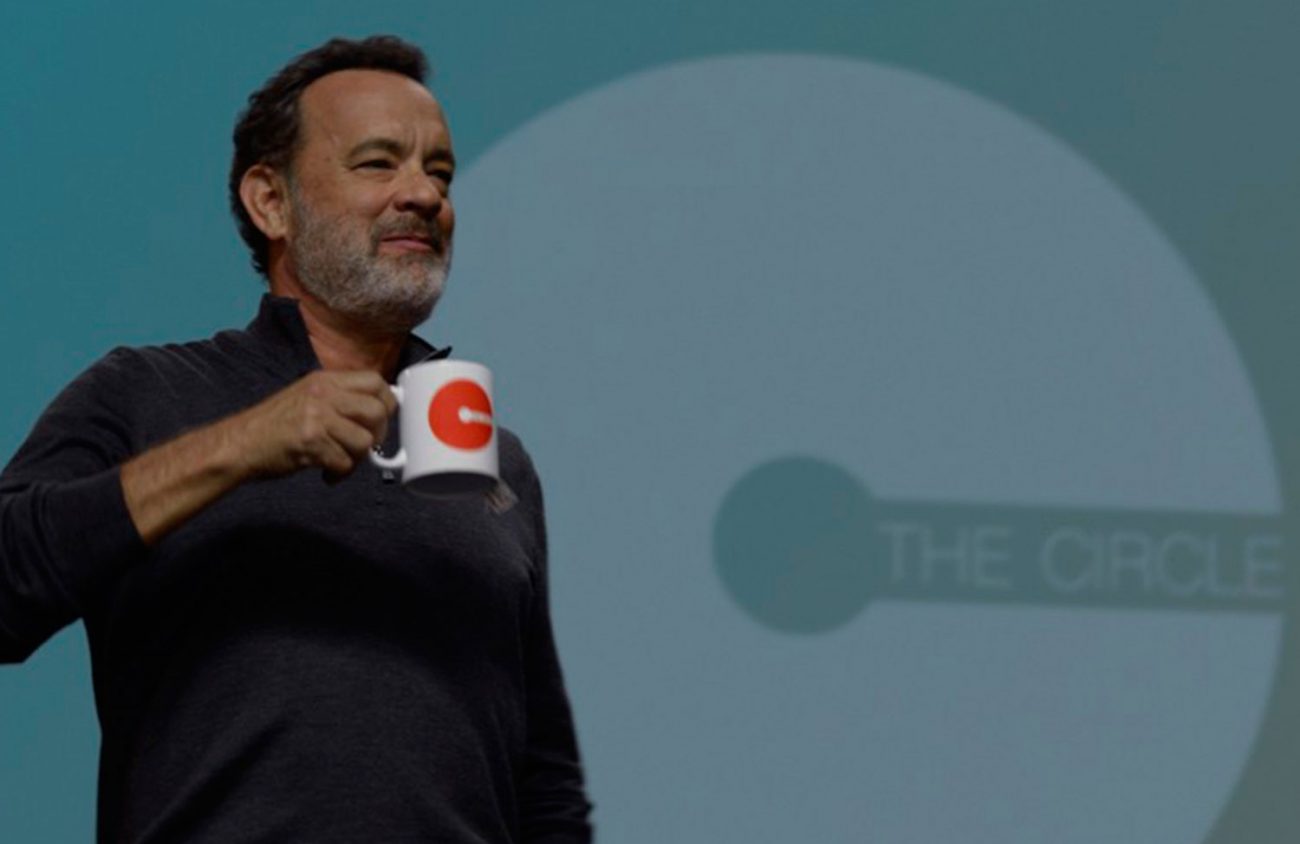
If The Circle has one strong point, it’s the tendency of a certain stripe of person — played here with smug ease by Tom Hanks and sweet vagueness by Watson — to believe their every idea is a good one, and that they will use power more wisely than anyone else would. Cameras everywhere! Change the world! There are certainly no nefarious implications whatsoever!
Grateful Mae goes full-on Circle devotee, opting to broadcast her whole life, a 24/7 YouTube star. (Unlike real life, the best thing about The Circle may be the comments we see on screen when Mae is filming.) Meanwhile, Annie gets haggard and withdrawn for no specific reason, except to serve as a symbol that all is not pure and great within The Circle’s leadership.
Inevitably, the cameras lead to tragedy, and The Circle goes off the rails. Characters who would inconvenience the narrative simply vanish, while Watson plays Mae as exactly the same person throughout, no matter the increasingly intrusive nature of her ideas or their damaging results. Her family and her privacy-obsessed friend Mercer (Ellar Coltrane) stand stodgily in for Mae’s old, pre-Circle life, because there is never a healthy middle ground between old ideas and new, only utter disinterest or blind enthusiasm.
This false divide is part of the problem with The Circle, but the bigger issue is that it doesn’t know what kind of film it is. In stronger hands than writer-director James Ponsoldt’s, the film might’ve embraced its conflicting ideas, presenting a nuanced view of how one technology might be used for good or ill, and why we always think we’re right. (Ponsoldt co-wrote the script with Dave Eggers, on whose novel the movie is based.)
Is The Circle a truly cynical story about delusions of rightness and, if so, could someone have told Watson that? Or are its creators so un-self-aware as to believe that its final scenes are triumphant? Maybe the better question might be: Is there any reason to care either way? (Cinemark 17, Regal Valley River)