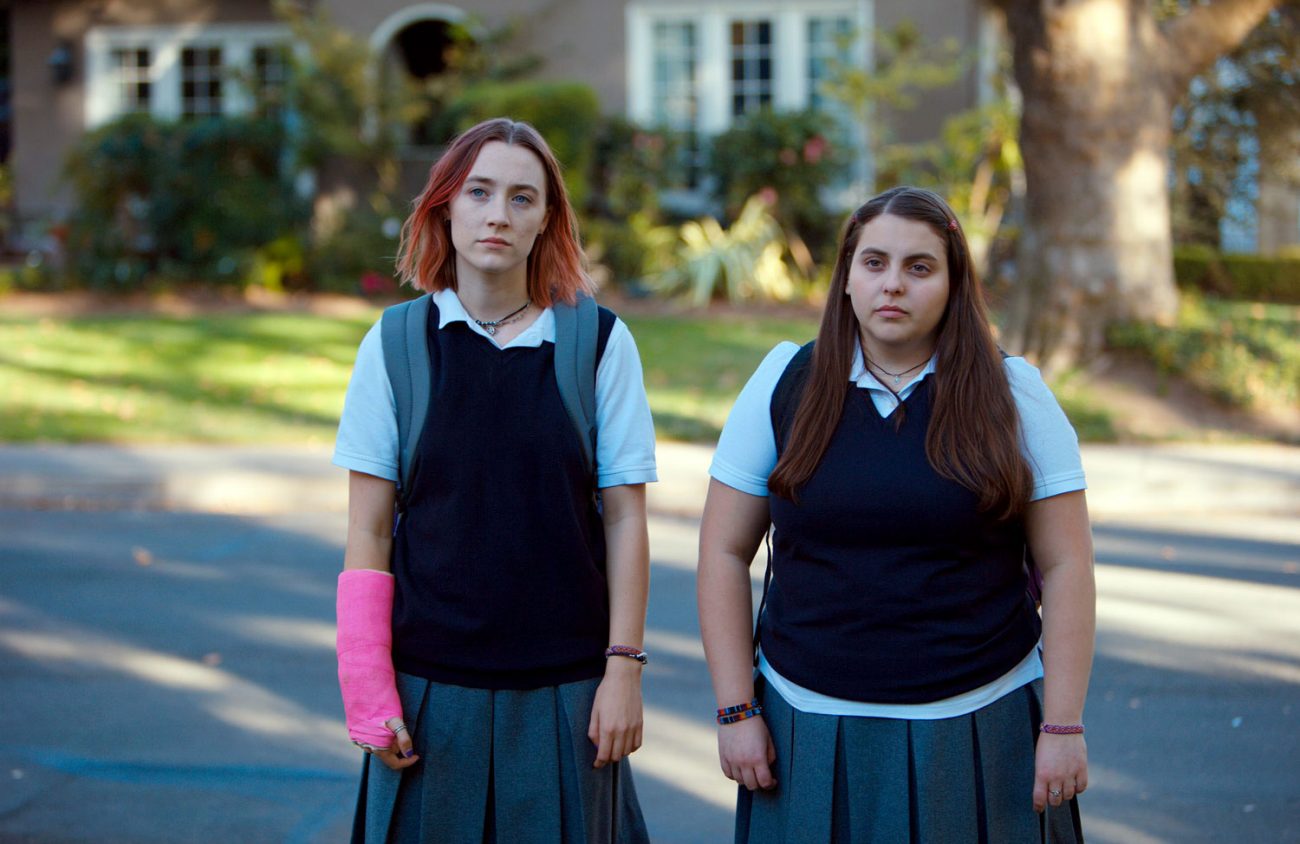
In Lady Bird, her directorial debut, Greta Gerwig looks at familiar moments of teen dramedy — parental spats, ill-chosen crushes, disagreements with friends, a chafing disregard for the place you grew up — with an eye for what they actually feel like.
The beats of our main character Lady Bird’s life have the imperfect shape of something lived-in, not the overworked simplicity of plot fodder. Conflict, here, is just part of life, not the end of the world: Lady Bird (Saoirse Ronan) can desperately want to escape her tired, critical mother (Laurie Metcalf) in one scene and go dream-house hunting with her in another, all disagreements momentarily forgotten in the fantasy of hardwood floors and gorgeous light.
Lady Bird isn’t simply a mother-daughter drama, but the relationship between Lady Bird and her mother, who plays the pragmatist to her daughter’s self-obsessed dreamer, is the story’s fuel. Lady Bird rejects her birth name (Christine); her mother rejects Lady Bird’s desire to fly far, far away for college.
Wisely, Gerwig roots this conflict not simply in an inevitable clash of personalities, but also in the reality Metcalf’s Marion can’t ignore: The family can’t afford to give Lady Bird everything her shifting heart desires, and Marion is hurt that what she does have isn’t enough for her daughter.
This stress point runs in the background as Lady Bird experiments with who she is: maybe a star in the school musical; maybe friends with the “cool” kids; maybe a teen whose choices run the gamut from clever to awkwardly unwise. Her contradictions are many: sincere and sarcastic, loving and cruel, thoughtless and gentle.
One very important hug, between Lady Bird and a former beau, is a thing of forgiveness, anger, grace and hurt; her prank on a kind nun (the wonderful Lois Smith) is funnier and sweeter than a truly cruel trick could ever be.
Gerwig’s precisely observed script is full of the jagged rhythms of friendships and families and dotted with the kind of absurdities that abound when you’re 18 and just want to get the hell out of town. Though it’s set in the early aughts, Lady Bird avoids the kind of nostalgia that puts a false sheen of coolness on things — like remembering only the movies and albums deemed cool in hindsight, using things that weren’t cool as punchlines, shortcutting emotional resonance with memorable references.
The director’s memory of 2002 is much clearer: dubious fashion choices (April Napier’s costumes are a delight), the twitchy transition to cell phones, a single household computer, the uncool songs that made people cry, the changing tastes of a girl who hasn’t settled on one self yet.
Gerwig and her cast and crew make Lady Bird look so easy that you might initially write it off as charming and slight — but this cinematic yearbook of a confident, flawed girl making her way into the world under her own power is big and vital and true. (Bijou Art Cinemas)