Within the first few minutes of Widows, a heist goes terribly awry. You’ll see this coming. It isn’t the job that you’re here to see, but the one that sets everything in motion.
It’s this disaster that seems to destroy the happy existence of Veronica (Viola Davis) and Harry (Liam Neeson) — no more morning snuggles in their luxe apartment, which seems cold and austere when Veronica is home alone. (At least she still has their perfect dog.)
But Steve McQueen’s film is a study in layers, and no scene — no line of dialogue — in Widows is just one thing. Within the framework of a taut genre film, McQueen and cowriter Gillian Flynn (adapting the 1983 TV miniseries written by Lynda La Plante) carefully trace lines of power and inequity.
The familiar beats of a heist — the plan, the challenges, the execution — underscore pointed commentary about options: Who has more or fewer of them, and how and why that is.
Against the backdrop of a changing Chicago, Veronica finds herself adrift when the men to whom Harry owed money come calling. Harry may be gone, but the money that vanished with him was owed to would-be alderman Jamal Manning (Brian Tyree Henry). Jamal needs that dough to fund his campaign against the established Mulligan family, who regard the position as essentially theirs to inherit.
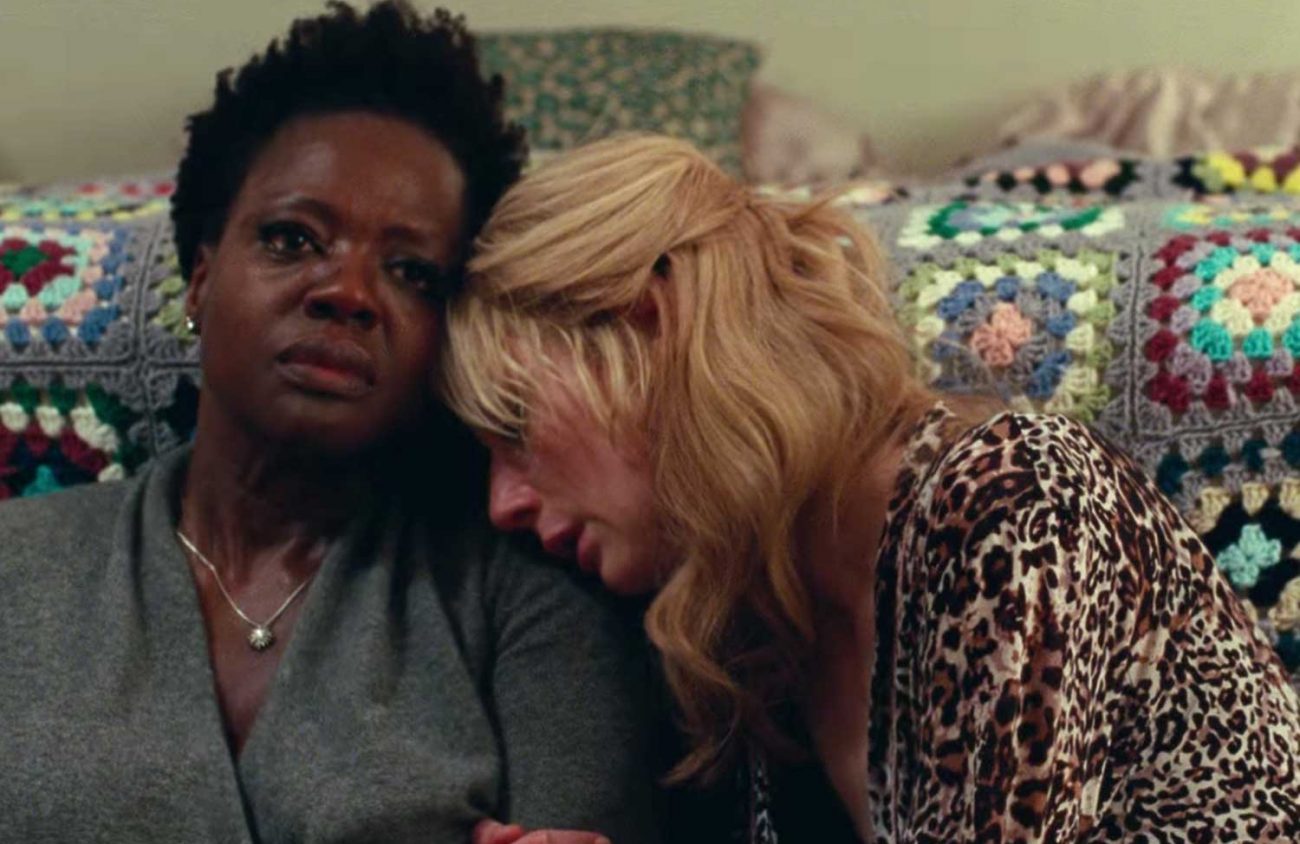
Veronica doesn’t have Jamal’s $2 million. But she does have Harry’s notebook, which contains the plans for his next job. To pull off that job, she enlists fellow widows Alice (Elizabeth Debicki), whose dead abusive husband followed in the footsteps of her abusive mother (Jacki Weaver, in a tiny part, is electric), and Linda (Michelle Rodriguez), whose dead husband gambled away their ill-gotten gains. Linda brings on the fourth member of their team, Belle (Cynthia Erivo), who works multiple jobs to support her daughter.
Widows neatly weaves the political rivalry of Manning and Mulligan into the story of the four women, making a compelling argument for the way abuses and imbalances of power shape a relationship, or a neighborhood, or a city, or the world. The movie is tightly packed and sometimes relies on narrative shorthand to build its characters, but the cast translates that shorthand into affecting performances across the board, from Davis and her stunning embodiment of Veronica’s grief-stricken gravitas all the way down to brief appearances by Carrie Coon and Jon Michael Hill.
The twists and turns in Widows’ plot are deeply satisfying, but it’s not simply the film’s clever construction that makes it so compelling; it’s McQueen and Flynn’s willingness to give a heist film depth and resonance. There’s real pain in Davis’s performance, real fear in Debicki’s, and there’s never really any guarantee that everything is going to turn out okay in the end.
Men have failed these women — failed to see them as fully human, to understand their pain, to recognize their potential. But the widows see all these things in each other as they, to borrow a famous line, do everything their husbands did, just backwards and in heels (metaphorically speaking).