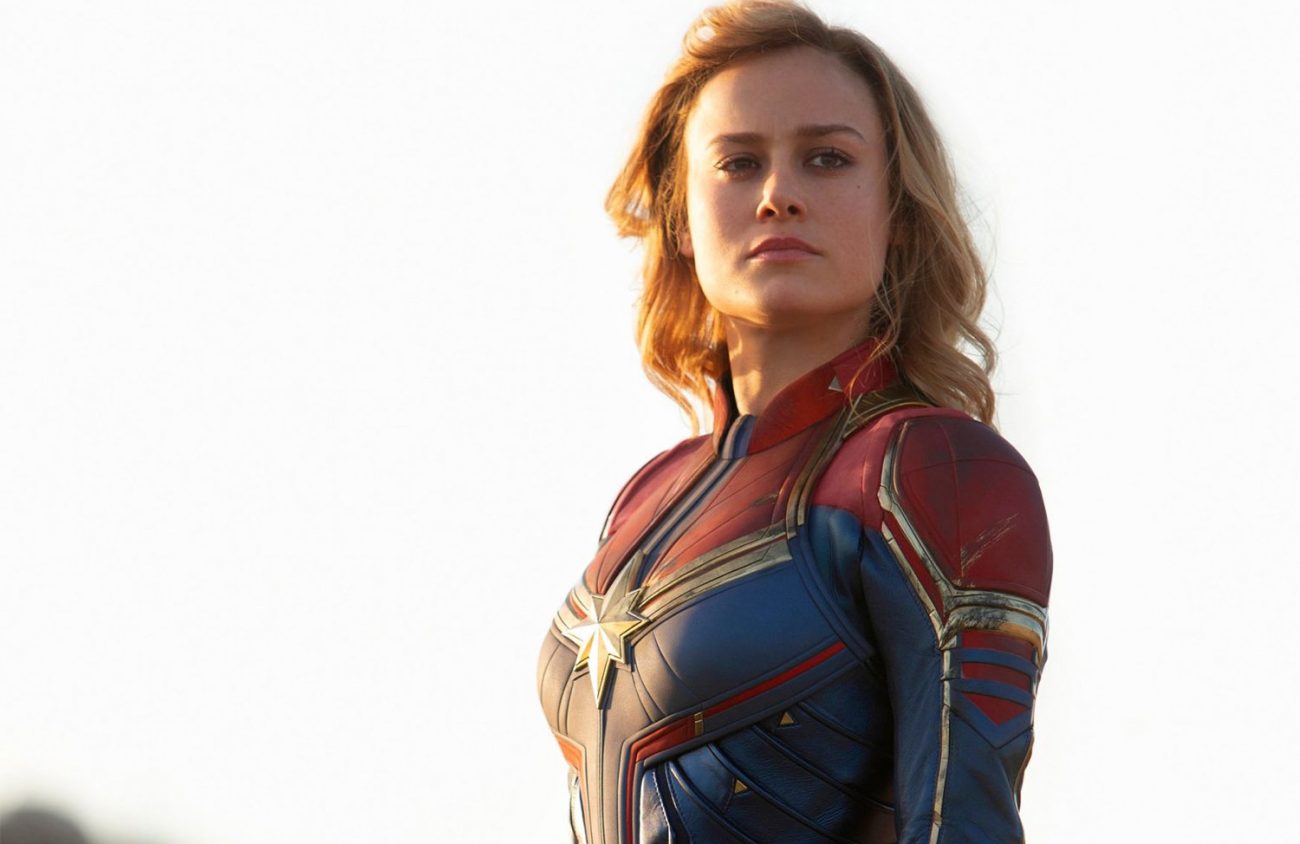
Right now, in the glow of Captain Marvel’s excellent debut, it feels like there are as many articles about the troll response to Captain Marvel as there are articles about Captain Marvel.
It’s deeply frustrating, this phenomenon, and I’d rather not waste time on it except to say that there is something to be annoyed about as a result of this movie: the way its smart characterization and lightly subversive storytelling highlight the weaknesses of so many of the earlier Marvel Cinematic Universe films. (For the record, Black Panther and Thor: Ragnarok are generally exempt from my MCU frustrations.)
When Carol Danvers (Brie Larson) dominates the screen, wearing a practical outfit and a smirk, refusing to smile at men just because they want her to, and questioning the underlying assumptions of her adopted alien society, it’s not just a proverbial breath of fresh air. It’s a question lobbed straight at the MCU’s tendencies toward underused female characters and supervillains who, like a cartoon mouse, want to take over the world.
Captain Marvel is set in the ’90s, so that Pinky and the Brain reference is entirely apt. And that ’90s setting does more than just support a host of era-appropriate references and hit songs. It also serves as a reminder that this movie was a long time coming.
Every one of those songs and ’90s references is a welcome mat set out for older female comics readers who never got a movie like this when we were Carol Danvers’ age. This is for you, too, is what I heard when Elastica and Garbage played.
The setting isn’t just emotionally relevant; it also reframes the history of superheroes within the MCU. Captain America was first, but Nick Fury (a digitally de-aged Samuel L. Jackson) met Carol long before Iron Man showed up. And her influence on the Avengers Initiative is greater than anyone but Fury knows. (Yet.)
(So where was she when all the bad shit of the last twenty Marvel movies went down? Presumably we’ll find that out in the sequel the film’s end neatly — but not too forcefully — sets up.)
On the one hand, Captain Marvel is on a different scale than the many-movie Avengers arc. It’s an origin story, but it’s also about a crisis of identity, and about how difficult it is to figure yourself out when the people you trust are lying to you. It’s heavy stuff — about the consequences of uncritically aligning yourself with dominant power structures, and about male fear of female power (a theme also driving Netflix’s Umbrella Academy).
All of this heavy stuff is baked into the foundation of a movie that’s a joy to watch. Carol has a lot to figure out about herself and about her two worlds, but she also has a best friend, fellow pilot Maria (Lashana Lynch); a mentor, Dr. Lawson (Annette Bening, doing double-duty as an alien Supreme Intelligence); and a new buddy in the apparently cat-loving Fury (who’s mellower than the older Fury of the earlier films — though he does insist on being called by his last name).
Captain Marvel is about Carol — it’s not about saving the world, though that happens along the way. The antagonist, a brilliantly cast Ben Mendelsohn, is not the problem. Something much bigger — and subtler — is.
Captain Marvel isn’t perfect — for one thing, I’d pay good money to replace No Doubt’s too-on-the-nose “Just a Girl” with just about any other sly ’90s jam. But it shouldn’t need to be perfect. It should need to be good.
Movies that work to reshape what a blockbuster can be shouldn’t be held to a different standard. If there’s room in the MCU for the tedious and flat Ant-Man and the Wasp, there’s more than room for the powerhouse that is Carol Danvers, who takes everything her enemies throw at her and blasts right through it, laughing in delight. (Broadway Metro)