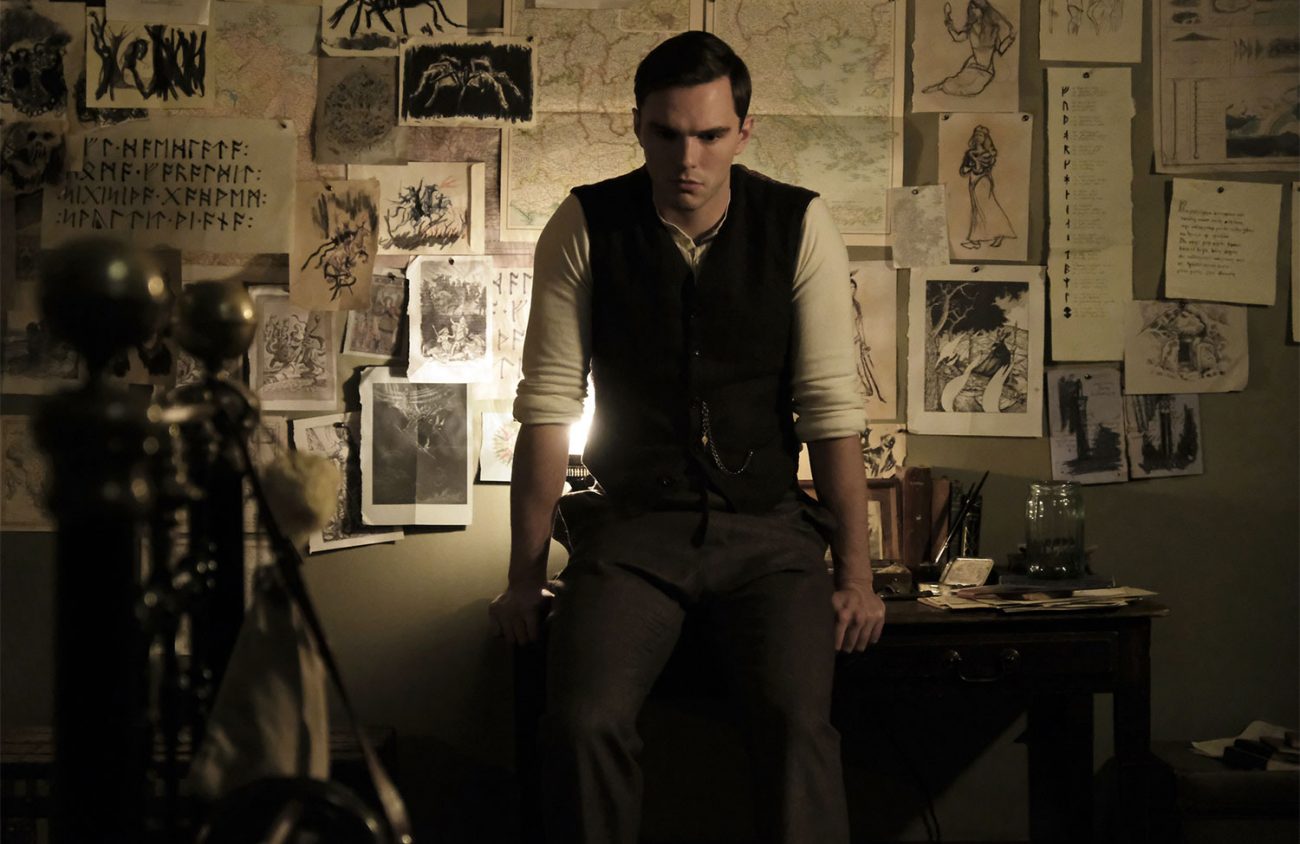
John Ronald Reuel Tolkien — J.R.R. to most of us — conjured some of the most influential magic of the 20th century. His most beloved works, The Lord of the Rings and The Hobbit, were turned into more blockbuster films than strictly necessary. His popularity comes in waves; in the early 2000s, when Peter Jackson directed the best of his Tolkien films, it was a transformative moment for those of us who grew up on his mythmaking.
Suddenly, everyone knew the story that mattered to us. We no longer had to explain what a hobbit was.
I say “we” because one of the most baffling things about the new biopic Tolkien is the question of whom it is meant to please. I’m not a reader who wants to know everything about an author, but I do know enough about Tolkien that Dome Karukoski’s film treads fairly familiar ground.
Tolkien was brilliant with languages; he loved his wife; he had strong friendships and fought in World War I. But if you didn’t know anything but the movies — if you went to the theater out of curiosity piqued by, say, that moment in the Jackson films when Gondor calls for aid — what would this have to offer you?
Tolkien covers only a short part of the writer’s life, mostly in school, with a start in the country and a brief jump to the future, when his wife, Edith Bratt (Lily Collins, doing the best she can with what she’s given), badgers him inexplicably about his writing.
Karukoski burnishes his scenes with all the golden light and sweetly smoldering glazes he can. Screenwriters David Gleeson and Stephen Beresford lightly differentiate Tolkien’s school friends, but generally they’re a tumble of young men who talk a big game about art but rarely make any.
Most of the film is taken up not with character but with an attempt to reference things from Tolkien’s life that might have made their way into his work.
This is a joylessly literal, insultingly reductive view of art. As a child, John Ronald was sad to be taken away from a verdant countryside — ta-da, the Shire! City life was dark and industrial — ta-da, the end of Frodo’s journey! WWI was dark and full of smoke and fire — ta-da, the Balrog! Or Sauron! Or just plain old evil!
Art isn’t a one-to-one response to life. It’s nothing as simple as taking a handful of moments and retitling them, giving friends new names and places new descriptions. We are the sum of our experiences, and those make their way into art.
But there’s so much more than that. There’s alchemy; there’s work and skill, frustration and transformation. Writing is a process of making mistakes, taking them out, writing more, and repeating the process until you are left with as few mistakes as possible — and a string of words that, when read in order, make sense.
Or make magic. Tolkien has no idea how that magic happens — no idea how to show it, no idea how to infuse a film about a master of imagination with anything but the most literal of fantastic imagery. Its subject deserved better. (Bijou Art Cinemas) ν