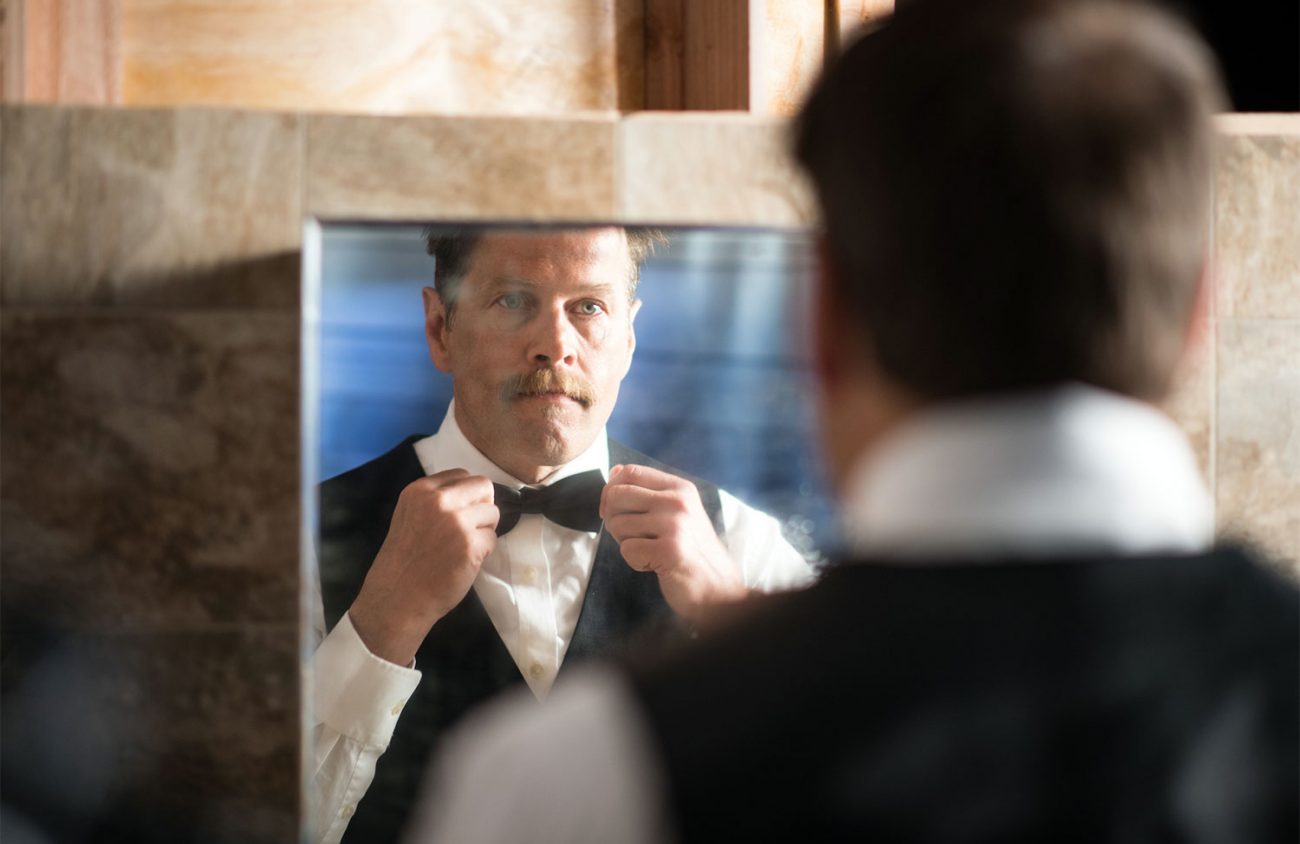
At first I didn’t understand the people on Twitter who were marveling about watching TV. They said it was weird, watching all these people touching. But after watching that last season of Veronica Mars and a movie, I see it now. Shaking hands, touching faces, hugging, maybe even touching other people’s faces: All that was once utterly unremarkable is now something you can’t help but notice.
Much of Phoenix, Oregon is about the seemingly unremarkable: The shape of a life in midlife, and the trite-but-true lesson from childhood that few children are equipped to learn. Appreciate it while you’ve got it because one day you’ll wake up and it’ll be gone. They’re talking about youth, but it could be about so much.
Bobby Hoffman (James Le Gros, dialing his intensity down to a bare simmer) once had it all, in a small-town way: the high school girlfriend turned wife, the beloved mother, the moment of early life triumph that people around him still remember.
Bobby’s was a perfectly bowled game. But that was the last time life was perfect. His mother died, and his wife left. His life now fits into the Airstream he inherited from his mother, Pop-Tart boxes littering the floor. He bartends for a jerk named Kyle (Office Space’s Diedrich Bader) and works on an autobiographical graphic novel (the art, by Vince Rush, serves to illustrate Bobby’s past). He thinks about Elon Musk’s theory that we’re all just part of an elaborate simulation.
But his buddy Carlos (Jesse Borrego) has bigger dreams — dreams that find focus in a dilapidated bowling alley. Carlos makes amazing pizza. Carlos remembers Bobby’s winning game. Carlos knows Bobby is sitting on a chunk of change he inherited from his mother, and that he’s not going to use that money for anything unless pushed into action.
Phoenix, Oregon feels like a short story; its highs and lows aren’t life-sized; its failures and triumphs temporary; its trajectory moving slowly, painstakingly upward. Bobby has been wallowing for some time, though less in self-pity than self-neglect. He just hasn’t been doing anything, and while it’s Carlos who pushes him into initial action — and Lisa Edelstein’s delightfully direct Tanya who calls out Bobby’s flaws — Bobby’s life won’t change until he changes it.
It would be dramatic to call Bobby’s situation at the film’s start a midlife crisis. It’s more like a midlife malaise, a heavy, smothering sense that he’s gotten off track. Working on his graphic novel gives him endless opportunities to try to figure out when he took a wrong step, but writer-director Gary Lundgren’s script gently nudges Bobby into shifting his gaze from the past to the present, and maybe the future. Tanya sees it, and Carlos sees it, but it takes Bobby a little longer to see that where he went wrong has long since stopped being the point. The point is that he might still choose to go right.
Lived-in, warm and life-sized, Phoenix, Oregon is full of ordinary problems, small-town characters (Kevin Corrigan is excellent as the wacky Al, who services the bowling alley) and shifting relationships that resist tidy definitions. Le Gros plays Bobby like he’s a supporting actor in his own life; a sense of inaction infuses everything Bobby does. When he finally steps up to take the lead, it’s not an instant fix. But it’s movement, and there’s promise in that.
Phoenix, Oregon is available as video-on-demand at “matinee pricing” ($6.50) and producers will split the profits with the theaters that would have shown the film. Watch it at PhoenixOregonMovie.com.