Lane County government is trying to address its most dangerous road — 30th Avenue — through traffic easements to reduce car crashes and improvements to increase safety for pedestrians and bicyclists.
The Lane County Board of County Commissioners discussed a plan at its Dec. 6 virtual and in-person meeting that would add safety improvements for drivers, pedestrians and bicyclists. Commissioners unanimously approved it, but there are more steps ahead as the county searches for funding, reviews transit plans and works with property owners.
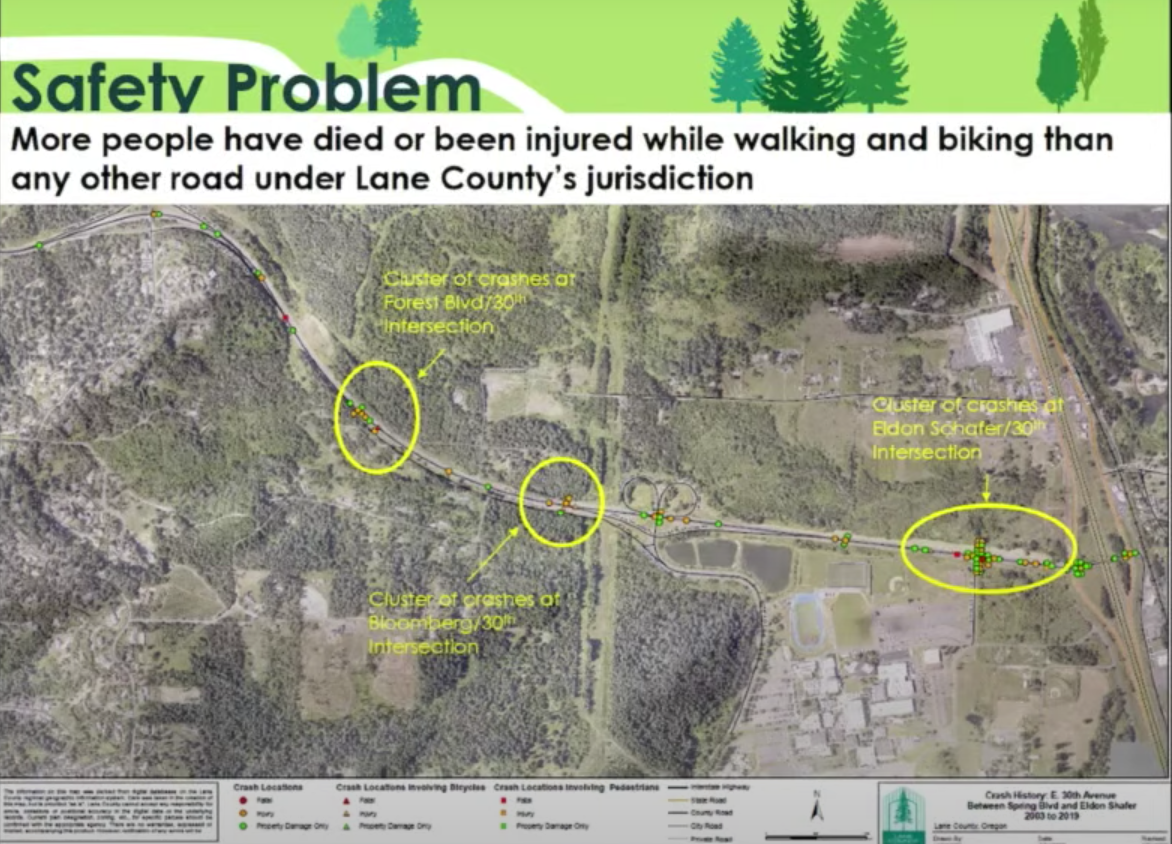
“There have been more people who have died or have been injured while walking and biking on this stretch of 30th Avenue than any other road under Lane County’s jurisdiction, countywide,” said senior transportation planner Becky Taylor at the Dec. 6 meeting. “To improve safety for people walking and biking along this high speed facility, we really need to have a more substantial protected space.”
The area of 30th Avenue under consideration for transit planning runs from Spring Drive (near Laurelwood Golf Course) to McVay Highway (by the I-5). The county worked on the transit plan for about 18 months, according to board materials, and included three community meetings and a public hearing. Most of the area is near Lane Community College and has a posted speed limit of 45 mph.
Taylor said the county also saw a higher number of crash density at three intersections along 30th that runs from Albertsons to LCC: at Forest Boulevard, Bloomberg and Eldon Schafer — one of the entrances to LCC. “We are proposing treatments at those three locations to reduce crash severity and frequency,” she added.
The plan would require the county to coordinate with the city of Eugene and Oregon Department of Transportation, as some of the road falls in those agencies’ jurisdiction. Some of the plan requires adding sidewalks along 30th.
All commissioners spoke highly of the project. Commissioner Laurie Trieger said she’s heard from bicyclists who are eager for the protected bike lanes. Commissioner Jay Bozievich said he’s familiar with fatalities that have happened along 30th and is looking forward to safety improvements. And Commissioner Heather Buch said she uses 30th to access Eugene from south Lane County and is aware of the road’s safety issues.
According to testimonies from the public included with board materials from the meeting, there were concerns from the public about an early proposal to remove a lane from 30th (which the current proposal no longer has). The public supports adding safety improvements to the road.
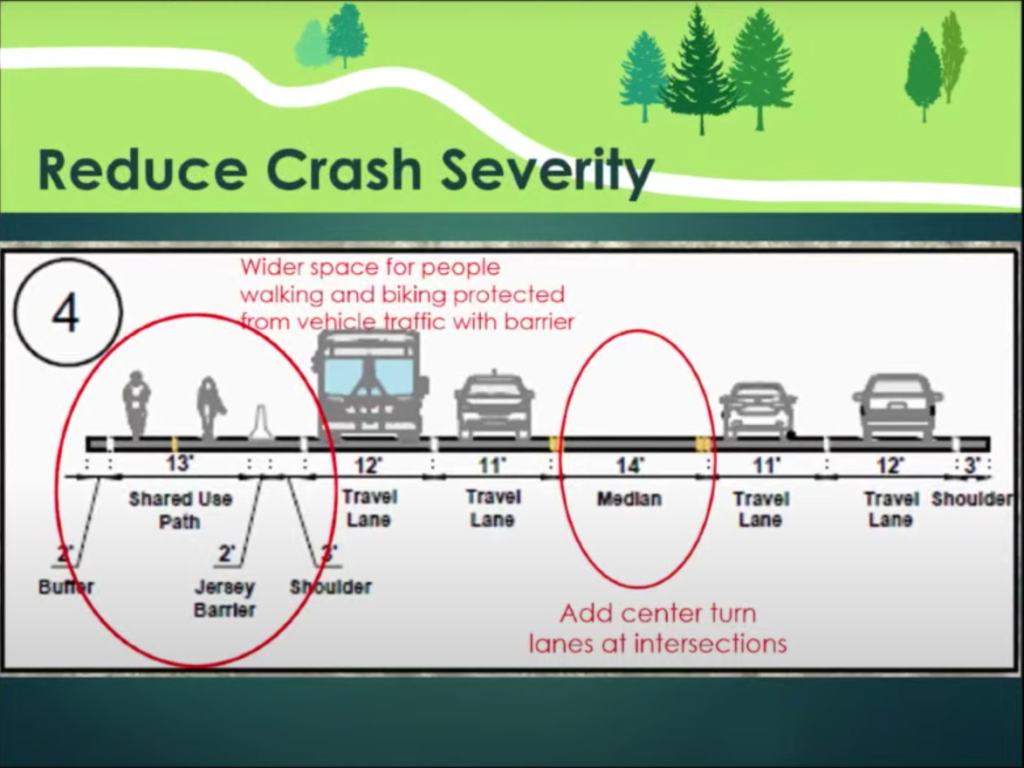
The county’s plan includes a wider shoulder along 30th to add a 13-foot shared use path for walking, biking and other active forms of transportation. This would include a concrete barrier as protection from fast-moving vehicle speed. Although the county doesn’t have a final cost for the project, the meeting materials report that it has secured $906,382 from Central Lane Metropolitan Planning Organization of Lane Council of Governments (LCOG); the county is pitching in $103,739.
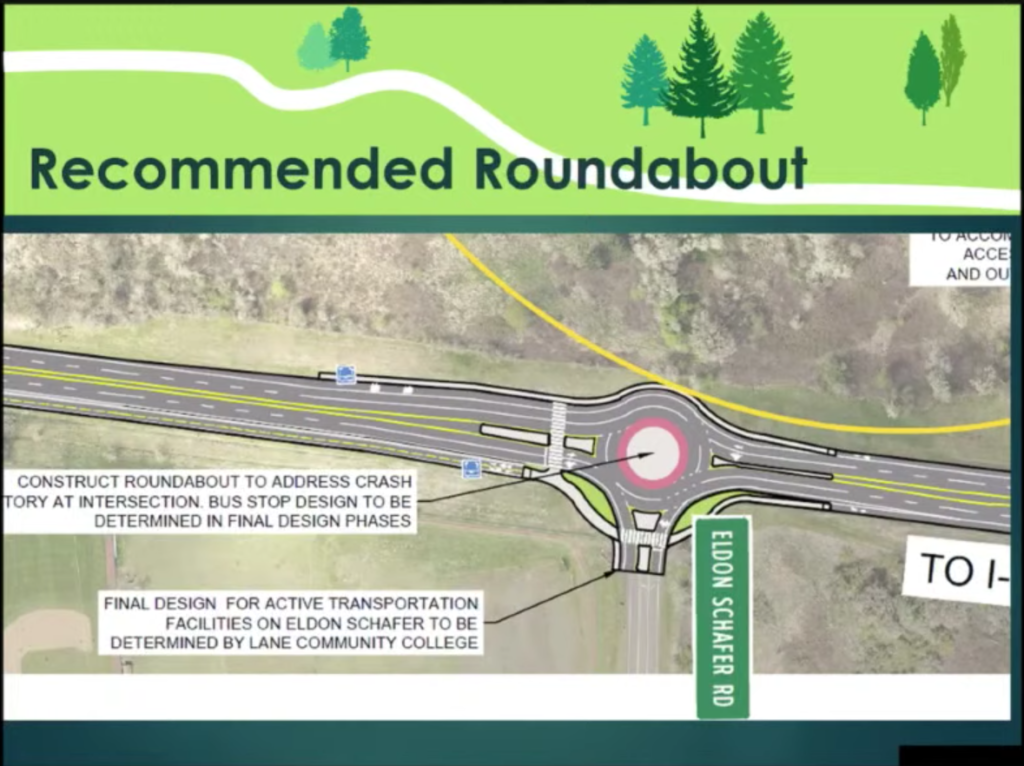
Taylor said the plan also includes constructing a roundabout at 30th and Eldon Schafer, an entry way to LCC and Oak Hill School, as a way to address car crashes there, where drivers often speed through traffic signals at around 55 mph. “A roundabout reduces crash severity because the roundabout speeds are significantly lower, about 15 miles per hour,” she added.
The plan still has years to go until fruition. Commissioners approved an early step that allows Lane County officials to begin negotiating with affected property owners and refining transit plans, according to board materials. County officials will also start seeking grant funds to pay for the improvements.