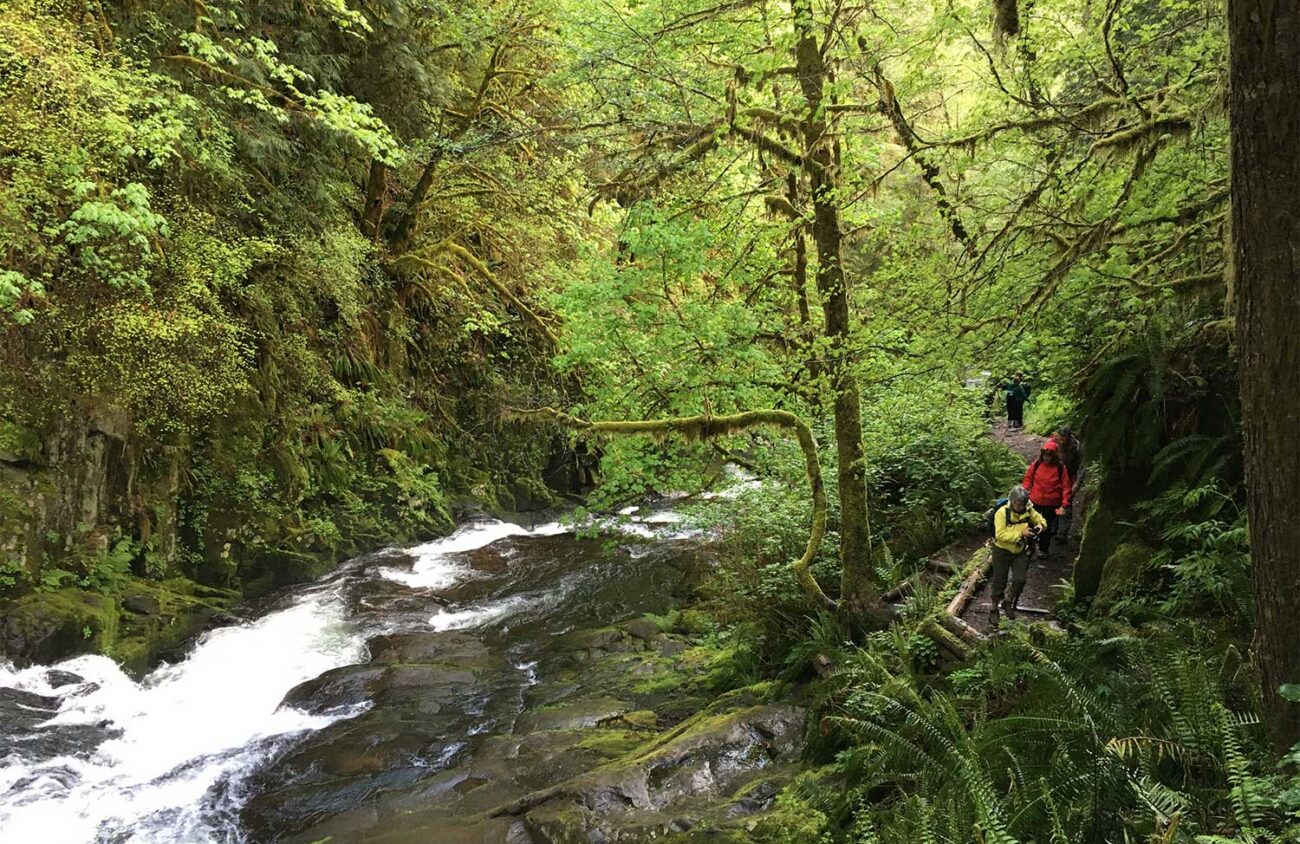
Spring is a great time to explore the streams, forests and flowers of the central Oregon Coast Range, and I can’t think of many places better than Sweet Creek to enjoy the first full month of spring. The rippling stream is at its height, maple and alder trees are adding their bright green leaves, trillium and bleeding heart flowers are in full bloom, and American dippers dance and sing from their rock perches in the middle of the rushing water.
Sweet Creek, named after a homesteading family that settled here in the 1870s, has four trail segments within the Siuslaw National Forest. It takes about an hour and 20 minutes to get there from Eugene.
Just take Highway 126 (West 11th turns into Hwy 126) west about 45 miles to Mapleton. Just before the bridge that takes you over the Siuslaw River and into Mapleton, turn left (south) on Sweet Creek Road. Follow about 10 miles and you’ll first see the Homestead Trailhead on the right, but the trail from here is currently closed as there has been extensive damage to the elevated walkway just upstream. Find Sweet Creek Trail at FS.USDA.gov for updates.
No worries, there are other trailheads and trail sections to enjoy. I’ll recommend two specifically. Continue about another mile to the Sweet Creek Falls trailhead for hike No. 1. Head down the trail and turn left for a nice streamside walk just 0.4 miles upstream to a view of multi-tiered Sweet Creek Falls. Enjoy the overhanging maple trees above the splash pool from here or follow a spur trail uphill for a viewpoint of the upper falls before heading back.
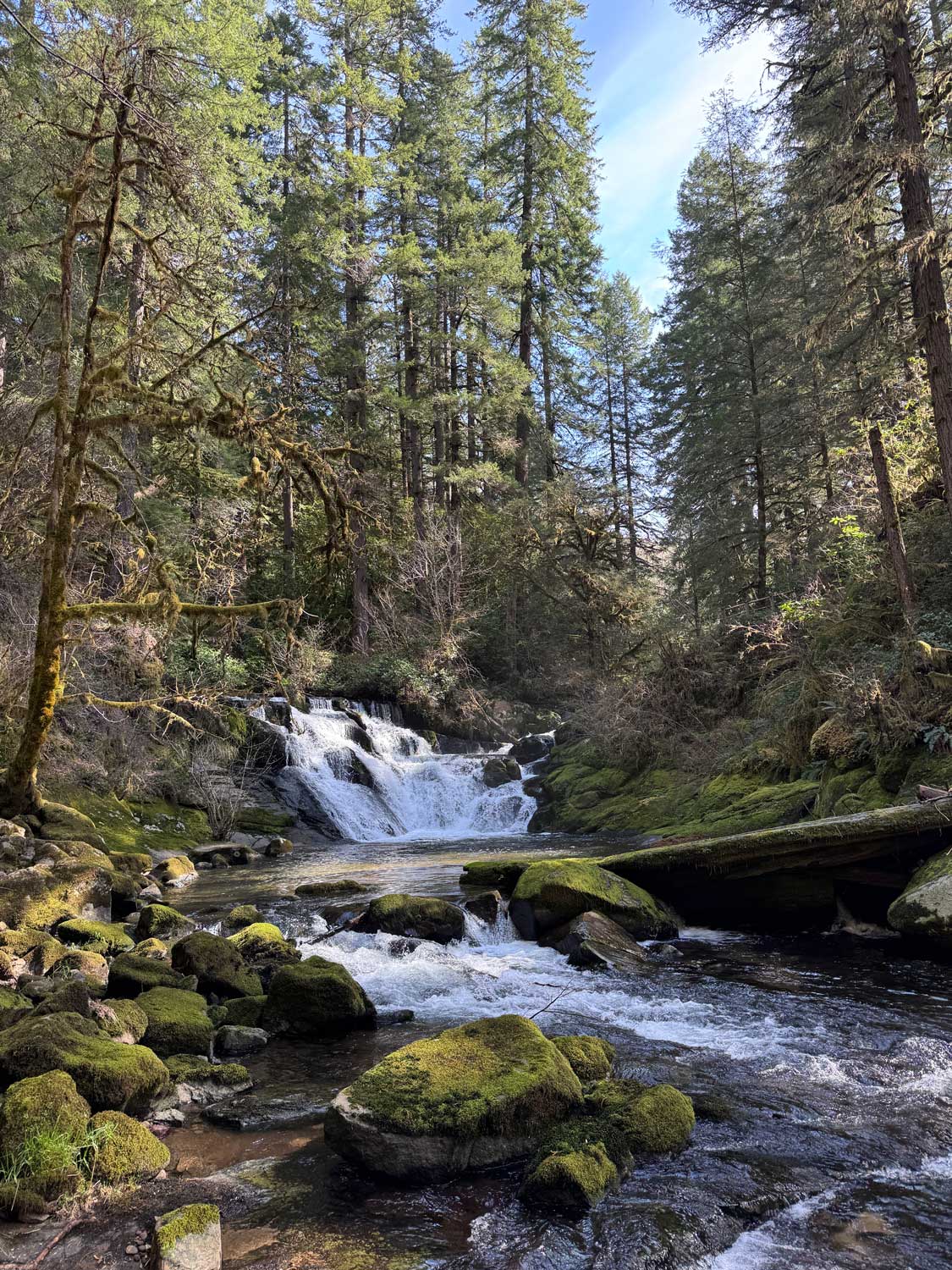
For the second hike, drive another mile or so past the Sweet Creek Falls Trailhead to the Wagon Road Trailhead, on the left. You’ll find the trail to Beaver Creek Falls just north of the bridge and parking area. From here, it’s just over a half mile to the confluence of Sweet Creek and Beaver Creek, where the streams come together at a beautiful waterfall. The trail isn’t as flat and wide as the one to Sweet Creek Falls, but it’s doable for most people and definitely worthwhile.
While enjoying these trails and the lovely shaded walk, it’s good to think about the history, and future, of this popular recreation area. Coast Range forests like these are home to birds, fish, amphibians, and plants that depend on old trees, shaded water, and a moist climate. The Douglas-firs, western hemlocks and western redcedar that dominate the forests here can grow for hundreds of years and reach great size — including some you’ll find along the Sweet Creek trail. That said, an observant hiker might notice evidence of some “missing” giants as well — old stumps of cedars that were 8 feet in diameter, with young trees and shrubs growing from their hollowed-out shells. Redcedars like these were once prized by native inhabitants for making canoes, but homesteaders and the timber industry have since removed most of the old growth in the Coast Range. The Northwest Forest Plan governing the National Forest here requires restoration of old-growth forest habitat and preservation of what remains, but proposed revisions to this plan could mean more logging in these recovering forests, and fewer protections for rare wildlife. A visit to Sweet Creek’s trails will hopefully inspire you to weigh in to support protecting these streams and forests for future generations. The next opportunity to do so is coming this summer.
Chandra LeGue of Eugene is the author of the book Oregon’s Ancient Forests: A Hiking Guide and is the senior conservation advocate at the nonprofit organization Oregon Wild.