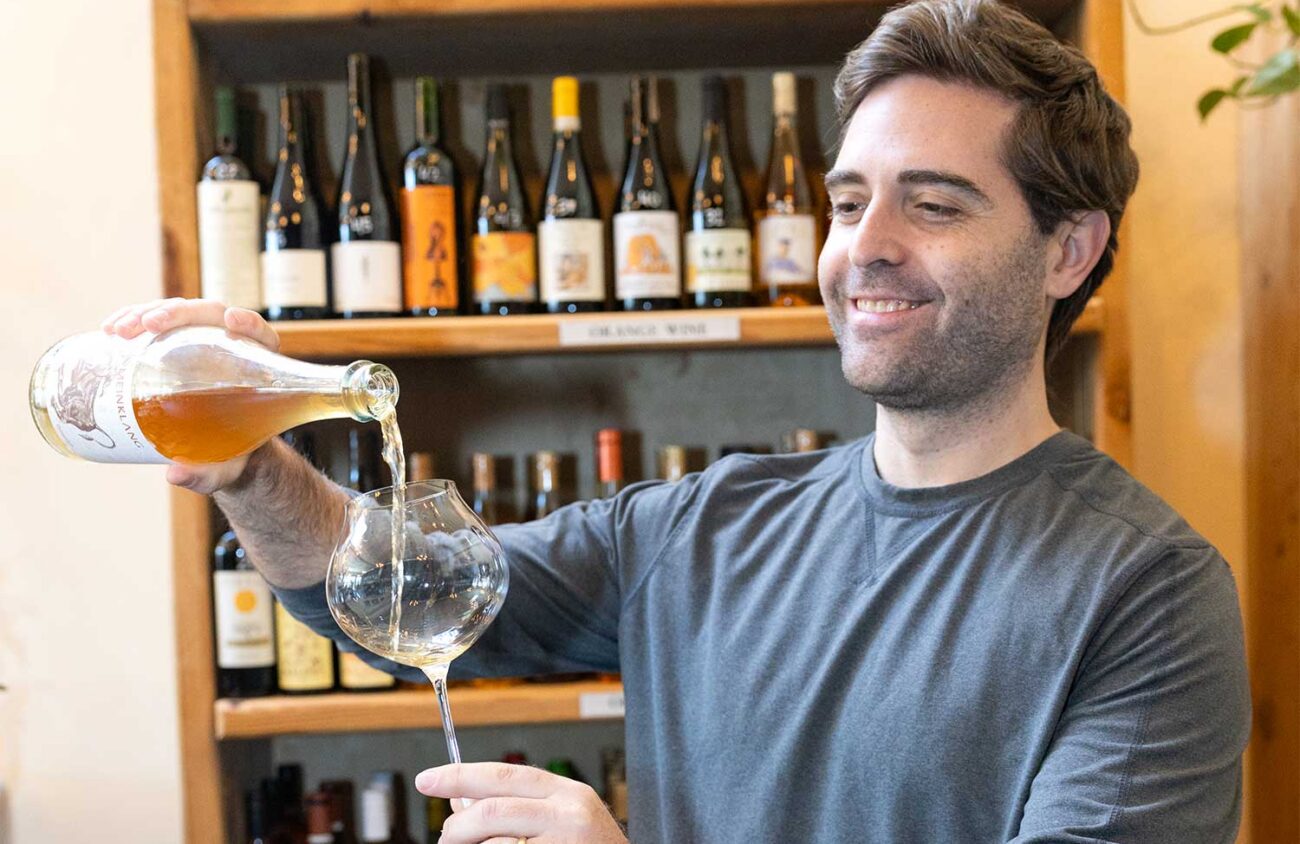
In the wine world, orange wines remain the underappreciated cousin to the more recognizable reds and whites. But orange wines are gaining in popularity, paralleling so-called “natural” winemaking, a viticultural philosophy that prioritizes organic farming, few or no additives and less intervention in the process. According to several winemakers, sellers and experts Eugene Weekly spoke with, orange wines have bold flavors and offer a unique drinking experience.
Not all orange wines are “natural” wines — a somewhat difficult-to-define wine industry term more or less translating to organic, but with no governing body or strict set of guidelines dictating what that means.
Generally, natural wines are made from organic grapes and Indigenous yeasts, with fewer additives, such as sulphites, a preservative to stabilize the wine’s color and improve its shelf life. For these reasons, wineries interested in natural winemaking are well-suited for the time and care required to make an orange wine.
Wine experts EW spoke with say many wines considered natural contain some sulphites, and the amount of sulphur allowed in a natural wine is debated. There’s also an urban legend that wines with less sulphur cause milder hangovers. Anecdotally, if you’re sensitive to sulphites, that might be the case — but unfortunately, alcohol is the primary culprit for those nasty morning-after headaches.
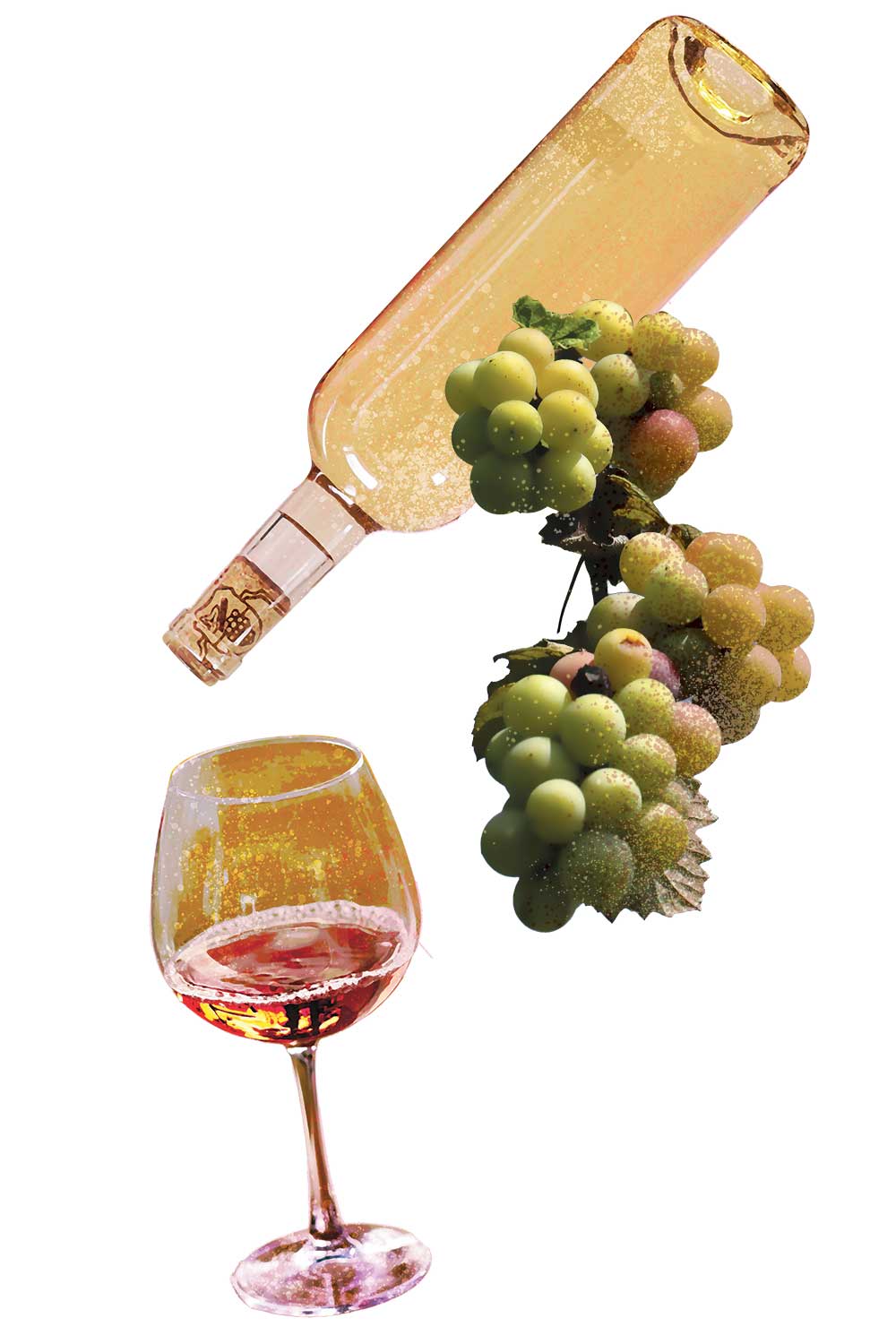
Natural winemaking aside, one thing to understand about orange wines is that they don’t all taste like oranges, although many have orange-like flavors. Instead, they get their name from the orangish hue rather than the deep red, clear or yellowish tint common in other wine varieties.
Then, in a process similar to how red wines are made, the grapes are macerated — or mashed — and then fermented, still in contact with their skins, sometimes for several months, creating deeper colors, more tannins and added flavor intensity. The wine is aged after that. Orange wines originated in Georgia, that small nation on the Black Sea between Russia and Turkey, and are among the oldest wine-making techniques known to man.
When you take a white wine grape and make it into orange wine, “you’re essentially putting that flavor profile on steroids,” says Aaron Schwartz, owner of Headquarters Wine Bar on 5th Avenue in Eugene, and of the Lane County wine distributor, Julian Sinclair.
For example, Schwartz adds, gewürztraminer grapes, aromatic and flavorful when made into white wine, become “that much more perfumed and tropical” through the orange wine-making process.
Craig Weicker, a retired winemaker formerly of Civic Wines in downtown Eugene who made his own and served other brands, recalls the first time he tried an orange wine.
“It hit this experience that you didn’t get with white or red,” Weicker says. Weicker loves bread and cheese, and when paired with an orange wine, “it just takes off.”
Fossil & Fawn, a winery based in Rickreall, west of Salem, distributes through Julian Sinclair and makes several varieties sold at Headquarters, FossilandFawn.com, and other outlets.
“It’s hard to sum up orange wine in broad strokes,” says Jim Fischer, Fossil & Fawn’s co-founder. “It has the texture of a red wine, often with the acidity of a white wine.” Describing orange wines, Fischer’s colleague and co-founder, Jenny Mosbacher, continues, “They tend to be more savory-toned.”
Fossil & Fawn’s Lightwave is a “baby orange wine,” combining muscat canelli, pinot gris and riesling grapes. The grapes are half-direct-pressed and skin-macerated, enhancing the tropical fruit flavors. Also available from Fossil & Fawn is the aptly named Oregon Orange, made from gewürztraminer, pinot gris and chardonnay grapes, with orange, rose water, apricot skins, ground ginger and fresh-dried hay.
When you think of white wine, Mosbacher says, “you’re thinking citrus or maybe apples or pears,” and those attributes are there in orange wine, too, she says. But, “you also sometimes get earthy tones more closely associated with red wines like sandalwood, smoke and leather,” she says.
Orange or not, Schwartz, from Headquarters, recommends that when navigating the world of natural wines, follow this simple rule: Treat wine as food. “When you ask people what they care about with food,” he adds, “they care about who grows it, how it’s grown and the scale of it — an industrial scale versus a people scale. Those are essentially the same bounds we put on natural wine.”
Orange wine tends to be associated with natural winemaking, Schwartz continues, because “it’s different and it’s exciting, and it goes against the grain.”