By Barbara Bryson
“Look, a towhee!” the homeowner exclaimed, indicating the red-eyed, orange-and-black bird kicking leaves around under her dense shrubs. “Now that we’re leaving leaves, we see a lot more of them.”
I had just arrived for a Habitat Haven certification visit, and within moments, she was showing me evidence that her garden had become more than a pretty place. The clues were everywhere, and not just in the many kinds of birds finding shelter and food. More and diverse butterflies, and many types of native bees — such as mason and leafcutter — were finding the flowers and plants they need.
Moments like that are what inspire people to join Habitat Haven. Many people, it turns out, want to hear more birdsong and see more pollinators in their yards, but they often don’t know where to begin. Some are eager to restore their entire property, while others have little room and will add a few native wildflowers or a shrub. Wherever they start, Habitat Haven’s nature advisors meet people where they are.
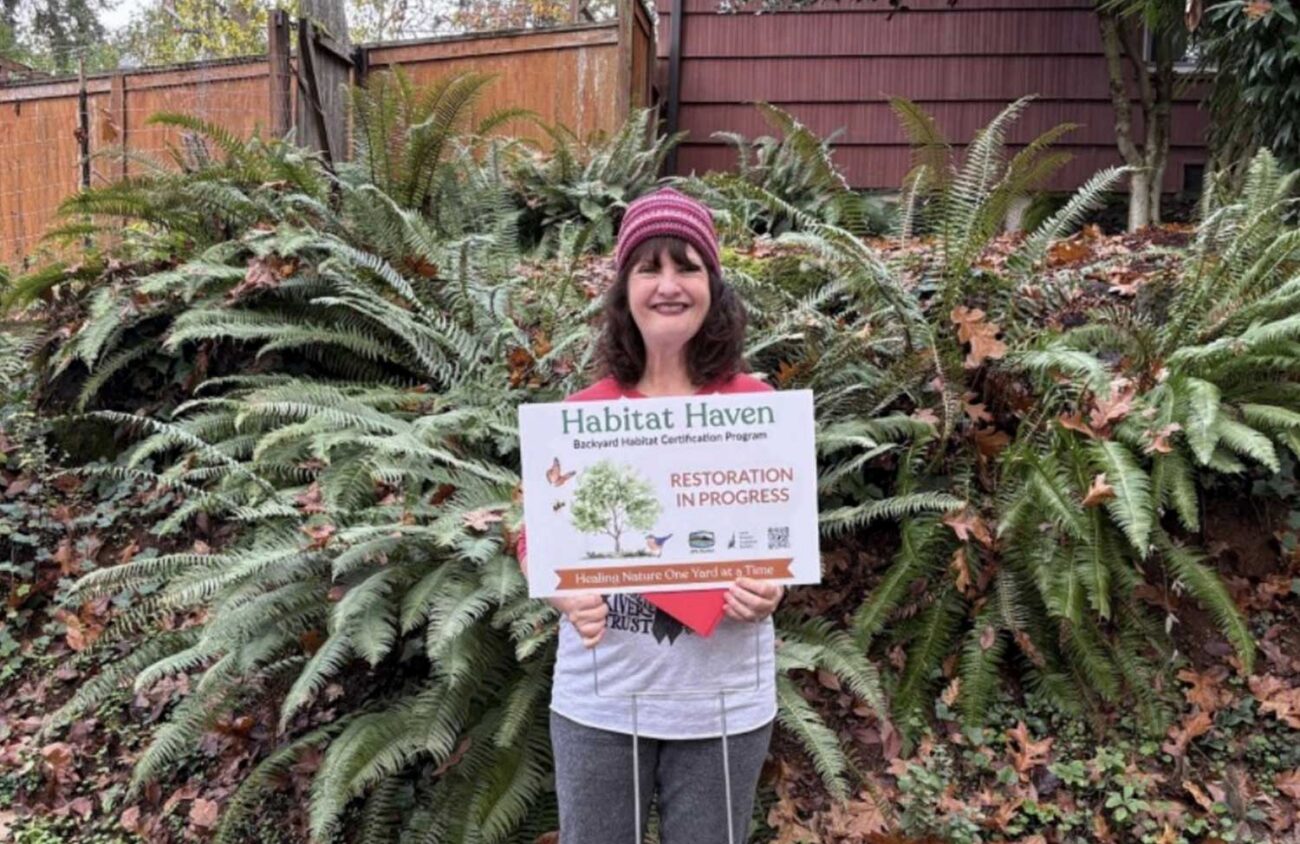
Habitat Haven, a program of the Coast to Cascades Bird Alliance, is surprisingly new. It began in May 2024, with funding from Upper Willamette Soil and Water Conservation District, yet more than 260 households have already enrolled. Our small group of inspired volunteers is struggling to keep up with demand for visits, so Habitat Haven’s parent organization, Coast to Cascades Bird Alliance, is about to hire its first employee.
What attracts people is the idea that their garden can become part of something bigger — a patchwork of small habitats across our community that supports birds, other wildlife and pollinators and the many living things they depend on.
This in turn creates a sense of hope — we can make a small piece of the world better for wildlife, and, it turns out, better for ourselves. Hearing birds and being in a peaceful part of nature is good for people.
The foundation of this rich habitat is native plants.
Insects and native plants evolved together over the last 100 million years. Those insects are essential food for birds — especially during nesting season, when a nest of baby birds requires thousands of insects to grow.
In other words, when native plants return, the rest of the food web begins to rebuild.
Participants in the program begin by completing a questionnaire describing their yard and their hopes for it. Then an experienced Habitat Haven nature advisor visits the property to walk through the garden, identifying plants — including invasives to remove — and talking about ways to make the garden more welcoming to birds and pollinators.
For people who want to certify their yards, there are five criteria to consider. These include native plant cover, removal of invasive plants, elimination of pesticides, water conservation and reducing runoff, and wildlife stewardship. Education is a big focus of the program.
Afterward, participants receive a personalized report. It includes recommendations for native plants for different parts of the yard, based on site requirements and conditions, as well as ideas for enhancing habitat. These include many options such as providing water (especially important in winter and summer), adding window protection to prevent bird strikes and keeping cats indoors, for example. Adding rock piles and little brush piles can provide shelter, too.
For many people, receiving the report is an exciting moment. One participant wrote back quickly, “Thank you so much for this amazing report — I can’t wait to get started on my yard!”
Habitat restoration doesn’t happen overnight. Sometimes people notice small changes during the first year, but the real transformation often comes after about three years, when native plants have had time to grow and fill in.
As shrubs and trees mature and wildflowers spread, gardens develop the layered structure birds love — groundcover, shrubs and taller canopy plants that provide shelter, nesting places and food. When people begin leaving autumn leaves beneath trees and shrubs, butterfly cocoons, bumblebees and other insects overwinter there; birds will scuffle through them, looking for food.
Beneficial insects and birds help control problem pests, and pollinators help vegetable gardens to become healthier, too. An extra benefit to many native plants is that once established, they require little summer water.
A yard that once hosted only non-native English sparrows or European starlings may begin attracting new visitors. Golden crowned sparrows will scratch in leaf litter, chickadees move through the branches searching for insects and cedar waxwings forage in your serviceberry tree.
With richer habitat comes more birdsong and more peace.
For more information or to register, please see CCBirdalliance.org/habitat-haven. To volunteer, email Habitat@CCBirdalliance.org. Barbara Bryson is the manager of Habitat Haven BYCP and vice president of Coast to Cascades Bird Alliance. She may be reached at BBryson@ccbirdalliance.org. Kim Kelly edits The Garden Palette. Questions? Email: Gardening@eugeneweekly.com