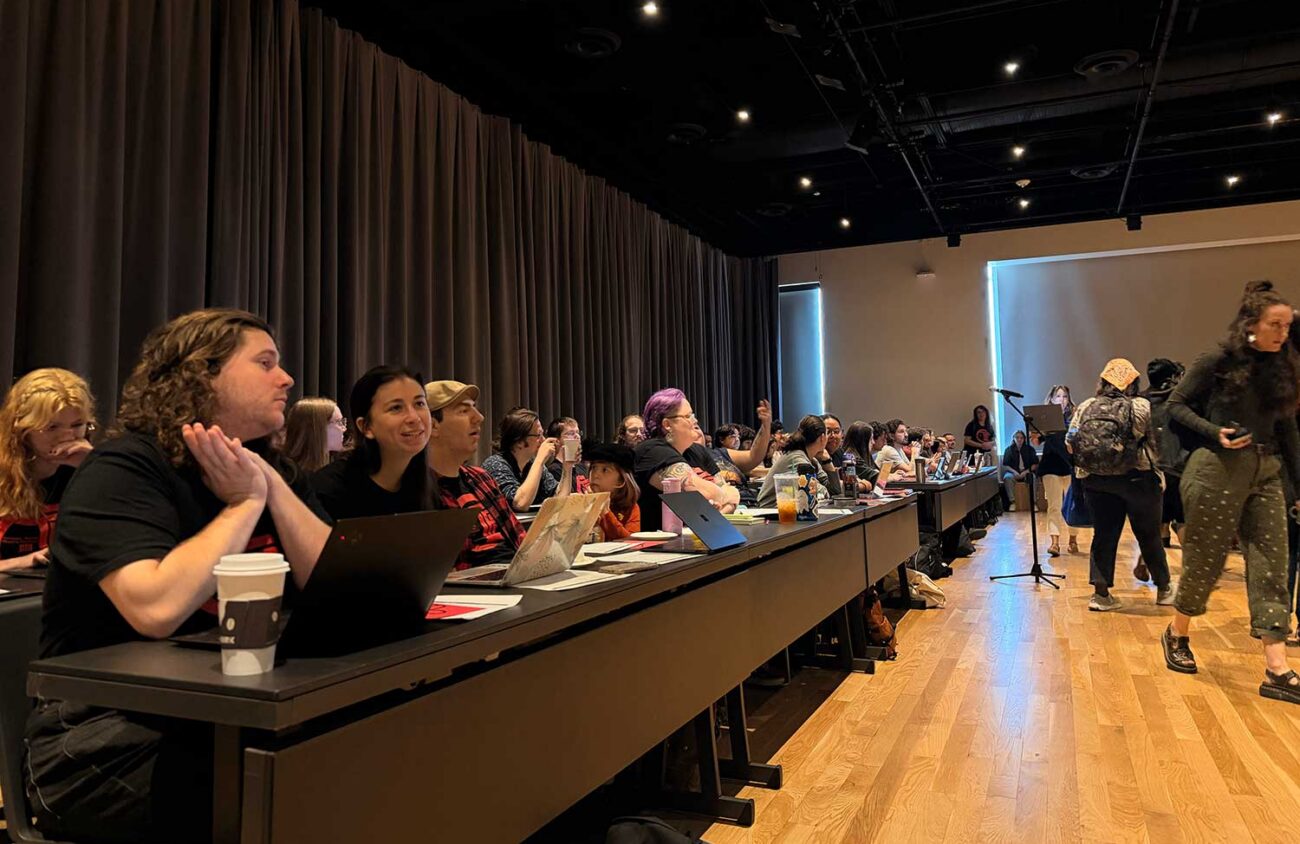
On the morning of July 1, the Erb Memorial Union was full of people wearing black shirts and sporting picket signs. “UO doesn’t work unless we do,” and “We deserve a living wage,” were some of the signs held by Graduate Teaching Fellows Federation members, the University of Oregon’s graduate student employee union.
July 1 marked the fifth bargaining session between the UO’s and the GTFF’s bargaining teams. In past negotiations, UO has pushed for a 0 percent increase in salary for five years and cut the childcare benefits for graduate employees. GTFF members lined each wall of the bargaining room, with additional members waiting outside to listen to the potential changes in their contract.
The UO’s bargaining team hasn’t responded to four articles of priority for the GTFF. These look into the university’s policies on interacting with Immigration and Customs Enforcement, non-citizen GE support, layoff procedures and expectations for summer term. Although the UO’s bargaining team, led by Chris Meade, agreed they “can prioritize them,” for the next session, they “couldn’t guarantee a counter for each of those.” Meade is senior director of employee and labor relations in the UO’s Office of Human Resources.
The graduate student union gave the university around an hour to walk through UO’s proposals. The main ones that Meade and UO’s bargaining team discussed were the salary proposal, changes within the grievance submission process, changes in health insurance and tuition waiver.
“I just want to acknowledge that it was probably frustrating to get this proposal from us. Particularly so in the testimonials that we heard about the concerns about inflation, cost of living, housing expenses,” Meade said when introducing the proposal for 0 percent raises in five years. “I think if I was in your position, getting a proposal would have made me feel like I had not been heard.”
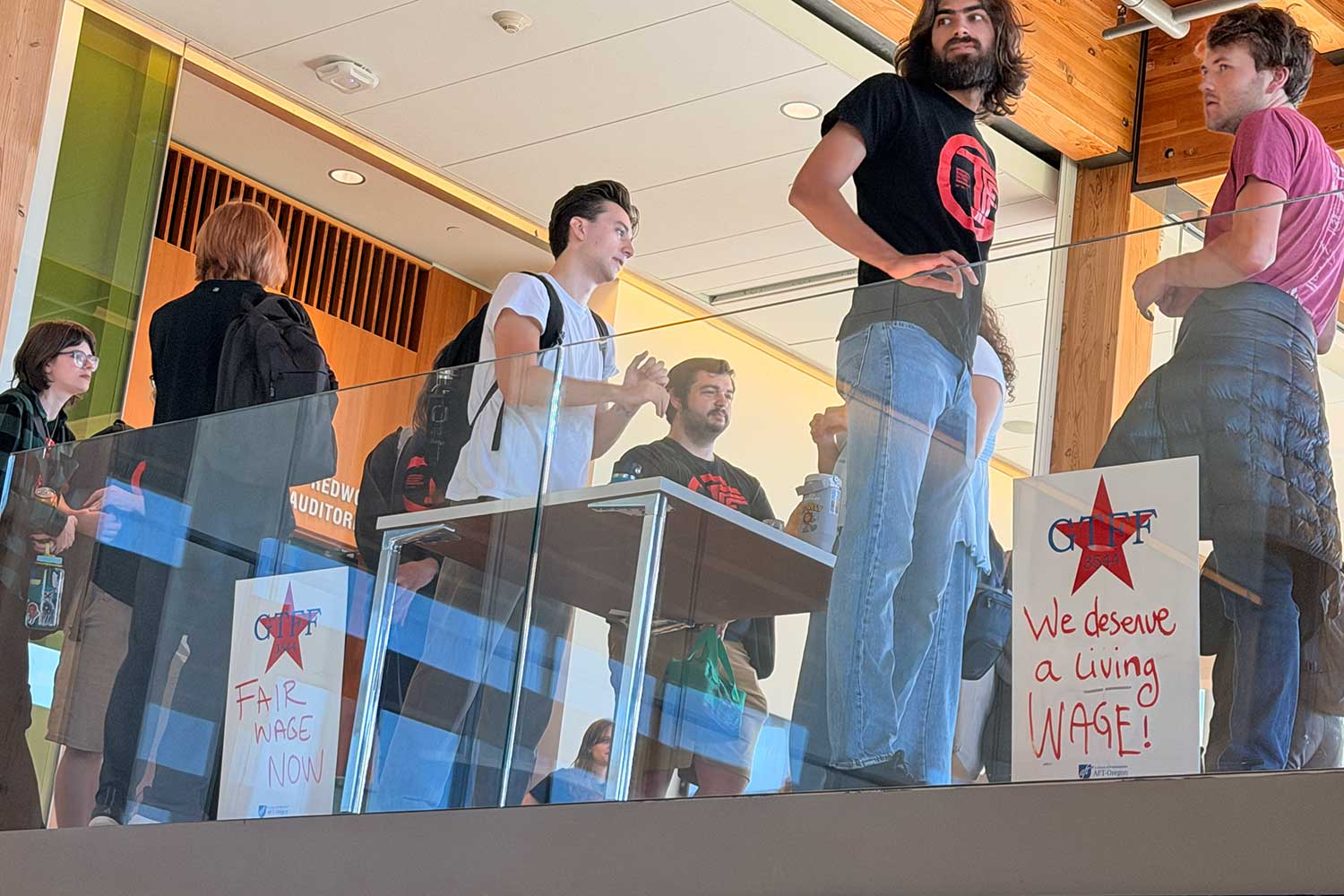
“Is it UO’s stance that the salary that UO proposed is stagnating at $51,000? Is it your stance that this is a livable wage for GEs?,” says Allison LaSalvia, GTFF lead negotiator. The figure LaSalvia uses is the full time equivalent base salary for employees, and GEs make a fraction of the total rate, from .25 to a high of .49 FTE. Meade wasn’t able to respond to the direct question, however the graduate union supporters responded in laughter.
Meade claimed that the proposal was not a reflection of cost of living or of value or worth of GE labor, but it was rather a reflection of the financial challenges the university is being faced with.
GTFF argued that the lack of salary increase might impact recruitment or retention and affect UO’s status as a research university. Meade’s team said it recognized those challenges, but wanted to create a future proposal that would limit staff layoffs — with the last major budget deficit leading to 100 layoffs.
The salary proposal was framed in a five-year time line, but allows for an economic reopener at the three-year mark to discuss potential changes within salary.
GTFF entered into this bargaining session facing a $65 million budget deficit in UO’s general fund. In the past general meetings the graduate student union stressed the importance of members to show up during general bargaining, to show collective strength in bargaining.
LaSalvia asked whether UO’s bargaining team was “anticipating” layoffs for graduate employees, to which Meade responded saying “it was too early to tell” and that “all options need to be considered.”
Meade explained that “all employee groups” are going to be considered for potential layoffs, and that all options are going to be considered when addressing the budget deficit.
“I look forward to seeing these words actually be put into practice. Because it leaves a sour taste in the mouths of all your employees when we see six-figure salaries continue to increase when we’re living off half $51,627 a year,” LaSalvia said.
The university proposed a change to the health care amendment, which was first codified in 2019. This set the payment cost at a 95 to 5 percent ratio, with graduate students covering 5 percent of the health care costs. The university proposed that the “split will change as health insurance goes up and down.”
Many of the other proposed amendments by the university aimed to streamline contract language and cut out unnecessary words. The back-and-forth dialogue cleared up the intentions behind the language of the proposals.
Eugene Weekly reached out to Molly Blancett, the primary press contact at UO for a comment, but has not heard back yet.
The date for the next bargaining session is yet to be determined, but both parties hope to agree on a date early this week.