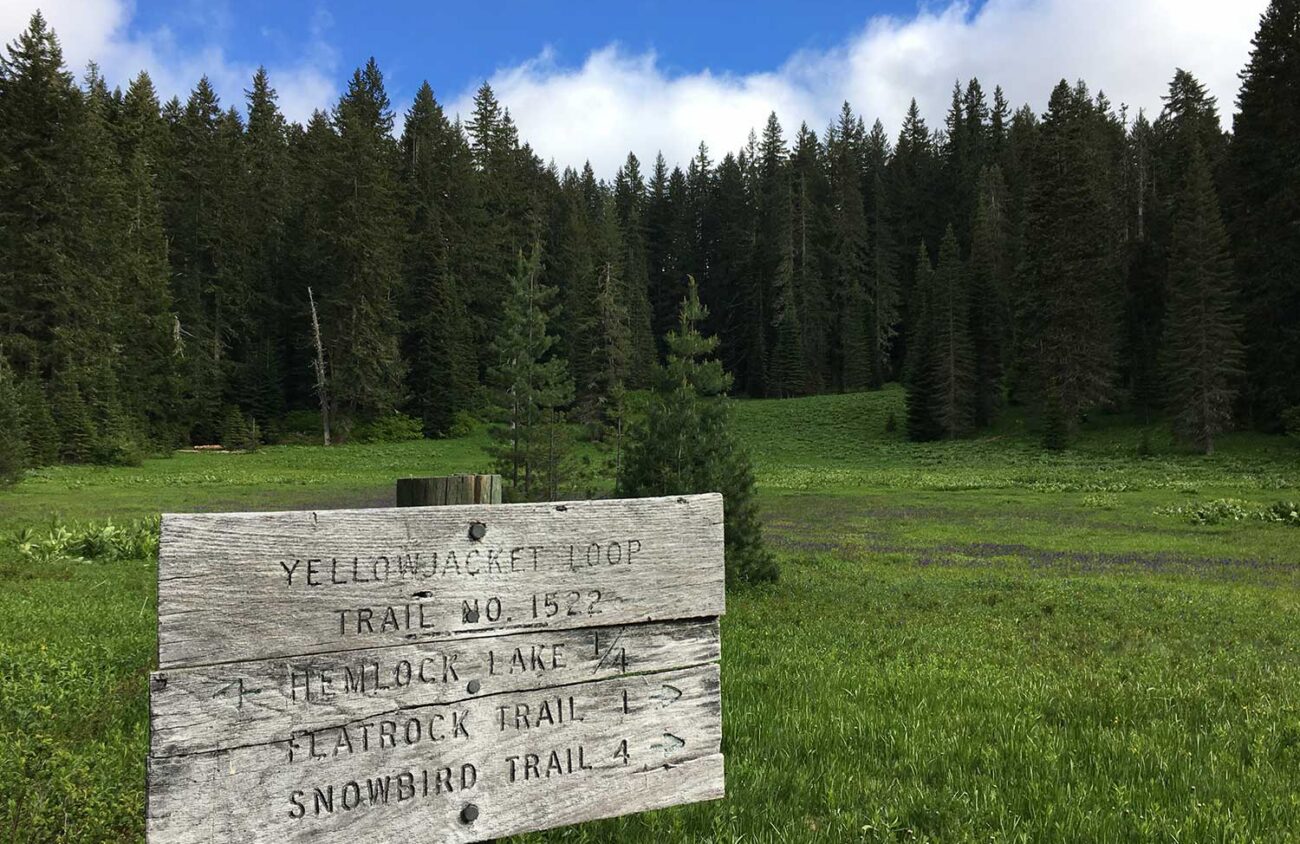
Don’t be turned off by the name of this lovely 5.6-mile loop trail — Yellow Jacket Glade is not named after the annoying wasps that like to crash your backyard barbeque, but rather a native flower.
In fact, by mid-July, there likely aren’t even noticeable mosquitoes on this hike, with the snow long since melted. Instead, you’ll find wildflower-filled meadows, great views and some natural forest recovery from a 2021 fire that impacted part of the trail.
A bit off the beaten path, Hemlock Lake (actually a small reservoir), this loop trail and nearby roads attract anglers, hikers, mountain bikers and motorcyclists. It takes close to 2.5 hours to get here from Eugene, so consider making a camping trip out of your excursion and checking out other nearby trails like Wolf Creek Falls.
The forests and meadows of Yellow Jacket Glade lie near the dividing point between the North and South Umpqua River watersheds, and, at the mid-elevation range of 4,400 to 5,300 feet, this area offers a huge amount of diversity as the ecosystem transitions from the moister forests of the central Cascades to the drier forest types to the south, and as it bridges lower and higher elevations. Still dominated by Douglas-fir trees, you’ll also see silver and Shasta red firs, and western white pines. Mid-story shrubs include elderberry and mountain ash, with peak wildflower blooms in July.
To get here, it works just fine to enter “Hemlock Lake Campground” or “Yellow Jacket Loop Trailhead” in Google Maps. Start by heading south from Eugene on I-5. Take exit 124, and go through downtown Roseburg, following signs for Crater Lake/Diamond Lake and OR-138E. A quarter mile east of milepost 16 on Hwy 138, just before Colliding Rivers Viewpoint and North Umpqua Ranger Station in Glide, turn right (south) on Little River Road (County Road 17), which becomes Forest Road 27. Follow for 19.5 paved miles and an additional 11.2 on gravel, turning right after 8 miles to stay on FR 27 and otherwise staying on this main road at intersections. 30.7 miles from Hwy 138, turn right onto a road marked “Hemlock CG” and cross Hemlock Lake’s dam in a half mile.
The trailhead and campground are a quarter mile beyond the dam, with day-use parking (no fee required) and a picnic area to the left and a restroom nearby.
Start at the main signboard at the campground entrance and go right to hike this loop counterclockwise. Starting out under tall Douglas-firs and silver fir covered with lichen, the trail soon crosses a large wildflower-filled meadow. Over the next two miles, the trail climbs through a series of picturesque meadows, following small streams and then switch-backing up a ridge to a high sloping plateau. Along the way, enjoy the mix of dense and more open forests, some moderately burned in the recent fire.
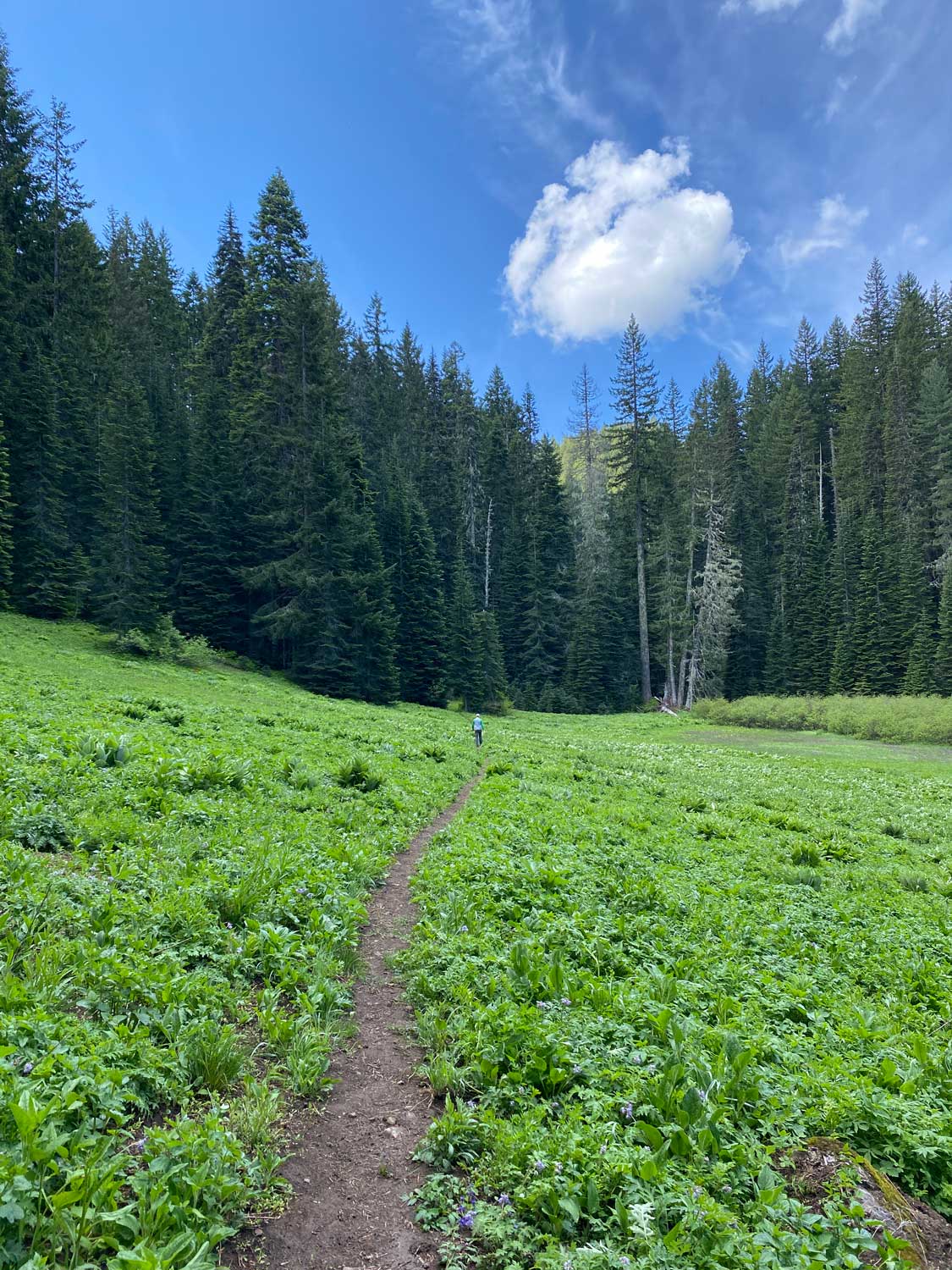
Stay left at all trail junctions to continue on the loop (signs are not always present), which tops out on a ridgetop meadow with views of the southern Cascades and then passes through an old logged area. You’ll climb again to a ridgetop, now looking north towards Hemlock Lake, and amble along before descending towards an old logging road. At about the four-mile mark, stay left at a faint trail and then at two more junctions to continue the loop downhill past a small pond, along a creek and finally to the lakeshore lined with willow and alder. Cross a bridge at an inlet stream a quarter mile before reaching the parking area and completing the loop.
Under the Northwest Forest Plan that lays out management for the Umpqua National Forest and others in western Oregon, there are some limitations on logging in this location to protect threatened wildlife habitat.
Under proposed, but not yet finalized, revisions to this plan, protections for this habitat and centuries-old trees are likely to be weakened to better comply with federal mandates to increase logging. Watch for opportunities for public comment on this effort in the coming months.
Chandra LeGue of Eugene is the author of the book Oregon’s Ancient Forests: A Hiking Guide and is the senior conservation advocate at the non-profit organization Oregon Wild.