Your pet may not know what a bad day is, but they know what one looks like. They know the sound of your footsteps when you walk through the door. They know whether the keys in your hand mean a walk around the neighborhood or a trip where they are staying home.
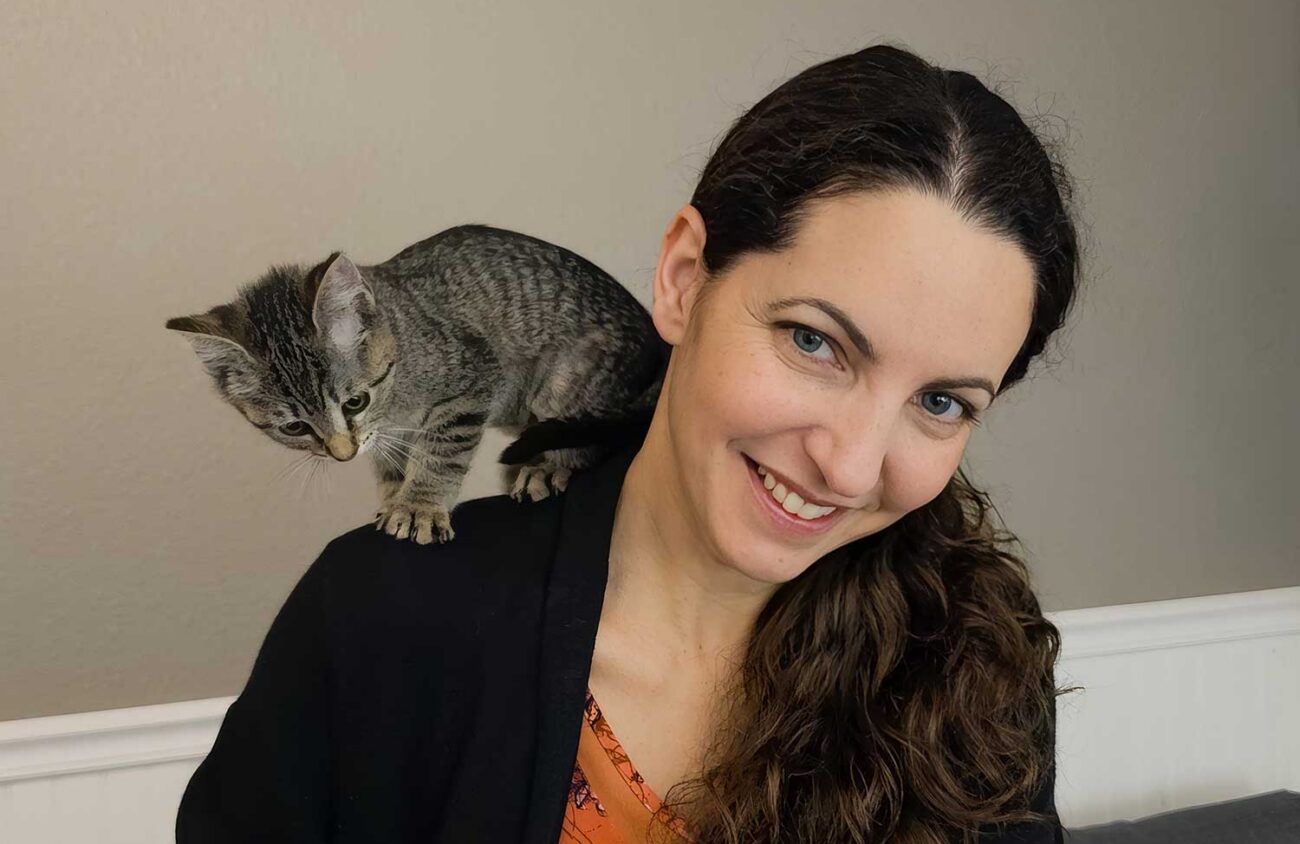
For Malissa Snyder, a Eugene pet sitter and owner of three cats, Cosmo, Sophie and Donald, those moments are nothing new. After 10 years of caring for animals, she’s watched pets respond to people in ways that often seem almost intuitive. “I sometimes feel like they know more than humans ever could,” Snyder says.
But according to Monique Udell, director of Oregon State University’s Human-Animal Interaction Laboratory, that “sixth sense” is less mysterious than it seems. Animals are constantly noticing people around them — our routines, habits, reactions and the patterns that shape their daily lives. “They’re watching and learning those associations,” Udell says.
At OSU’s laboratory, Udell studies how cats and dogs learn, what information they prioritize and how relationships between humans and animals develop. Her research explores not only how pets understand the people they live with, but also how those relationships benefit both.
For animals that share their lives with people, understanding humans is necessary.
“We control access to most of the things that are important to them in their day-to-day life,” Udell says. “For animals that live with us, they’re really learning a lot about us and about the environments that we create for them.”
Those patterns are something Snyder has seen more recently, especially after losing her mother. Her cat Cosmo, who she inherited from her mother, seems to know when Snyder is having a moment of grief. “If I start crying, and I don’t know where my cats are, Cosmo will run to me and just lay on me until I calm down,” Snyder says.
To Snyder, it feels like empathy. Scientists say behaviors like Cosmo’s likely develop through associations and experience. Pets form associations between their actions and the responses those actions receive, gradually learning what brings comfort or attention.
When Snyder was putting down her cat, Fisher, after he was diagnosed with kidney disease, she remembers lying down with Fisher, crying. “My cat took his paw and wiped around my eyes.” Snyder says, “He was comforting me and saying, ‘Mommy, it’s gonna be okay.’”
Science cannot prove exactly what an animal is experiencing emotionally, Udell says. Researchers cannot ask a dog or cat whether they understand sadness the same way humans do. “Do they understand or do they respond to it?” Udell says. “If they can make these associations and they can respond appropriately or in a way that’s most beneficial to them, then that’s a kind of understanding.”
Those associations also shape the relationships that form between people and animals over time. Udell’s research explores how those bonds influence behavior, including whether they create benefits on both sides.
A 2026 study from Udell’s lab examined whether cats could support children with developmental disabilities through animal-assisted interventions. While dogs and horses have historically received most of the attention in this field, Udell and her research team wanted to understand whether cats could also play a role in supporting children’s development.
Over six weeks, half of 36 children with developmental disabilities trained their family cats, while the other half served as a control group; researchers tracked outcomes through surveys and video analysis for a year.
The study found that children who participated in the program showed increased responsibility for cat care, reported stronger relationships with their cats and helped some cats develop stronger attachment bonds and increased social behavior.
For Snyder, those findings reflect what she has experienced with her cats for years. The bond she shares with Cosmo, Fisher or the other pets she’s watched was not built from a single moment of connection, but through thousands of small interactions. “I already have a relationship with the [pets] I take care of,” Snyder says “But the fact that I’m not even their mom makes it pretty remarkable that they can sense my feelings.”
That relationship is what makes moments like Cosmo running to her when she cries feel so meaningful. Whether or not pets understand human emotions in the same way people do, Udell’s research suggests that animals and humans are constantly learning from one another.
“I think by studying animal behavior we can also learn to pay closer attention to our own behavior and the things that contribute to it,” Udell says.
For more information about Monique Udell’s work at Oregon State University’s Human-Animal Interaction Laboratory, visit TheHumanAnimalBond.com.