Five blocks from Steve Law’s home in Southeast Portland lies Mount Tabor. Law goes hiking there a few times a week and served as chairman of the Friends of Mount Tabor Park Board.
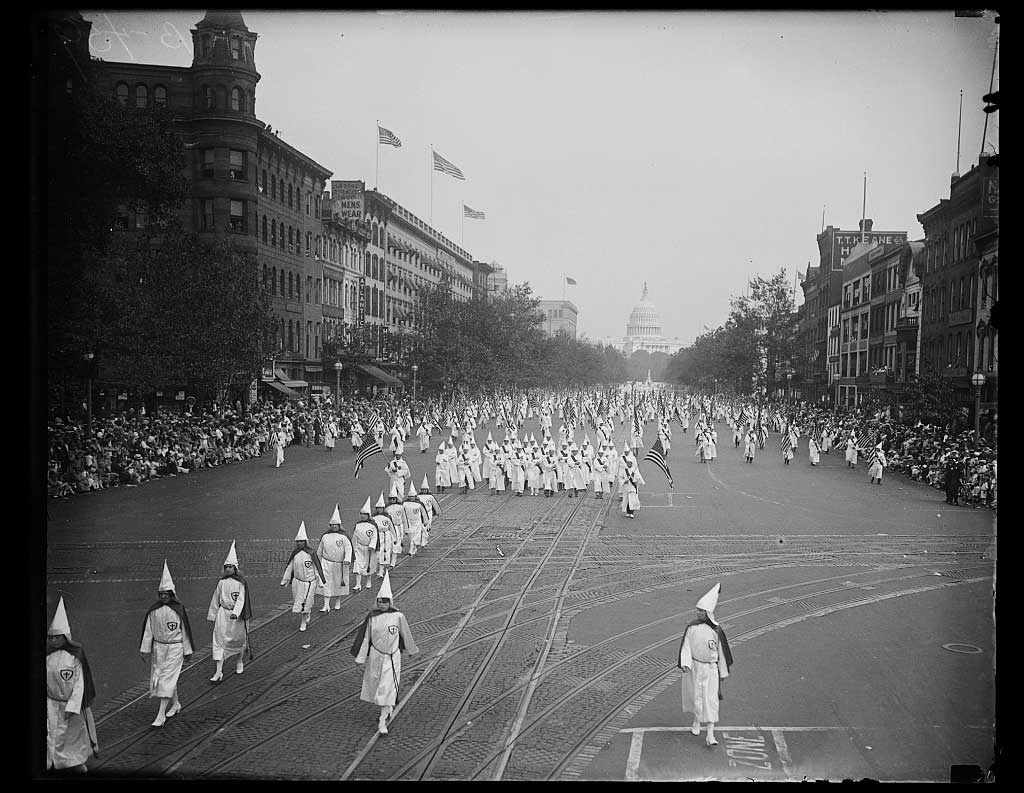
When he found out that 100 years ago, the Ku Klux Klan would burn crosses there, he was shocked. “Nobody talks about it,” Law says. “It’s like people have forgotten about it or never knew it happened.”
Law spent most of his over 30-year career as a reporter for the Portland Tribune, retiring in 2019. He says his life’s work is heavily influenced by lawyer, activist and author of Just Mercy: A Story of Justice and Redemption Bryan Stevenson. While listening to a podcast featuring Stevenson, he learned about Stolpersteine — brass plates embedded in the sidewalks of Germany denoting victims of the Holocaust. Literally translating to “stumbling stone,” they’re a physical daily reminder of one of the greatest tragedies in history.
Law thought it might be fraught to embed something similar in Portland’s streets, indicating the victims of the Klan, so he set out to write a reminder in the way he knew how.
Oregon State University Press publishes his book Peddlers of Hate: How the Ku Klux Klan Seized Power in 1920s Oregon, in August 2026. It is a comprehensive account of the impacts the Klan left in the state of Oregon, how it rose to power and the influences it left behind.
After retiring, Law researched and wrote a six-part series on the Klan published in the opinion section of the Portland Tribune in 2022. “It’s probably the most praise I’ve ever gotten for stories,” Law says. “I think this issue resonates with people, especially in this era.”
Law calls Eugene “one of the most thoroughly Ku Kluxed cities of Oregon,” citing the 1923 resignation of the mayor, city attorney and police chief as a result of Klan pressure and burning crosses atop Skinner’s Butte in 1920. In 2017, the University of Oregon renamed Dunn Hall to Unthank Hall after demands from the Black Student Task Force. Dunn Hall had been named for Frederick Dunn, a longtime professor and head of the Eugene Chapter of the KKK.
DeNorval Unthank Jr. was the first Black man to graduate from UO’s architecture program. In May 1951, someone burned a cross on the lawn of the Gamma Phi Beta sorority, where Debbie Elaine Mohr Unthank Jr’s girlfriend and future wife slept.
Fifty-six of the book’s 278 pages are a bibliography of Law’s extensive research in newspapers, interviews and firsthand documents. The book also begins with an acknowledgement of the role of women, specifically journalist and civil rights leader Beatrice Morrow Cannady, who lobbied against Portland screenings of The Birth of a Nation, the racist 1915 film, which portrayed the Klan as heroic in the aftermath of the Civil War. The film was a trigger for the Klan’s resurgence and putting down roots in Oregon.
“Cannady broke down and wept, saying she’d gone for a week with little sleep and irregular meals, and the stain was too great after her mission failed,” Law writes in the first chapter. Law regularly brings characters to life with details like the “charismatic redhead” and the “slim, curly-haired man with horn-rimmed glasses.” The details, compiled over the several years Law spent researching primary documents, highlight the proximity Oregonians have to this history: how easily the mayor, local priest and neighbor could be corrupted by bigotry.
His tone is that of a seasoned reporter; resigned to the realities of the past, with an analytical breakdown of cause and effect, leaving no detail unexplored. Contextualizing the origins of “fake news,” past examples of global pandemics and stolen elections, the book maintains an evergreen quality.
“You want a book to last more than one election cycle,” Law says. “I really don’t see how you can educate people about these things without talking about them, without showing, and you can’t get people to read stuff.”
When Law started working on the book in 2021, he, and the rest of America, had just experienced the first Trump administration, “that rose to power by bashing immigrants,” Law says. The last part of Law’s series for the Tribune is titled “Same Wine, Different Bottle,” and the final chapter of Peddlers of Hate is called “White Robes and Masks Come and Go.”
Steve Law will host author events 7 pm Monday, August 24 at Bloomsbury Books, 290 East Main Street, Ashland and 7 pm Wednesday, August 27 at Powell’s Books, 1005 West Burnside Street, Portland. Pre-order Peddlers of Hate at OSUPress.oregonstate.edu/book/peddlers-of-hate.