One of the legislative efforts that Sen. Ron Wyden has sponsored is the Nurses Belong in Nursing Homes Act, which would establish strict minimum staffing requirements within nursing homes. The act also requires a registered professional nurse to be on-site 24/7 and provides permanent funding for nursing home surveys, inspections and enforcement programs.
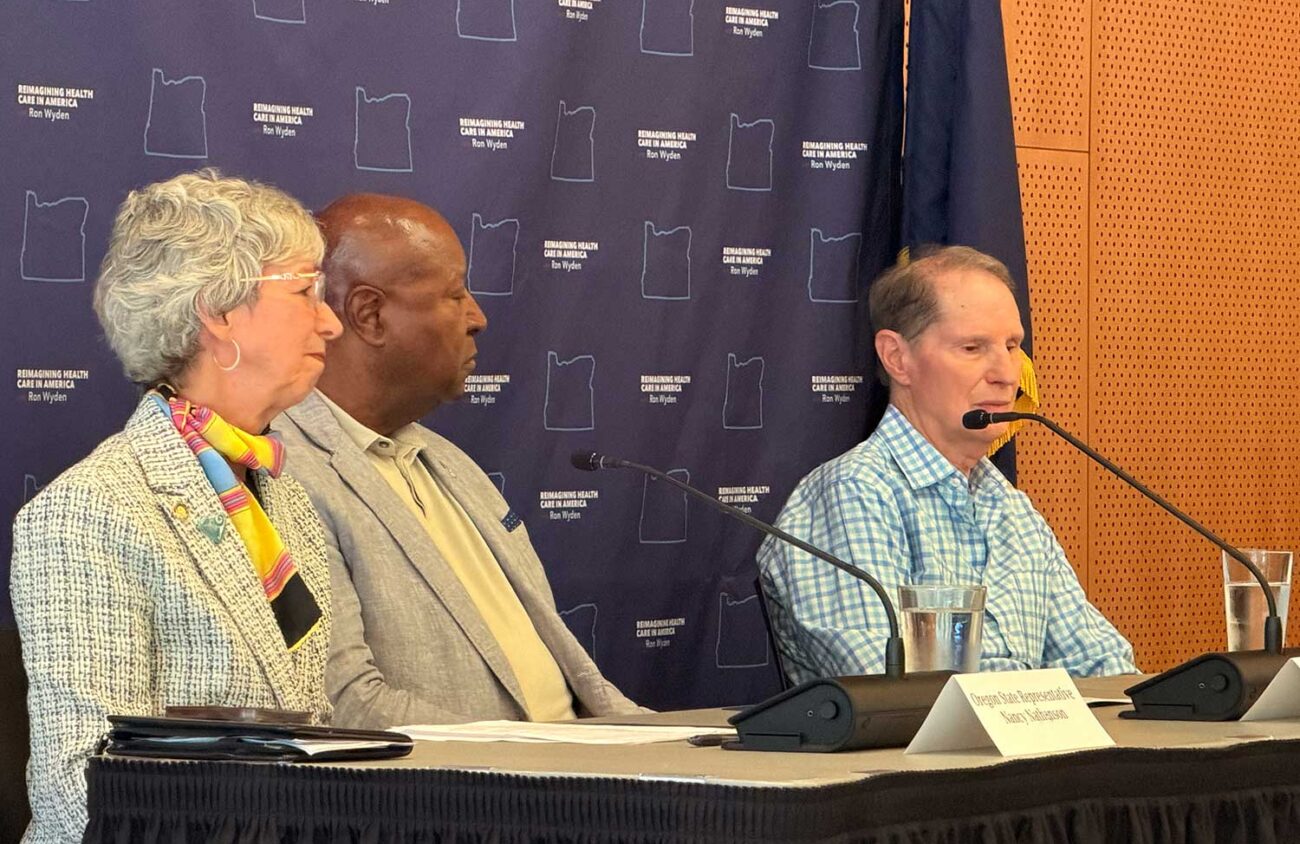
On August 11, Wyden stopped in Eugene for the first stop of the “Reimagining Health Care for America” townhall series. The aim of the series was to shed light on health care issues, the impacts Oregon might face due to cuts on Medicaid and discuss upcoming legislation.
Fred Steele, the Oregon state long-term care ombudsman, spoke to the state and national need of the legislation. Out of the 128 current long-term care nursing home programs, none offer 24/7 nurse care.
Steele said that Oregon, unlike other states, has staffing ratios in place for certified nursing assistants (CNAs). The daytime ratio is one CNA to seven residents and the night shift ratio is one to 11. Steele says that the ratios make the nursing home care “above average” compared to the national average and is essential in “increased care” and “better outcomes for residents.”
“That was the one thing that was really going to impact Oregon and Oregon’s nursing facilities,” Steele said. “What we did not have in Oregon was 24/7 nursing and that was going to be a new mandate.”
In 2024, the Centers for Medicare & Medicaid Services went through the rule-making process and recommended similar staffing ratios for nursing facilities throughout the country, with the rule planned to be implemented in three years. One of the recommendations also included 24/7 nurses within nursing facilities. The Trump administration repealed the rule before it became effective.
Currently there is a “national understanding,” Steele said, that there needs to be a registered nurse onsite within nursing homes for at least 40 hours a week. For the rest of the week, they are delegating authority to others to provide care and nursing related tasks.
There are differences between the type of care CNAs and registered nurses are allowed to provide. RNs are licensed professionals who conduct patient assessments, develop medical care plans, administer prescription drugs and provide IV treatments. CNAs are focused on daily activities like bathing, dressing, grooming and taking basic vital signs. They are not allowed to perform invasive procedures.
“I know there were concerns within the nursing home industry within Oregon on whether we had enough nurses to staff facilities, which was a common complaint nationally, which is why CMS at that time had given a long multi-year runway before the requirement was going to take effect,” Steele said. “There would have been time to educate, recruit and train more nurses so there could be 24/7 RN staffing”
In 2023, Oregon passed House Bill 2697, which established nursing minimums in hospitals, but did not include residential areas. This bill was introduced to address the high level of burnout nurses have reported feeling and to ensure people have adequate healthcare.
“We need to make sure that we’re catching up on it and with Sen. Wyden pushing it with his colleagues on a federal level, we’re working on that at the state level as well,” said state Sen. James Manning, a Democrat representing Lane County and one of the chief sponsors of HB 2697. “I think that it’s just time to go back in and amend to include residential, in-home health care centers.”
Manning said he noticed stress on the health care system first during the COVID-19 pandemic, where many nurses were asked to work long shifts leading to massive burnout within the field. Manning said a similar approach can be used for nursing facilities to provide further care.
“The purpose of this is to ensure we don’t have those issues and those families have enjoyed themselves in residential nursing homes and in-house care, and they have oversight and proper care as needed, and making sure that we have certified people that are the ones providing the care,” Manning says.
State Rep. Lisa Fragala, a Democrat representing Eugene and parts of Creswell, said she has heard constituents in Eugene mention the importance of the staffing requirements within hospitals.
“I truly do believe that safe staffing laws save lives and Oregon has its own strong staffing ratio law, and we need to think about protecting this law as well,” Fragala said. “But I have heard from constituents that they believe that their loved ones in nursing homes will be safe.”
She says that HB 2697 can be used broadly for any location that is acting under the hospital license, but for nursing homes that don’t meet the licensing requirement, the bill would not be applicable.
Steele said, “I strongly believe this is needed,” saying that nationally there needs to be staffing ratios similar to what Oregon has as well as registered nurses at all times in nursing homes.”