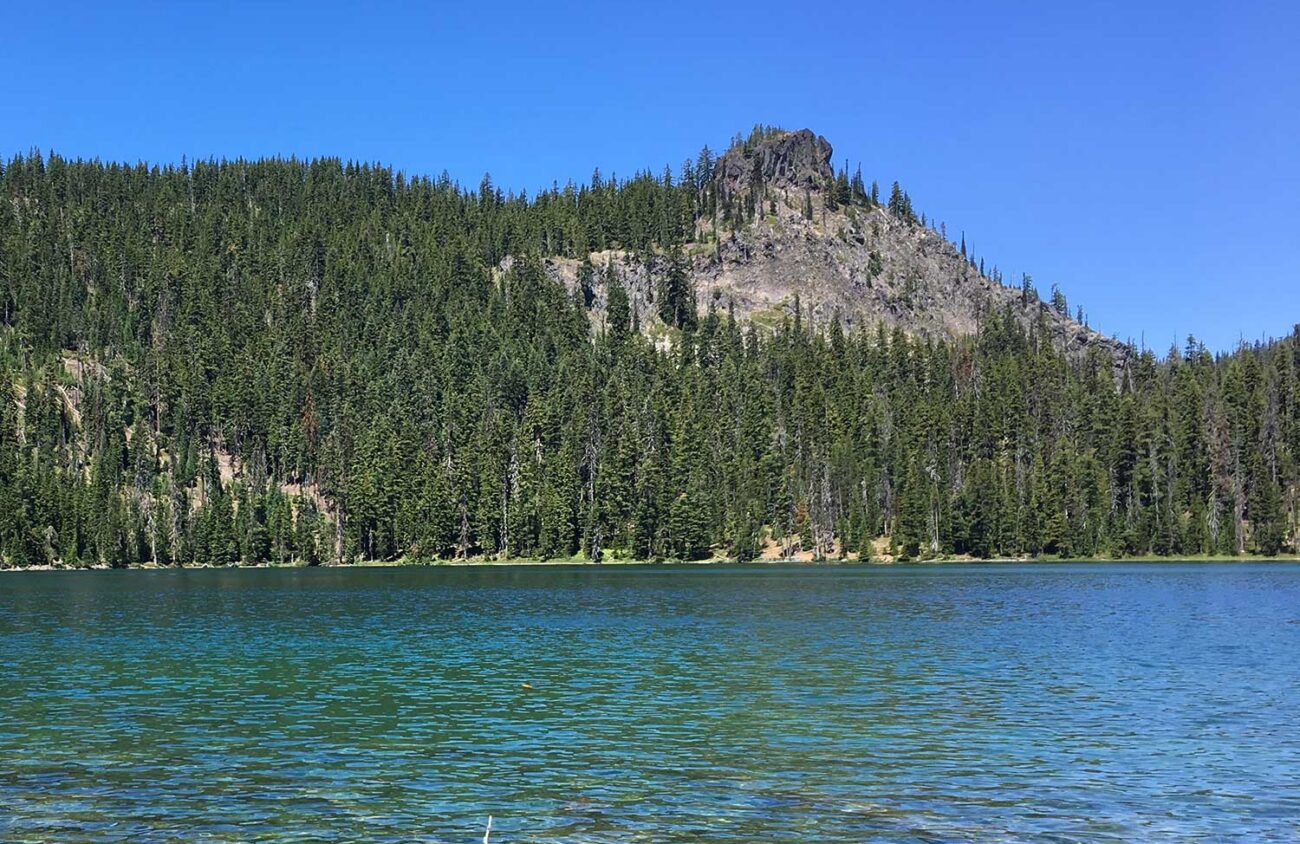
The Pacific Crest Trail can sound like a daunting undertaking, especially when taken all together. There’s no need to feel intimidated. I’m no through-hiker, but I can name several easily accessible day hikes or easy one-night backpack options along the PCT, all especially nice as summer winds down. The section from Willamette Pass to Rosary Lakes is one of these gems.
Tucked below ancient rocky rims just east of the Cascade Crest, the string of three Rosary Lakes are just a 3-mile hike from a major highway, but they feel remote and wild.
In fact, these lakes are part of the 36,000 acre Maiden Peak roadless area, which is connected to the Three Sisters Wilderness on the north and just a hop across a road from the Waldo Lake and Diamond Peak Wilderness areas to the west and south. In other words: big, wild, country.
The designated roadless area doesn’t have the same protections as these “big W” areas, though under the Roadless Area Conservation Rule it’s off limits to commercial logging and damaging roads. For now.
Getting to the trailhead is a cinch. Take exit 188 off of I-5 just south of Eugene and follow Highway 58 southeast to the town of Oakridge, then another 27 miles to Willamette Pass. Just past the Willamette Pass Ski Area, turn left at a sign for the Pacific Crest Trail, then turn right just before a large building to find the trailhead and parking area.
Start out on the PCT by heading right at the trail junction just into the forest from the trailhead. The trail rises slowly as it passes through an ancient forest of Douglas-fir, mountain hemlock and Pacific silver fir, with smaller grand fir, western white pine, subalpine fir and the odd Engelmann spruce. Down logs and snags add all the classic old-growth structure to the forest.
Note how some of the trees have broken tops — resulting in some real character, cavities and wildlife habitat. Some of the Douglas-firs have blackened bark and deep fissures, giving a clue to their past and great age — which at this elevation is likely over four hundred years.
As you gain elevation, you might begin to catch glimpses of shimmering Odell Lake to the south, and possibly even Diamond Peak rising beyond it. You might also notice the tree species changing toward a higher elevation mix. The trail skirts the base of a ridge that rises to the north, passing patches of rock slides, before cresting the ridge at about the 2.3 mile point. You’ll arrive at Lower Rosary Lake after 3 miles and an elevation gain of about 650 feet. Here you’ll find a great view of the lake and Pulpit Rock, which rises above it, down logs to sit on and flat ground for camping if you’re backpacking. Explore a little further to reach the two upper, smaller, lakes.
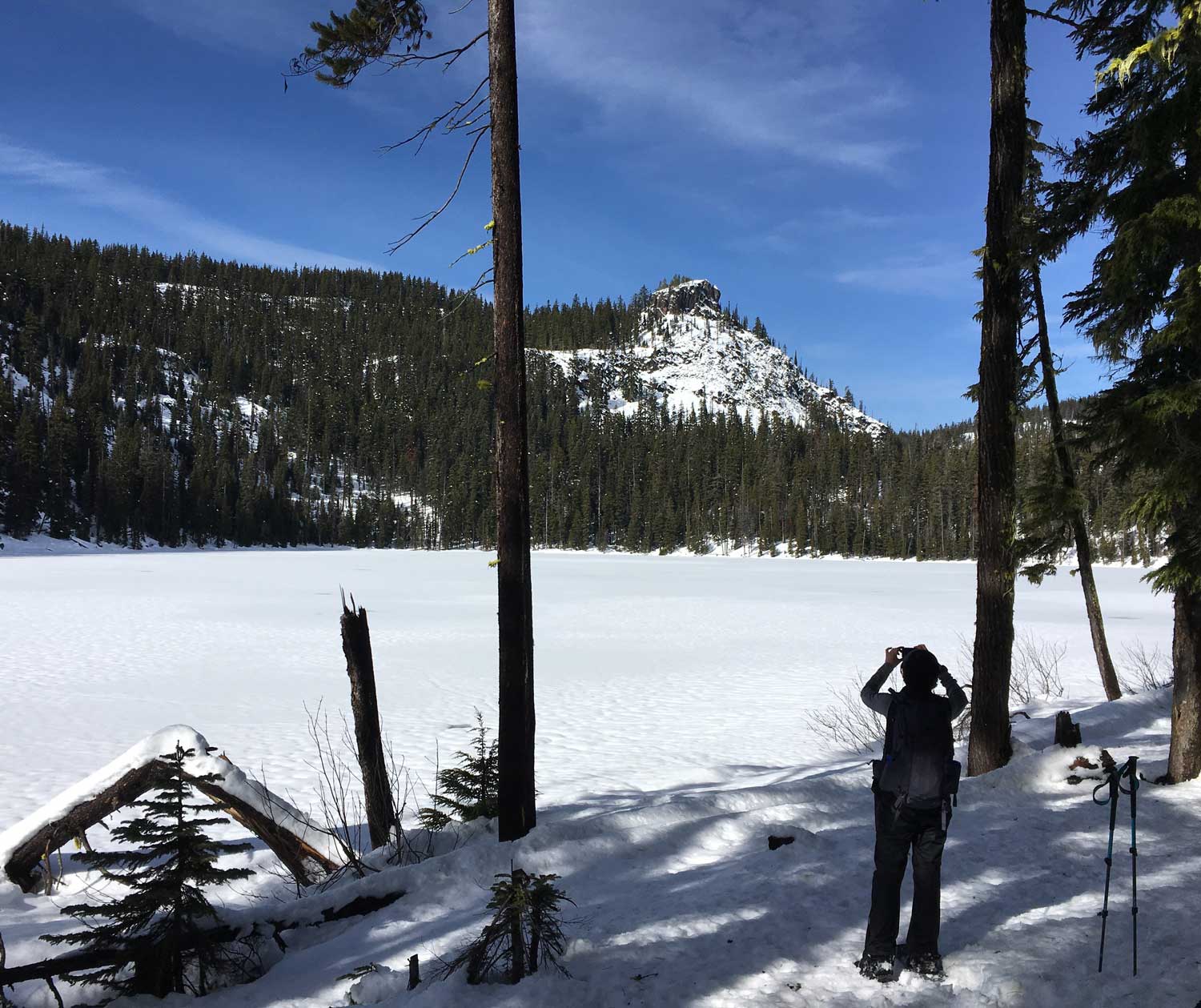
On warm late summer days, these lakes are great for a swim for you and any canine friends you brought along. In the winter, the trail can also be accessed by ski or snowshoe if you park at the Willamette Pass Resort and join the PCT from a connector trail on the east side of the parking lot.
Some of my past columns referenced a coming comment period for the Trump administration’s proposal to repeal the Roadless Area Conservation Rule. The time has come! The public has until Oct. 6 to weigh in on the effort to scrap protections for 2 million acres of wild Oregon forests like those around the Rosary Lakes. Check out SaveRoadlessForests.com, MoreThanJustParks.com/roadless-rule or OregonWild.org for plenty of great resources to craft and submit your comment.
Chandra LeGue of Eugene is the author of the book Oregon’s Ancient Forests: A Hiking Guide and is the senior conservation advocate at the nonprofit organization Oregon Wild.