I’ve been with my boyfriend for almost three years, so I feel like I’m starting to get the hang of this whole relationship thing. We’re getting to the point in our lives when we think about the future: next career steps, perhaps engagement, marriage and, eventually, a family.
It can be daunting, but we’re in it for the long haul.
No one is an expert when it comes to creating satisfactory relationships, but if anyone can prove their ability, it’s a couple that has survived decades of marriage together.
My first thought was, of course, my grandparents. My grandfather died last year just before their 60th wedding anniversary, but my stoic grandmother was willing to drop a few morsels of wisdom for me. “It wasn’t always beautiful, we had our ups and downs,” she wrote to me in a messaging app.
“Well, most of the time we liked and enjoyed each other.”
Conflict is the most difficult part of any relationship. My grandparents found a method that worked for them. “We had long silent stretches, finally hit on writing to each other. It made saying how we felt easier and less defensive. And reading with a less defensive posture.”
My grandma still has a framed letter from my grandpa in her bedroom from some forgotten anniversary or holiday. He wrote notes to her often, and she now loves reading them for the memories.
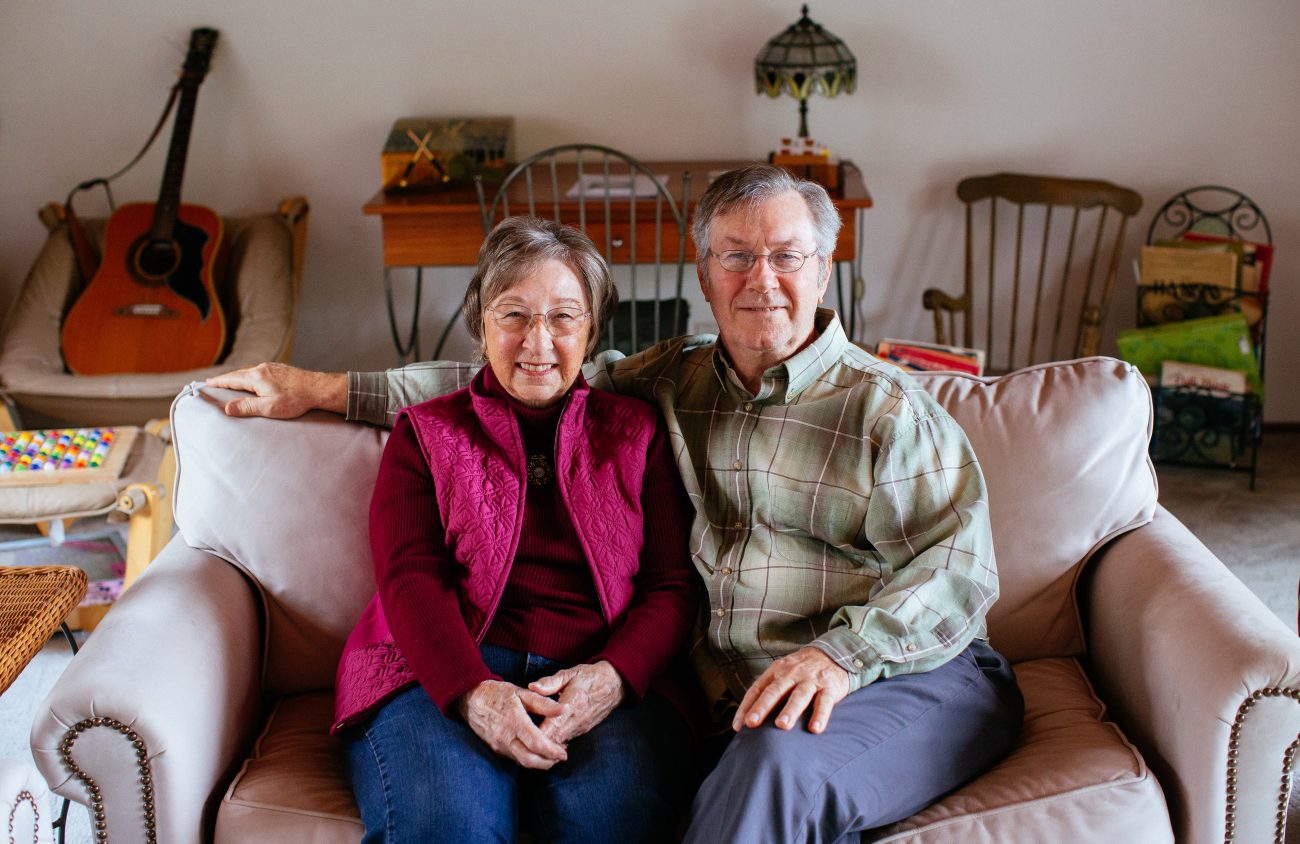
I also sat down with some long-wed locals, Jim and Beth Weldy, to get some relationship advice and see if I’m on the right track in my own relationship.
The Weldys emanate love for each other with every small movement and titter of laughter. Jim Weldy makes a pun, causing Beth to giggle. Beth Weldy emphasizes points in her stories with gentle pats on Jim’s forearm. They lean in towards each other almost unconsciously as they speak, their knees close together under the table as they sip hot cocoa.
“If a hug doesn’t last twenty seconds, it isn’t a real hug,” Jim says. “You need to relax into it.”
Every morning starts with such a hug for the Weldys.
There’s a simple sweetness to their relationship that lightens the mood around them. But it wasn’t always so easy. The Weldys married in 1967 after less than a year of dating, though they’d been friends for years beforehand.
“The first nine months were not good,” Beth says. “We thought we should become married people, and we kind of lost our friendship.”
“We each had an image of what a marriage should be and it didn’t fit either one of us,” Jim says. “It didn’t fit our relationship.”
After nine months of misery and a slowly boiling conflict, “we got angry with each other,” Beth says. “We began to realize that we needed to start over.”
“We’re not going to be married; we’re going to be friends again,” she says, recalling their early difficulties. They stayed married and committed, but that shift in thinking almost instantly fixed their marriage.
“He is my best friend. My very best friend,” Beth Weldy says, and that’s why they work so well together. “He’s a punner, if you haven’t picked up on that yet. There are times when I say, ‘Enough, enough, just stop.’ But yes, we laugh a lot.”
And Jim Weldy proves her right when we start talking about her love of quilting. “If she’s been quilting too long, I have to needle her to get her to stop. Ba-dum-tsh.”
I asked them if their marriage was always as happy as it seems now, and they said that they’ve had difficult periods in the past, but retirement is bliss.
“There were times when we got into a rut or a routine, and we would realize that,” Beth says. “So we’re going to do something different. And we’d go somewhere, somewhere different — we’re going to have an adventure.”
So keep things fresh. But what other advice do the Weldys have for a young couple trying to make their way in the world?
“Be kind to each other,” Jim Weldy says. That, and communicate. “You have to be considerate of each other all the time,” Jim says. “Not some of the time; all the time.”
“We disagree on lots of things. We’re two independent people, and it’s okay,” Beth Weldy says. “Once in a while, a disagreement will lead to an argument, but it’s not personal.”
And you can’t forget about physical touch. “Sometimes you don’t have to use words when you’ve had a disagreement. You just look at each other and you hug,” she says.
Those 20-second hugs Jim mentioned are key. “That hug in the morning is probably one of the most important things in our relationship,” Beth says. “Touching is, I think, one of the most important things that a human being needs.”
Luckily, they think I’m on the right track. My partner and I write notes to each other. Our conflicts aren’t personal; they’re about courses of action (and they often end in hugs). We give each other small gifts — flowers or chocolates, and once or twice a notebook of handwritten love notes.
And Beth Weldy sees hope in the future for other young people, as well.
“The young people that I see today, I’m very proud of them because they are more open and honest in their relationships than we were at our ages,” she says. “Society allows that, and they didn’t allow that back then. But I do like when young people show that they like each other and are affectionate with each other — that they like to hold hands, that they like to be touched. That’s important.”
A Note From the Publisher

Dear Readers,
The last two years have been some of the hardest in Eugene Weekly’s 43 years. There were moments when keeping the paper alive felt uncertain. And yet, here we are — still publishing, still investigating, still showing up every week.
That’s because of you!
Not just because of financial support (though that matters enormously), but because of the emails, notes, conversations, encouragement and ideas you shared along the way. You reminded us why this paper exists and who it’s for.
Listening to readers has always been at the heart of Eugene Weekly. This year, that meant launching our popular weekly Activist Alert column, after many of you told us there was no single, reliable place to find information about rallies, meetings and ways to get involved. You asked. We responded.
We’ve also continued to deepen the coverage that sets Eugene Weekly apart, including our in-depth reporting on local real estate development through Bricks & Mortar — digging into what’s being built, who’s behind it and how those decisions shape our community.
And, of course, we’ve continued to bring you the stories and features many of you depend on: investigations and local government reporting, arts and culture coverage, sudoku and crossword puzzles, Savage Love, and our extensive community events calendar. We feature award-winning stories by University of Oregon student reporters getting real world journalism experience. All free. In print and online.
None of this happens by accident. It happens because readers step up and say: this matters.
As we head into a new year, please consider supporting Eugene Weekly if you’re able. Every dollar helps keep us digging, questioning, celebrating — and yes, occasionally annoying exactly the right people. We consider that a public service.
Thank you for standing with us!

Publisher
Eugene Weekly
P.S. If you’d like to talk about supporting EW, I’d love to hear from you!
jody@eugeneweekly.com
(541) 484-0519