Winter isn’t necessarily the best time for wildlife watching in the Eugene area — what with the potential for rain, snow, fog and the dreaded “inversion.” But there are plenty of places to find birds, stream-dwellers and snow-adapted critters in these dreary months. Here in town, any riverside or wetland walk will likely feature herons, ducks and hawks, and maybe even river otters or beavers. If you’re snow-inclined, look for the tracks of snowshoe hares and weasels as you ski or snowshoe.
My personal favorite place for wildlife sightings in winter is the Oregon coast. I like to head to Cape Perpetua for hikes that combine my love of ancient forests and rocky tidepools. From Florence, head north on Hwy 101 for 23 miles and look for a sign for the Cape Perpetua Visitor Center. Turn right to find the parking area, restroom, and visitor center (which is closed for a few months for remodeling). A parking fee or pass is required to park here, but it’s worth it for all the area has to offer.
The large wrap-around deck of the visitor center is a fantastic place to spot whale spouts year-round. To get a closer view of the rugged shoreline and the wildlife there, follow the trail downhill and under Hwy 101. Enjoy any number of vantage points along the bluff, or carefully pick your way down to the lava rocks and tidepools to explore. (Always use caution on the rocks close to the ocean, and watch for waves at all times!)
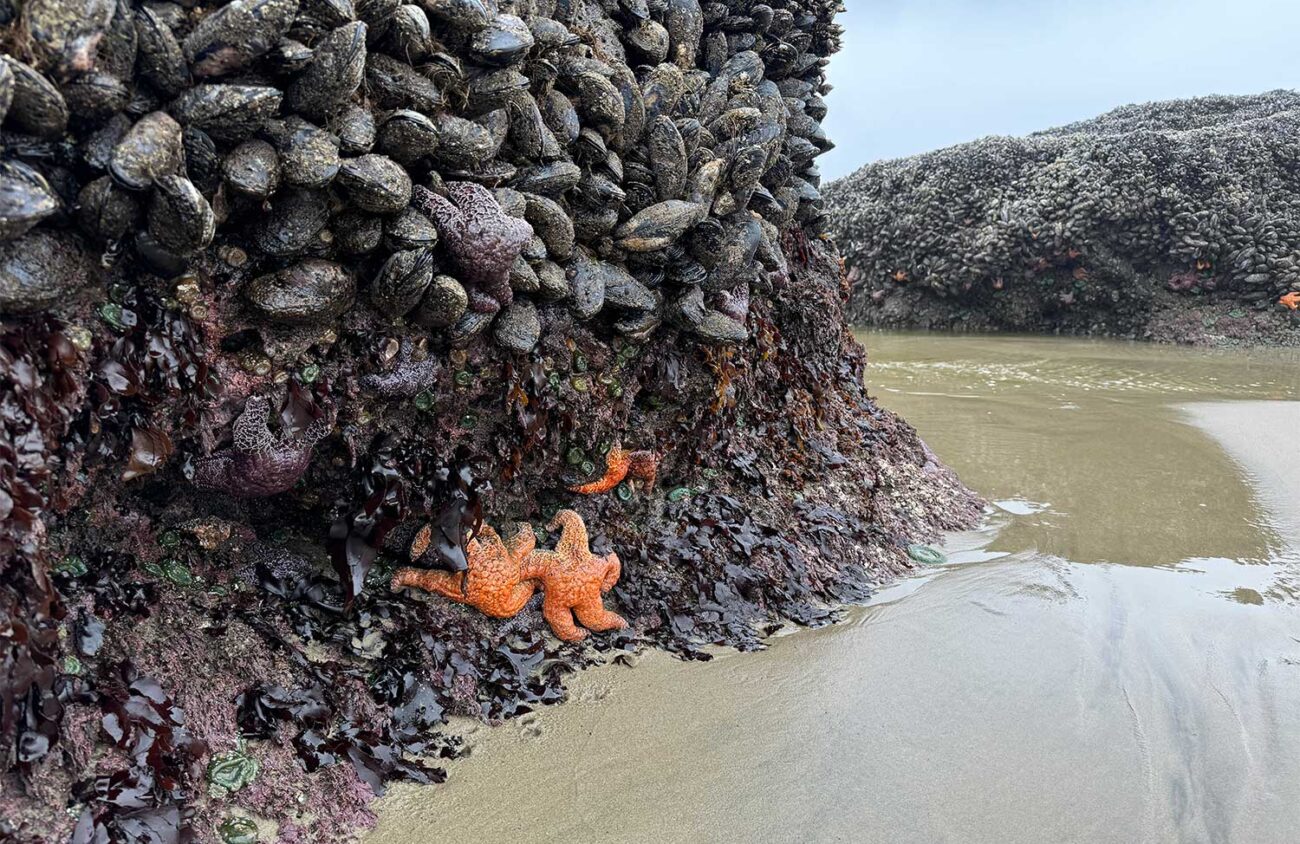
On a recent trip, I broke out my binoculars to scour the tidepools and inlets here and was rewarded with sightings of a kingfisher, black scoter ducks, some pelicans skimming the waves and colorful sea stars clinging just above the water level on the rocks.
To visit with the forest wildlife, my favorite hike is the 6.5 mile Cook’s Ridge-Gwynn Creek loop that begins at the top of the visitor center parking area near the camp host. The trail climbs up to the Discovery Loop (I recommend taking the left fork to reach the main trail more quickly), then continues up the ridge. Here, towering Sitka spruce trees rise into the canopy. I like to look for the fat, moss-covered branches high above where marbled murrelets lay their eggs. These seabirds depend on old-growth trees and forest habitat, found in abundance in few places today.
The trail gently climbs, offering views over Cape Creek’s canyon through the rainforest’s layers. As I got deeper into the forest on a recent hike, I was met with the chatter of Douglas squirrels and periodic outbreaks of birdsong. The Merlin bird ID app told me there were chestnut crowned chickadees, juncos and red crossbills. Thrilling!
After 2.4 miles, you’ll reach the Gwynn Creek Trail. Turn right at the intersection and head downhill. The trail descends to Gwynn Creek and leads you back towards the ocean. When you meet the Oregon Coast Trail, turn right to go back toward the visitor center with views of the coastline. Look for signs of elk in the underbrush along this stretch.
I’m not alone in seeking wildlife on the Oregon coast. People flock (ahem) there for the chance to see a migrating whale or spot a rare seabird, helping to keep the economies of coastal communities going year-round. But many of these sightings are becoming less common as wildlife populations continue to decline.
In an analysis released last summer, the Oregon Department of Fish and Wildlife identified over 300 native wildlife species that are in need of urgent action to avoid extinction. The list of those found along the coastal shore and forests includes the black oystercatcher, brown pelican, marbled murrelet, tufted puffin, snowy plover, northern spotted owl, silverspot butterflies, gray and humpback whales, coho salmon, coastal cutthroat trout, dungeness crab, sea stars and razor clams. Several of these are on the federal endangered species list as well.
With recent rollbacks to the Endangered Species Act and funding and staffing cuts at the U.S. Fish and Wildlife Service, the responsibility for wildlife conservation is shifting to the states, and right now, the state of Oregon has no funding mechanism to support this work.
A potential solution exists in a bill under consideration in Oregon’s upcoming February legislative session. The “1.25% for Wildlife” bill proposes to raise the state’s tourist lodging tax — a tax on short-term lodging units like hotel rooms and Airbnbs — from 1.5 percent to 2.75 percent, while keeping Oregon’s rate near the lowest in the nation. The bill has been supported by a broad range of hunters and anglers, conservationists, businesses and local communities, and bipartisan lawmakers. This is a major opportunity for the Oregon Legislature to help ensure a better future for Oregon’s fish, wildlife and the places they call home.
Chandra LeGue of Eugene is the author of the book Oregon’s Ancient Forests: A hiking guide and is the senior conservation advocate at the nonprofit organization Oregon Wild.