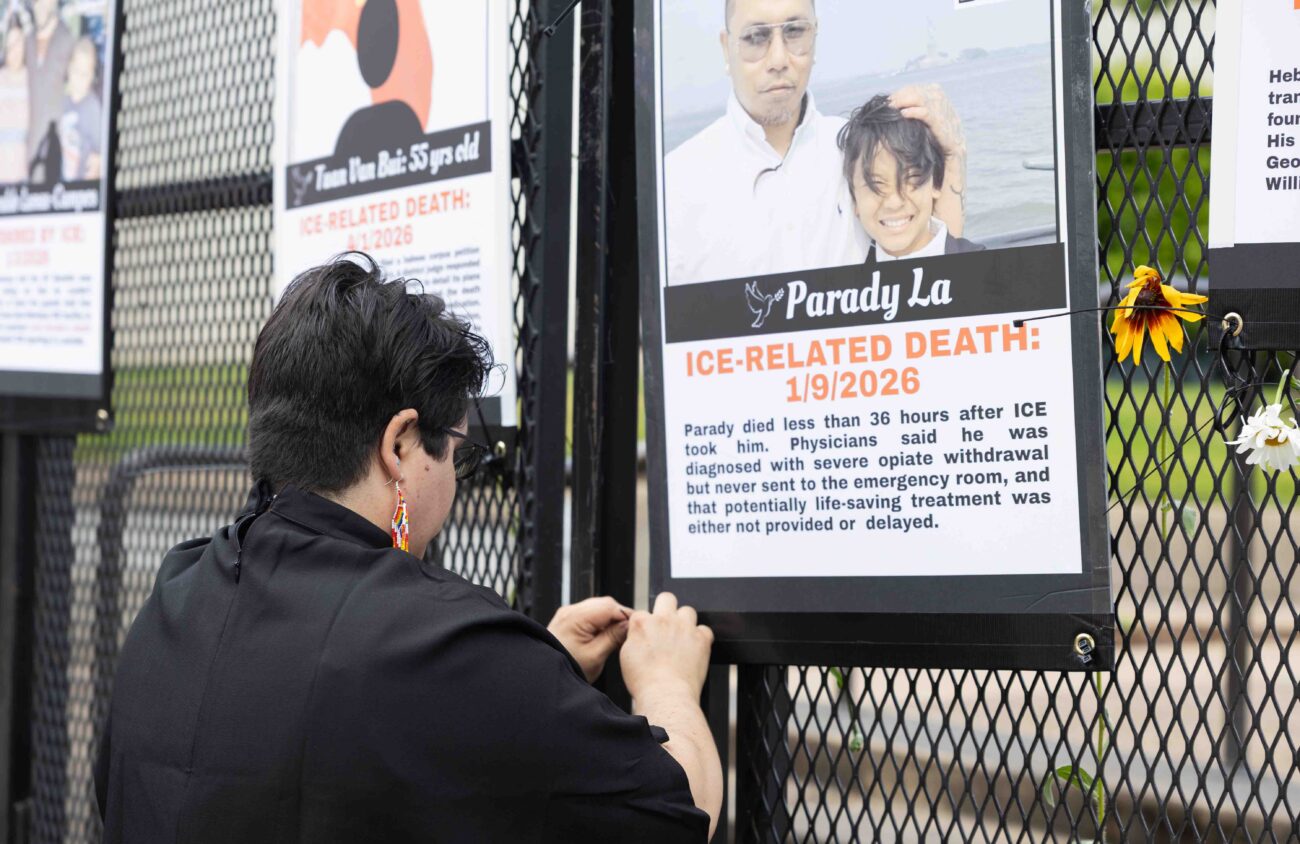
Over the past year, activists have been protesting unjust Immigration and Customs Enforcement practices outside the Eugene Federal Building, which is home to an ICE field office where immigrants make regular check-ins. Several immigrants have been detained there and then transported to a detention center in Tacoma since protests began.
While some protests have included instances of property damage followed by pepper spray and tear gas by federal agents, the vast majority have been peaceful gatherings featuring songs, vigils, SLUG queens and elderly protesters holding signs.
On June 4, in the Oregon District Court, six local activists filed a lawsuit against the General Services Administration, the federal agency tasked with managing federal property, over the security fence installed April 29 around the downtown Eugene Federal Building. The activists, represented by legal defense nonprofit Civil Liberties Defense Center, say the fence restricts their First Amendment rights by preventing them from holding vigils, protesting and having community meetings.
The fence, as it currently stands, blocks off large portions of the Federal Building’s plaza, referred to in court documents as the federal Free Speech Plaza, leaving just a small section open for protests. This plaza is not the same as the Wayne Morse Free Speech Plaza at the Lane County Public Service Building. One of the six plaintiffs, Susan Barnhart, says the feds removed a plaque designating the plaza as a Free Speech Plaza one year ago.
The fence surrounds the Federal Building starting at the intersection of Pearl Street and East 6th Avenue. The fence ends at the intersection of East 7th Avenue and High Street. Before the fence’s construction, protesters could approach the plaza area at the front entrance of the building. Now, they’re limited to a small section of the plaza facing the intersection of Pearl Street and East 7th Avenue left open for protests.
The plaintiffs are seeking an injunction against the GSA and declaratory relief — a court-issued judgement that defines legal rights and obligations — stating the GSA violated the Constitution and the Administrative Procedure Act by constructing the fence. The APA requires public transparency and participation for major projects. The plaintiffs hope the lawsuit will result in the fence being removed.
On April 1, Eugene Weekly broke the news of the GSA’s plan to fence off the Federal Building’s plaza. In communications with the city of Eugene, the GSA wrote that the building would need to be fenced off for two years to allow for the repair of broken windows and ensure the safety of workers inside. During a Jan. 30 protest that the Eugene Police Department declared a riot, several windows at the entrance of the Federal Building were cracked and shattered.
Records show the GSA awarded TeamGOV Inc., an access control, operation maintenance, IT and telecommunications company $9,141.12 for window film replacement at the Federal Building on Feb. 23. The security fence cost $269,225, records show.
Lauren Regan, CLDC director of litigation and advocacy, says it’s likely the fence could remain longer than two years. “I think history teaches us that once the government takes away our rights, they don’t give them back,” she says.
The plaintiffs, Naphtali Renshaw, Barnhart, Tyrras Warren, Michael Carrigan, Christopher Rompala and Charles Areford say the fence has prevented activists with disabilities from participating in protests, as the only access point to the non-fenced portion of the plaza is via stairs. “The federal government has taken the opportunity for older activists to sit at the benches and the picnic tables on the other side of this fence and rest while we take part in our rights,” Barnhart said to a crowd during a June 9 press conference in front of the fence.
“In addition to mobility issues, there are hearing and trauma issues,” Warren says. He adds that the upper portions of the plaza, which are now fenced off, are a quieter space free from the loud honks of drivers passing by. “We would hold vigils and memorials up there,” Warren says. “We get lots of people honking here, that’s amazing, it’s fantastic, but often it’s a little too much for some people and so we would often move up there.”
John Garrett, a protester who’s been showing up to regular Federal Building protests for several months says he was surprised to see a fence where he normally would express his First Amendment rights. “I didn’t see a reason for it,” he says. Garrett says he’s hopeful that the lawsuit will reopen the plaza so he and others can resume using the space. “This is the free speech plaza, how can you not allow free speech?”
Because the plaintiffs and Regan filed for a preliminary injunction, Judge Mustafa Kasubhai scheduled a hearing for oral arguments at the Wayne Morse Federal Courthouse at 9:30 am June 18.