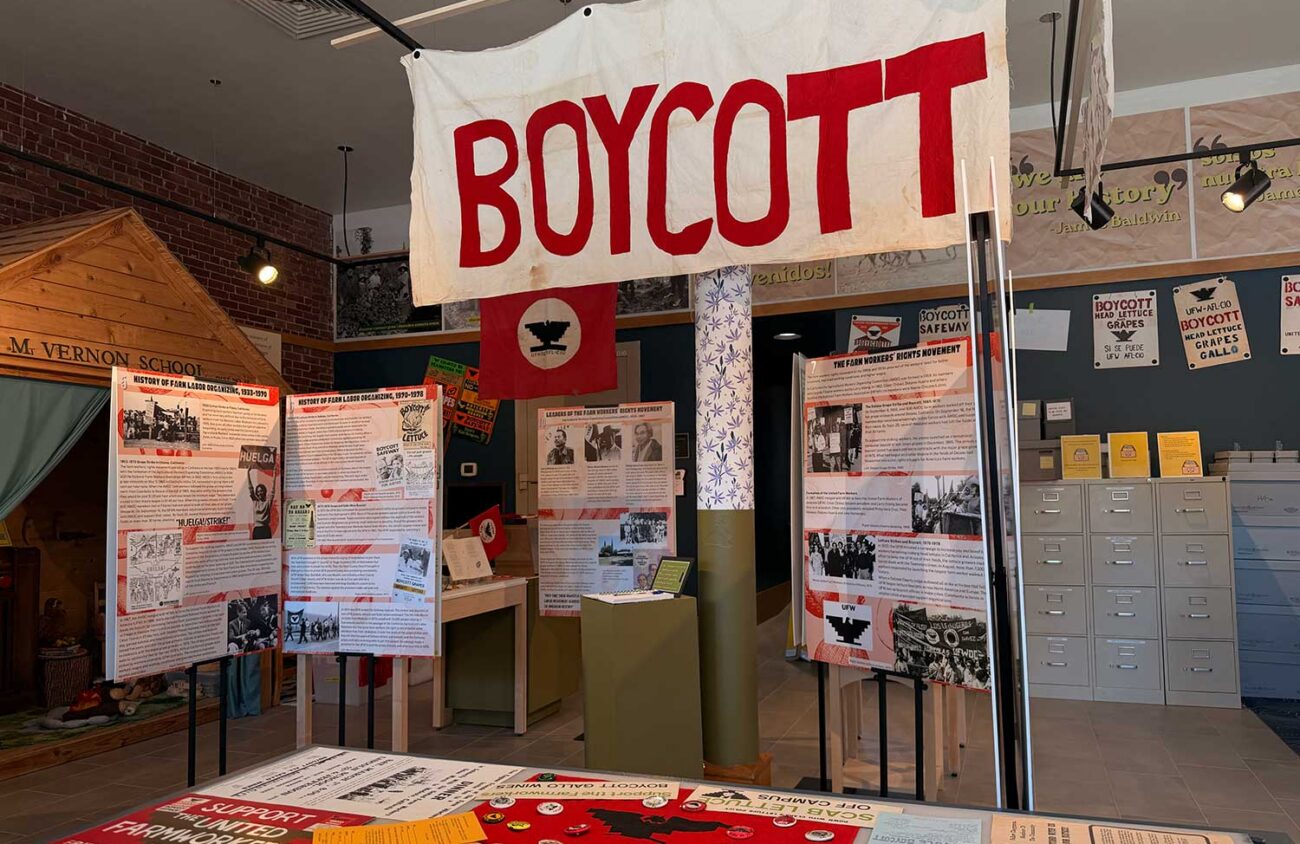
Springfield History Museum opens a new exhibit called “Farm Labor in the Valley” July 10, featuring the long history and individual stories of those involved in the Willamette Valley farmworker movement. Artifacts from Eugene Friends of Farmworkers are displayed, including many picket signs and posters from the 1970s farm labor movement, as well as a homemade movie that features the March on Gallo in Modesto, California. Eugene Friends of Farmworkers is a group of individuals who have supported farm worker unionization and general labor rights since the 1970s movement. Several new panels have been added, describing the role that Filipino farm workers had in the Willamette Valley, as well as the long history of Indigenous farming tactics in the area. “It’s this fascinating story that I think a lot of people don’t necessarily know about or think about,” says Madeline McGraw, the Springfield History Museum curator. McGraw specifically looked into adding Indigenous history into the exhibit. “There’s an entire culture of people who’ve been keeping that practice up for 15,000 years,” she says, “so our first migrant farm laborers in this area, as early as the 1870s, was the Indigenous people who lived here first.” The opening reception is July 10 and features songs related to the Farm Workers Rights movement performed live by folk band Justice 3.
Farm Labor in the Valley opening reception is 5pm to 7pm Friday, July 10 at Springfield History Museum, 590 Main St., Springfield. The exhibit runs July 10 to Dec. 26 and is free to visit.